Dogs in hot climates: choosing a breed and preventing heatstroke
Which dogs cope best with heat, what veterinary research says about heatstroke, how to prevent it day to day, and the first aid that gives a dog the best chance.
9 min read
Dogs live happily in hot countries all over the world, but heat is one of the few everyday dangers that can kill a healthy dog within hours. This guide explains which dogs handle heat best, what veterinary research has found about heatstroke, and the simple habits and first aid that protect any dog, whatever its breed.
Why heat is harder on dogs than on people
People cool down mainly by sweating over the whole body. Dogs have a very limited ability to sweat, so they rely on panting and on finding shade. Their normal body temperature is around 38–39 °C; above 40 °C they are at risk of heatstroke, which can cause seizures, organ damage, internal bleeding, coma and death. The longer the temperature stays high, the more dangerous it becomes, which is why speed matters so much in first aid.
A large part of a dog’s heat is lost through the nose as it breathes out. Flat-faced (brachycephalic) dogs have much less space inside the nose, so this cooling system works poorly, and they can overheat even on days that do not feel especially hot.
What veterinary research tells us
Most advice about dogs and heat repeats the same warning about hot cars. Research from VetCompass, a programme run by the Royal Veterinary College that studies the anonymised records of UK veterinary practices, gives a fuller picture.
How serious it is. Among more than 900,000 dogs seen by vets in the UK in 2016, heat-related illness was diagnosed in about 0.04% of dogs that year, and 14% of those events were fatal. It is not common, but when it happens it is often severe.
What triggers it. In a follow-up study of 1,259 heat-related illness events, exercise was by far the most common trigger (74% of events with a known cause). Hot weather alone, with the dog simply outdoors or in a warm room, accounted for about 13%, and confinement in a vehicle for about 5%. The authors concluded that, in the UK, exercise-related heatstroke affects and kills more dogs than hot cars. Most of the exercise cases followed ordinary walks; others followed running, cycling or play.
Which dogs are most at risk. The research identified several risk factors:
- Flat faces. Brachycephalic dogs had about twice the odds of heat-related illness compared with dogs with a medium-length muzzle, and they were at greater risk from all three triggers: exercise, hot weather and vehicles.
- Size and weight. Dogs over 50 kg had the highest odds, and every weight group over 10 kg had higher odds than dogs under 10 kg. Small bodies lose heat more efficiently.
- Extra weight for their breed. Dogs heavier than the average for their breed and sex were at higher risk, which makes a healthy weight one of the simplest protections.
- Age and activity. Dogs over two years old had higher odds overall. Young, active male dogs were more likely to overheat during exercise, while older dogs and dogs with breathing problems were more likely to overheat just from hot weather.
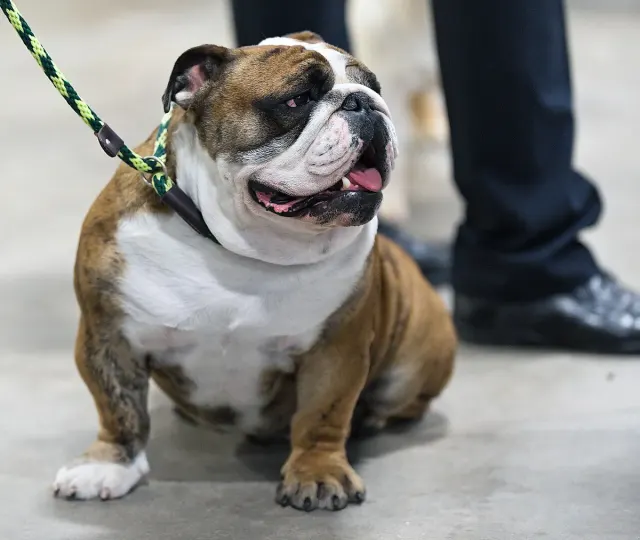
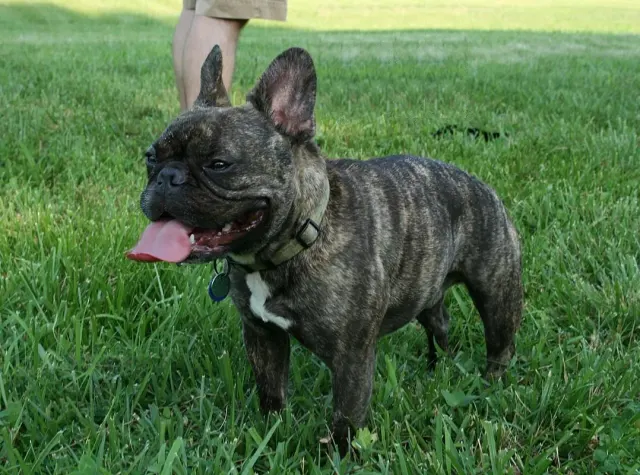
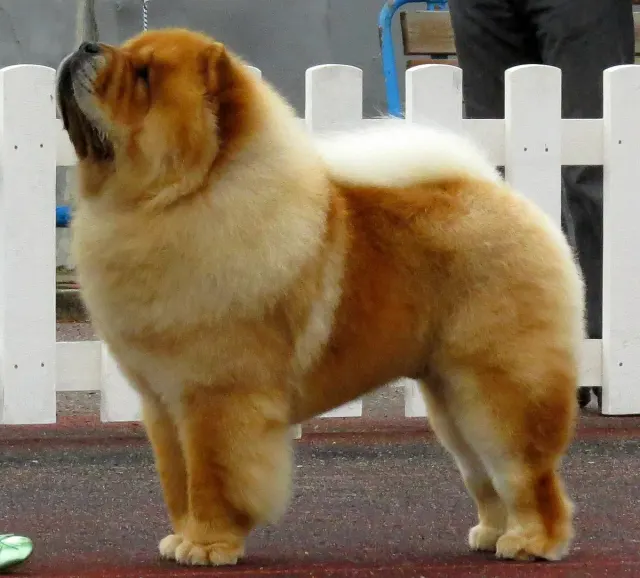
- Breed. The breeds with the highest incidence in the 2016 data were the Chow Chow, Bulldog, French Bulldog, Dogue de Bordeaux, Greyhound and Cavalier King Charles Spaniel.
One detail is worth knowing: in that study, three small flat-faced breeds that typically weigh under 10 kg (the Lhasa Apso, Shih Tzu and Chihuahua) had the lowest odds of heat-related illness of all the breeds analysed. The authors linked this to their small size. It does not make them heat-proof: veterinary charities still list flat-faced dogs, small ones included, among the dogs most at risk.
These studies come from the UK, where summers are mild compared with many parts of the world. In hotter climates the same risk factors apply, and the margin for error is smaller.
Which dogs cope best with heat
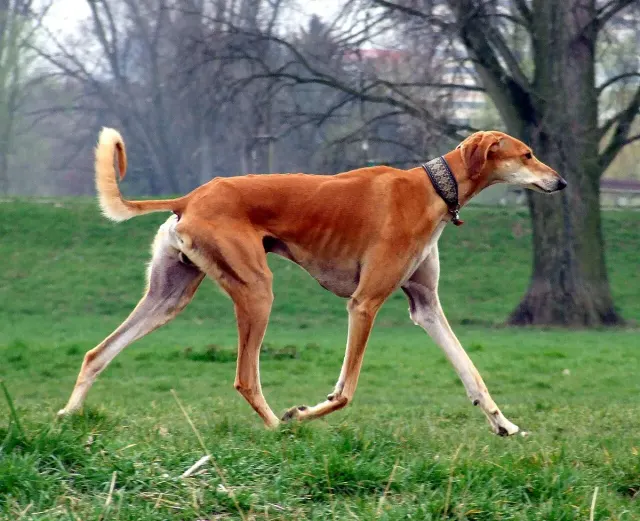
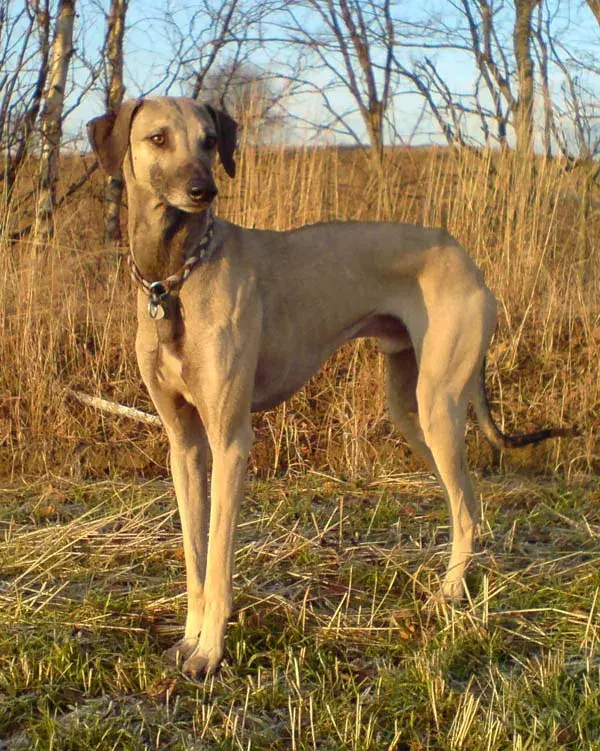
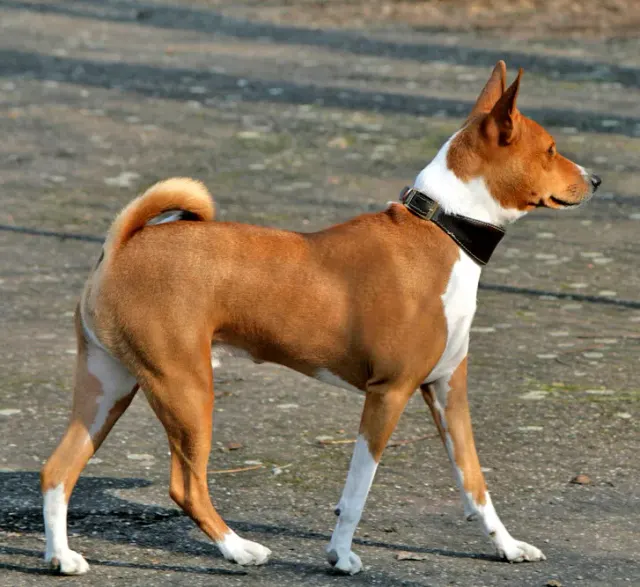
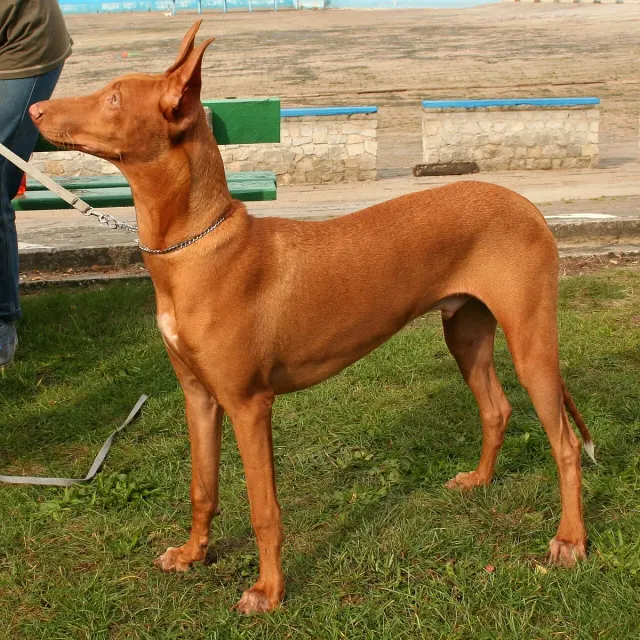
No breed is immune to heatstroke, but some are clearly better equipped. The best-adapted dogs tend to share a few traits: a normal-length or long muzzle, a lean body, a short or fine coat, and an origin in a hot region.
The sighthounds and primitive breeds of hot regions stand out. The Saluki, Sloughi, Azawakh, Pharaoh Hound, Cirneco dell’Etna, Ibizan Hound, Basenji, Rhodesian Ridgeback and Thai Ridgeback all receive our highest heat-tolerance rating. You will find the full ranking in the 10 dog breeds best suited to hot climates, and you can compare two of these breeds side by side, for example the Saluki and the Sloughi.
Keep in mind that many of these dogs are energetic runners. Heat tolerance does not mean they can run hard at midday: exercise remains the main trigger of heatstroke, even for well-adapted dogs.
Dogs that need extra care in the heat
Some dogs struggle as soon as temperatures rise:
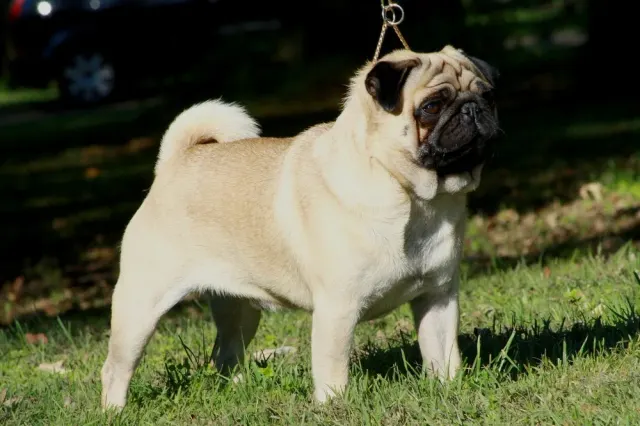
- Flat-faced breeds such as the Bulldog, French Bulldog, Pug, Boston Terrier and Shih Tzu.
- Thick-coated northern breeds bred for cold, such as the Siberian Husky, Alaskan Malamute, Samoyed and Chow Chow.
- Giant breeds such as the Newfoundland, Saint Bernard and Dogue de Bordeaux.
- Any dog that is overweight, very young, elderly, unfit or has a heart or breathing problem.
If you live somewhere hot and are choosing a dog, these breeds deserve serious thought. If you already share your life with one, the habits below matter even more. Our Find my breed quiz takes your climate into account when it suggests breeds.
Everyday prevention
Veterinary charities recommend a few simple habits to prevent heatstroke:
- Walk early or late. Avoid the hottest part of the day and keep walks short and gentle on warm days.
- Skip exercise on very hot days if your dog is unfit, elderly, very young, overweight, unwell or has breathing difficulties. A few minutes of calm sniffing in the shade is enough.
- Always provide shade and fresh water, at home and on walks. Carry water on warm days.
- Check the ground. If you cannot comfortably keep the palm of your hand on the pavement for seven seconds, it is too hot for paws. Sand, artificial grass and asphalt heat up quickly.
- Never leave a dog in a parked car on a warm day, not even for a few minutes, with the windows open or in the shade. Avoid car journeys in the heat; if you must travel, keep air flowing and water available.
- Use a harness rather than a collar for walks, especially for flat-faced dogs, so nothing presses on the throat while the dog pants.
- Keep your dog slim. Extra weight makes it harder for a dog to stay cool.
- Let your dog cool off in water in the shade, such as a paddling pool, but never force a dog that is afraid of water, and keep play calm.
- Groom thick coats. Regular brushing helps; for some heavy-coated dogs, a trim in the warm months can help too. Ask a groomer or vet which is right for your dog’s coat.
Recognising heatstroke
Heatstroke can progress quickly, so learn the signs before you need them:
- Early signs: heavy panting that does not settle after the dog stops and rests in the shade, fast or noisy breathing, tiredness or reluctance to move.
- Getting worse: drooling or foaming at the mouth, vomiting or diarrhoea, very red or very pale gums, shaking, weakness, wobbling or collapse.
- Severe: confusion, seizures, unconsciousness, or vomiting or diarrhoea containing blood.
Any of these after exercise or time in the heat should be treated as an emergency.
First aid: cool first, transport second
Veterinary guidelines for dogs with heatstroke recommend starting to cool the dog immediately, before and during the journey to the vet. A study of UK cases found that only about a fifth of dogs had been cooled before transport. The most common method was draping wet towels over the dog, which cools far less effectively than the recommended methods: immersing the body in cool water, or wetting the dog and keeping air moving over it.
- Move the dog to shade or a cool room straight away.
- Soak the dog with cool water over the whole body. Tap water is fine. Start gently so the dog does not panic, and keep water away from the nose and mouth. If the dog is used to water and calm, you can immerse the body, keeping the head out.
- Keep air moving: a fan, air conditioning, or open doors and windows. Moving air over a wet coat is what removes heat.
- Do not cover the dog with a wet towel or hold it close, as both trap heat. Lying on a cool, wet towel is fine.
- Offer a drink of cool water, but do not force it.
- Call a vet and go, ideally to the nearest practice. Travel with the air conditioning on or the windows open, and if possible have someone keep cooling the dog on the way.
For years, owners were told to avoid cold water. The research team behind the cooling study notes that this advice has persisted despite evidence to the contrary, and current guidance favours cold-water immersion and evaporative cooling as the most effective first aid.
After the emergency
Even if your dog seems to recover quickly, a vet should check it. Heatstroke can damage the kidneys, gut, heart, brain and blood clotting in ways that are not visible at first, and severe cases may need several days of hospital care. After your dog comes home, watch it closely for a day or two and contact your vet if it vomits, has diarrhoea, seems confused or stops eating.
In a hot climate, plan the whole year around the heat
If you live somewhere with long, hot summers, think about heat when you choose a dog and when you plan its day. A breed with a normal muzzle, a lean build and a light coat will have an easier life. Whatever the breed, routines built around the cool hours, constant access to shade and water, and a healthy weight are what keep dogs safe. If you are still deciding, our Top 10 lists and breed comparisons can help you compare candidates.
Sources
Studies, veterinary and welfare organisations and breed standards this guide is based on.
- Incidence and risk factors for heat-related illness (heatstroke) in UK dogs under primary veterinary care in 2016 (Hall, Carter & O'Neill, Scientific Reports, 2020) — Scientific Reports (Nature Portfolio)
- Dogs Don't Die Just in Hot Cars: Exertional Heat-Related Illness (Heatstroke) Is a Greater Threat to UK Dogs (Hall, Carter & O'Neill, Animals, 2020) — Animals (MDPI), via PubMed Central
- Cooling Methods Used to Manage Heat-Related Illness in Dogs Presented to Primary Care Veterinary Practices during 2016–2018 in the UK (Hall et al., Veterinary Sciences, 2023) — Veterinary Sciences (MDPI), via PubMed Central
- Heatstroke in dogs — PDSA (veterinary charity)