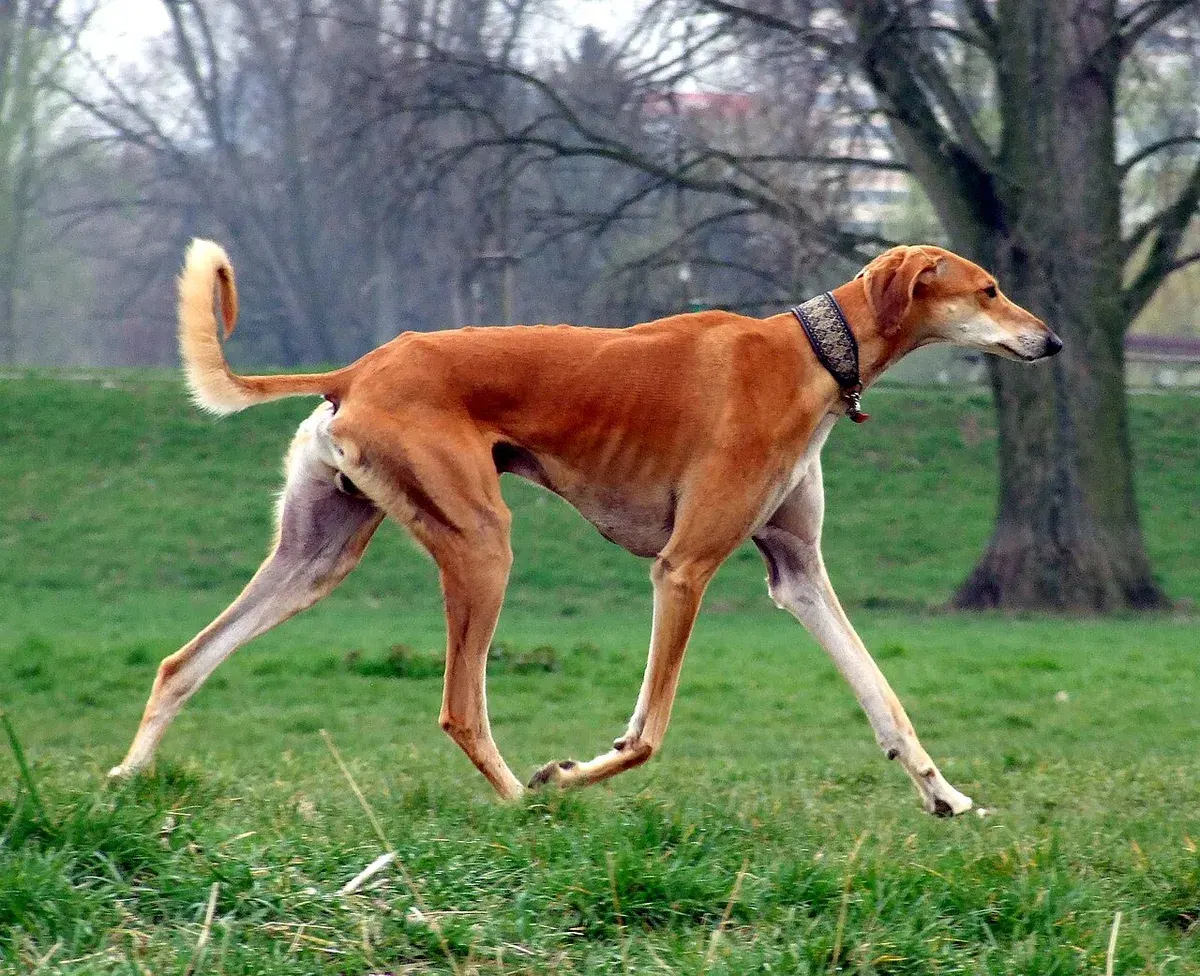
A Middle Eastern sighthound with a slender outline and feathered ears, the Saluki is enduring, graceful and reserved.
History and origins
The Saluki is one of the oldest sighthound types, bred for centuries by the nomadic peoples of the Middle East to hunt gazelle and hare, often alongside falcons.
There is a feathered variety (long hair on the ears and tail) and a smooth variety.
Appearance and colours
The FCI breed standard describes a dog giving an impression of grace and symmetry, great speed and endurance, strength and activity. The coat is smooth and of a soft, silky texture, with feathering on the legs and the back of the thighs; the smooth variety has no feathering.
Any colour or combination of colours is permissible; brindle is undesirable.
- Height at the withers: on average 58–71 cm, females proportionally smaller.
Temperament
Gentle, reserved and independent, the Saluki is deeply attached to its family but not demonstrative. It is sensitive and dislikes harsh handling.
Its hunting instinct is very strong, so recall in open spaces is unreliable.
With children and other pets
The standard describes a dignified, intelligent and independent dog, reserved with strangers but not nervous or aggressive. It rates 3 out of 5 with children and 3 out of 5 with other dogs in our ratings.
- It is calm at home but needs to run.
- Its chasing instinct is strong: be careful with cats and small animals.
Training tips
According to the standard, Salukis vary in type because of their special place in Arab tradition and the vast area of the Middle East where they have been used as hunting hounds for thousands of years; each tribe kept Salukis suited to its terrain, and by tradition they were not sold but given as marks of honour. The Royal Kennel Club notes that they were prized by the Bedouin, who hunted hare, fox and gazelle with them. It rates 2 out of 5 for trainability in our ratings.
- Let it run only in safe, fenced areas: it chases by sight.
- Use gentle, patient, reward-based training.
Health
This is a robust breed. Some heart diseases, hypothyroidism and certain cancers should be monitored. It is sensitive to anaesthetics.
Regular veterinary follow-up is recommended.
Often hunting in the countryside, it must be protected against leishmaniasis.
Common health issues in detail
The Royal Kennel Club recommends as best practice for breeding dogs a DNA test for neuronal ceroid lipofuscinosis (Sal-NCL), a fatal brain disease, and says imported dogs must be tested to prevent its reintroduction into the UK population.
We found no large population study of health in the Saluki.
This is general information. For any question about your dog's health, consult a veterinarian.
Feeding
Good-quality food matched to its activity suits it. It is naturally very lean; slightly visible ribs are normal.
Avoid exertion straight after meals.
Exercise
It needs long daily walks and free runs in a large enclosed area.
It is an endurance athlete.
It hunts much like the Sloughi, but it is a separate breed. It needs a large, securely fenced garden.
Grooming
Its smooth coat needs weekly brushing; the ear feathering needs a little more attention.
It has very little odour.
Choosing a puppy
Choose a breeder who does the Sal-NCL DNA test.
- Ask for the parents' Sal-NCL results.
- Meet the mother: she should be calm and dignified.
Our guide on how to recognise a responsible breeder explains what to ask.
Similar breeds
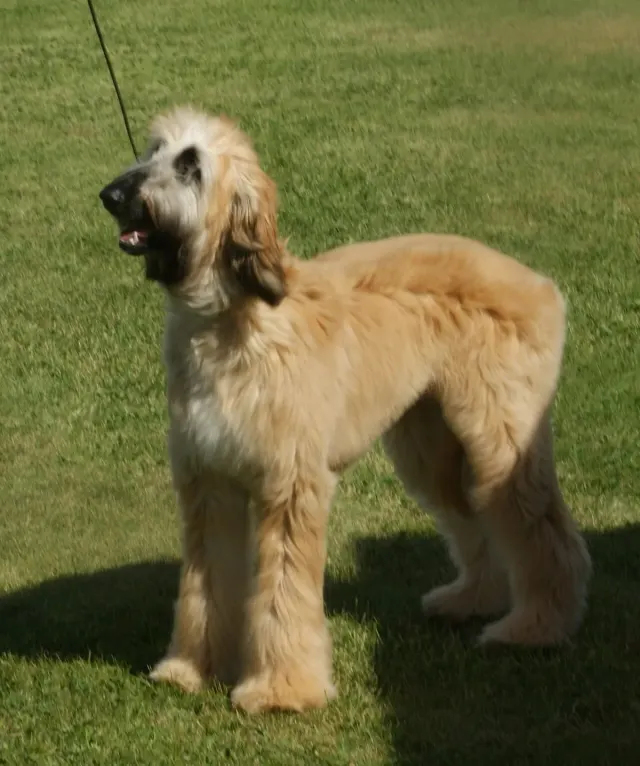
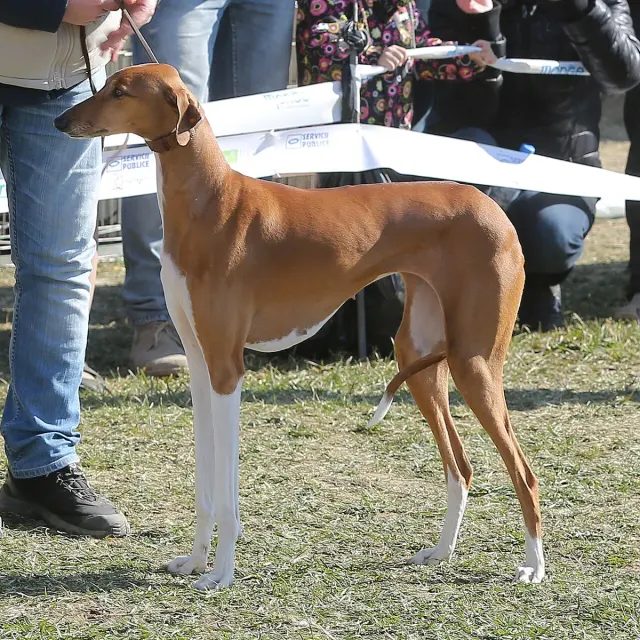
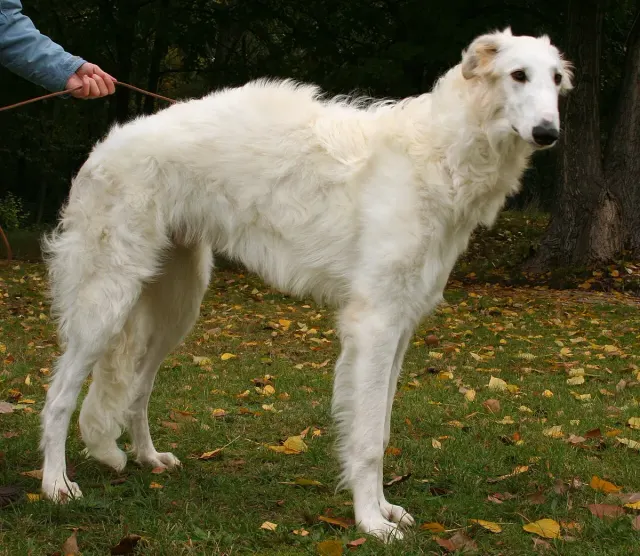
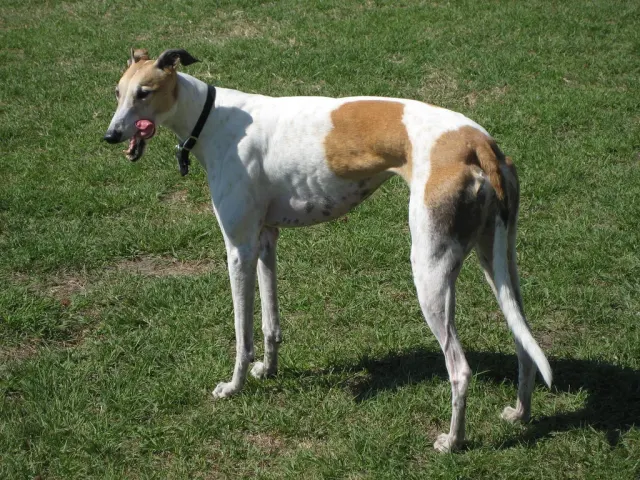
The Sloughi and Azawakh are other African and Middle Eastern sighthounds. The Afghan Hound and Greyhound are other sighthounds.