Saint Bernard
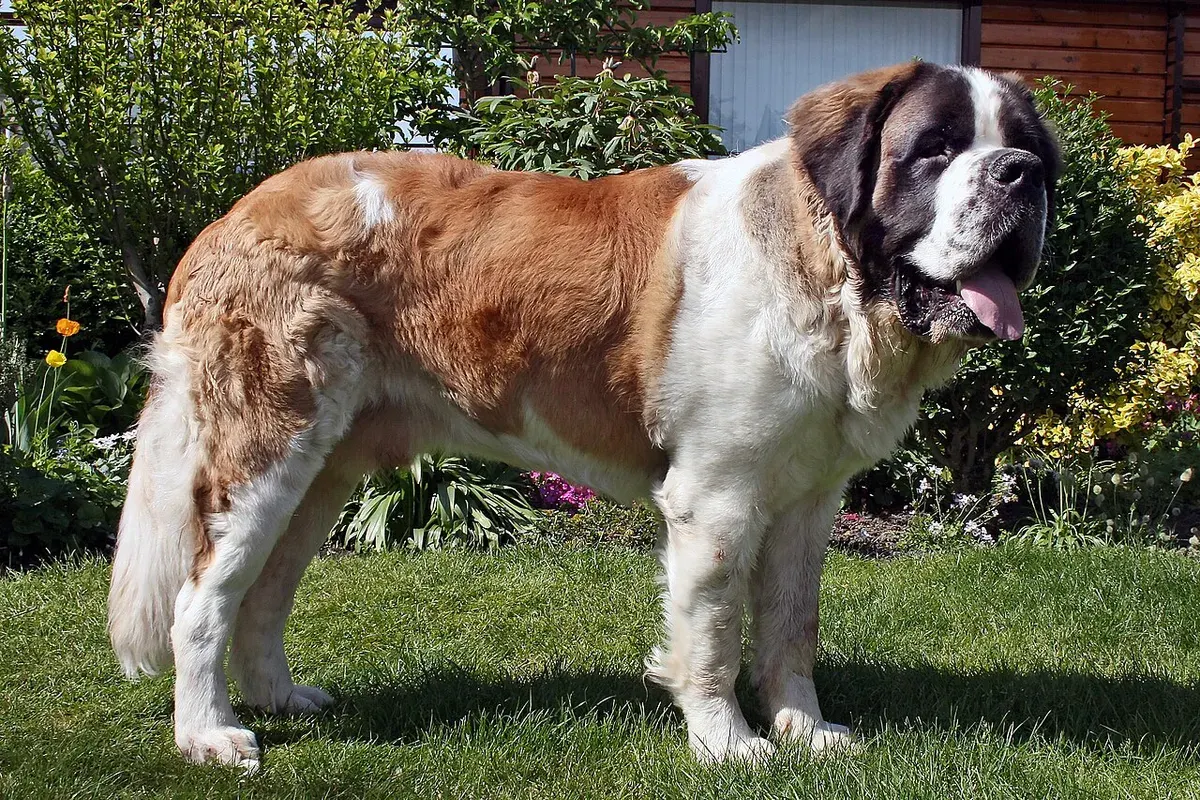
The legendary rescue dog of the Alps, the Saint Bernard is a gentle, patient giant built for cold far more than heat.
History and origins
The Saint Bernard takes its name from the hospice on the Great St Bernard Pass in the Swiss Alps, where monks used it to guide travellers and find people lost in the snow.
The famous Barry is said to have saved dozens of lives in the early 19th century.
Temperament
Calm, gentle and very patient, the Saint Bernard is an excellent family dog, particularly tolerant of children.
It must learn lead walking and calm behaviour early, as an adult is hard to hold back.
Health
Its size exposes it to hip and elbow dysplasia, bloat, cardiomyopathy, eyelid problems and some bone cancers.
Regular veterinary follow-up is essential.
This is general information. For any question about your dog's health, consult a veterinarian.
Feeding
Puppies should grow slowly on large-breed food. Adults: two or three meals a day and rest after eating.
Avoid any excess weight.
Exercise
Calm daily walks are enough. Avoid intense effort during growth and in hot weather.
Above all it enjoys family life.
It needs a house with a shady garden and a large food and veterinary budget.
Grooming
Whether short- or long-coated, it sheds a lot: brush two to three times a week, daily during the moult. It drools heavily.
Clean its eyes and jowls.