Bulldog
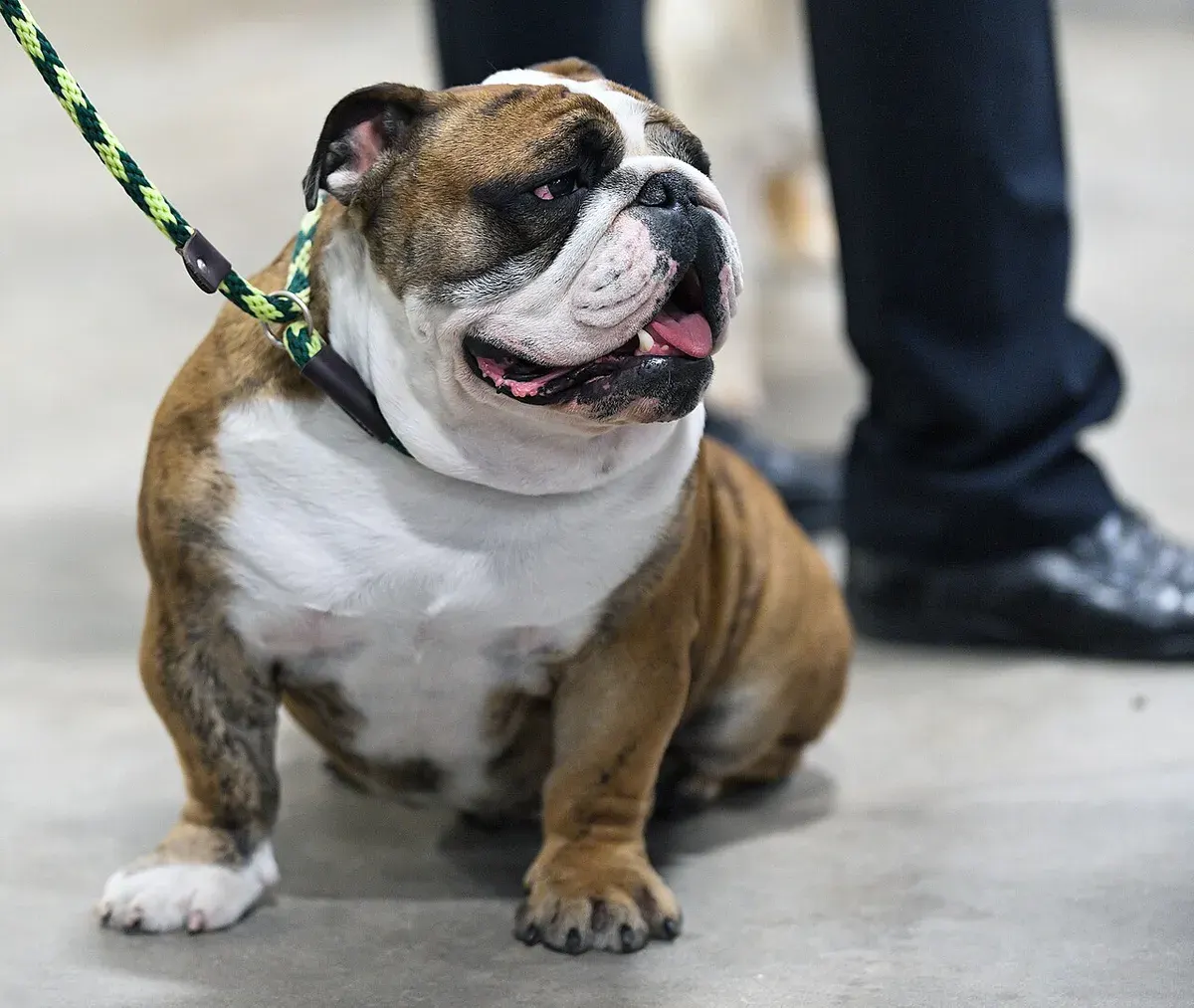
Stocky, placid and very affectionate, the Bulldog is an endearing indoor companion, but extremely sensitive to heat.
History and origins
The Bulldog descends from dogs used in England for bull-baiting, a cruel practice banned in 1835. The breed was then developed into a calm companion dog.
It has become a British national symbol.
Temperament
Calm, gentle and endearing, the Bulldog loves human company and comfort. It is usually patient with children.
It can be stubborn, so patient, reward-based training works better than force.
Health
Its very short muzzle and build expose it to many problems: brachycephalic airway syndrome, heat intolerance, skin-fold infections, and eye and joint problems. Births often require a caesarean section.
Choose a breeder who selects dogs that breathe well, and see a veterinarian at the first sign of distress.
This is general information. For any question about your dog's health, consult a veterinarian.
Feeding
It gains weight easily, which worsens its breathing. Good-quality food in measured portions is essential.
Some individuals have sensitive digestion and flatulence.
Exercise
Short, calm walks are enough. Never make it run for long, and do not let it swim unsupervised: it swims very poorly.
Use a harness rather than a collar.
It adapts well to city apartments. Noisy panting or a purplish tongue are veterinary emergencies.
Grooming
Its short coat needs little care, but the face and tail folds must be cleaned and dried regularly.
Keep an eye on its eyes.