A soft-hearted giant and outstanding swimmer, the Newfoundland is a legendarily gentle family dog, but very sensitive to heat.
History and origins
The Newfoundland comes from the island of Newfoundland, Canada, where it helped fishermen haul nets, carry loads and rescue people from the water.
It is still used today as a water-rescue dog in several countries.
Appearance and colours
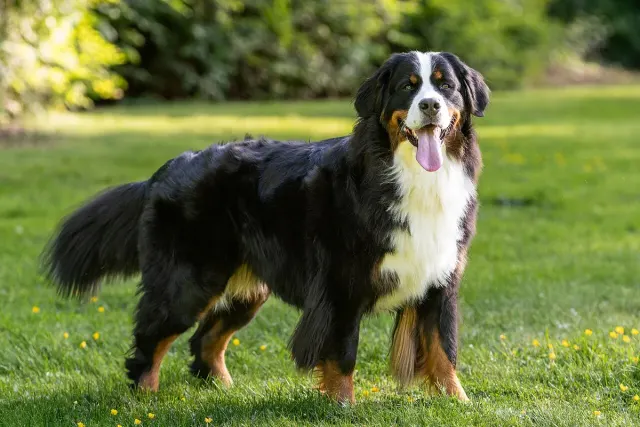
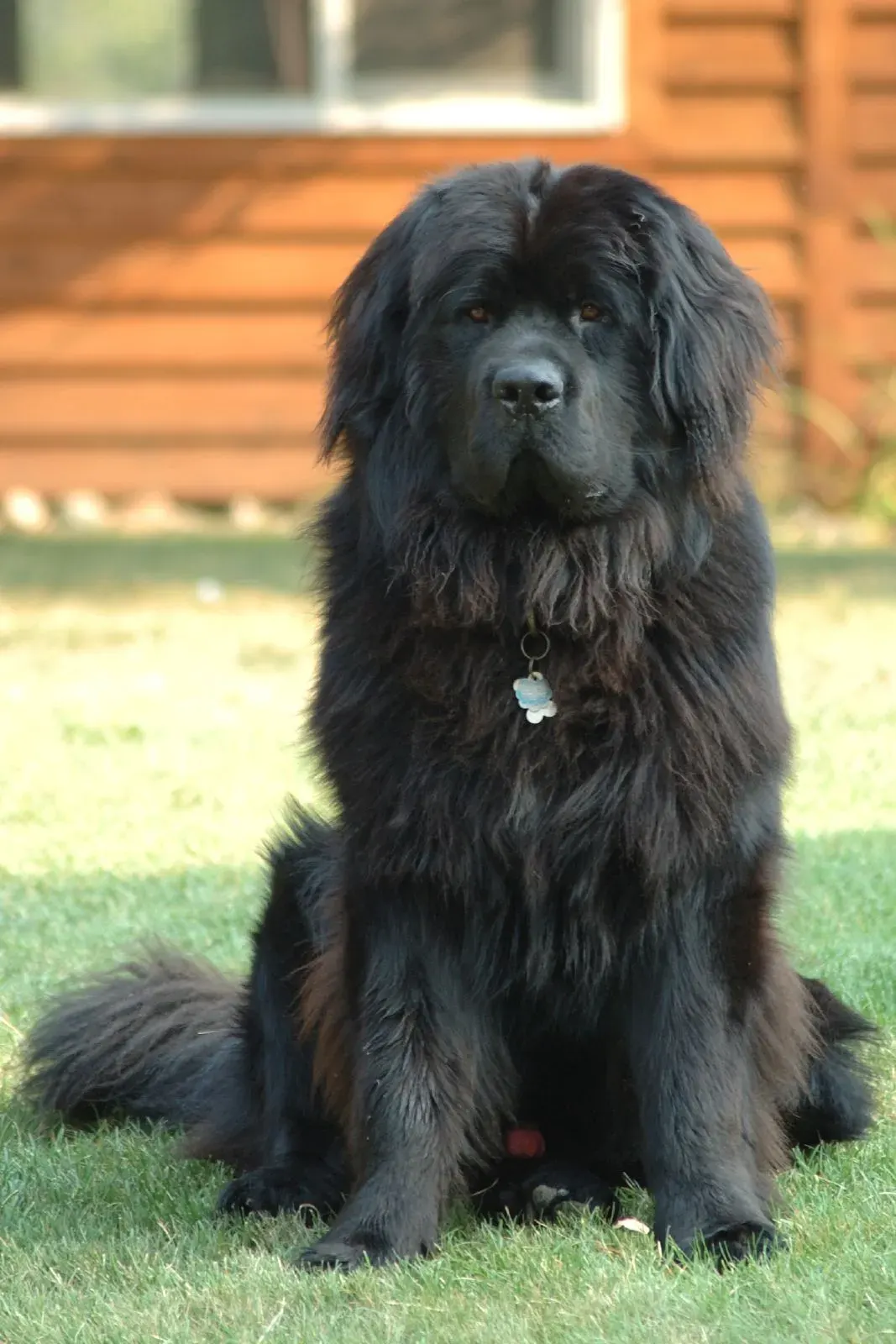
The FCI breed standard describes a massive dog with a powerful, well-muscled body and well-coordinated movement, longer than tall. It has a water-resistant double coat: a moderately long, straight outer coat and a soft, dense undercoat, with feathering on the legs and a well-covered tail.
Colours are black, white and black, and brown.
- Average height at the withers: 71 cm for males, 66 cm for females.
- Average weight: about 68 kg for males, 54 kg for females.
Temperament
Gentle, patient and very affectionate, the Newfoundland is famous for its kindness with children. It is not aggressive, but its size deters intruders.
It learns well with gentle training; harshness hurts it.
With children and other pets
The standard describes an expression of benevolence and softness; dignified, joyful and creative, the breed is known for its sterling gentleness and serenity. It rates 5 out of 5 with children and 4 out of 5 with other dogs in our ratings.
- It is a gentle family dog, but very large and heavy.
- It sheds a great deal (5 out of 5 in our ratings).
Training tips
According to the standard, the breed developed on the island of Newfoundland from local dogs and the big black "bear dog" brought by the Vikings after 1100, later reshaped by dogs of European fishermen; by 1610 it already pulled heavy loads on land and served as a water and lifeguard dog. The Royal Kennel Club calls it Canada's powerful, versatile working water dog. It rates 4 out of 5 for trainability in our ratings.
- Swimming and calm, reward-based training suit it.
- Avoid exercise in the heat: it rates 1 out of 5 for heat tolerance.
Health
The breed is prone to a heart disease (subaortic stenosis), hip and elbow dysplasia, cystinuria (inherited bladder stones) and bloat.
Ask for the parents' tests and keep up regular veterinary follow-up.
Common health issues in detail
The breed has a known risk of inherited subaortic stenosis, a narrowing below the aortic valve. A French breed club screening programme examined 921 Newfoundlands by heart ultrasound between 2010 and 2023: 99.1% were free of aortic stenosis and 99.8% of pulmonic stenosis, and no cases were found in the last three years. In a UK study of giant breeds, the median age at death of Newfoundlands was 10.3 years, based on 70 deaths.
This is general information. For any question about your dog's health, consult a veterinarian.
Feeding
Puppies should grow slowly. Adults tend to gain weight, so measure portions and split them into two meals.
It drools a lot when eating and drinking.
Exercise
Calm daily walks and, ideally, swimming are enough to keep it happy.
Avoid intense effort, especially in hot weather.
In hot weather, provide a cool home, shade, water to swim in and outings only during the cool hours. It needs a house with a shady garden.
Grooming
Its thick, water-resistant double coat sheds enormously: brush several times a week, daily during the moult. It drools, so keep towels handy.
Do not shave it.
Choosing a puppy
Choose a breeder who has the parents' hearts screened by a vet using ultrasound.
- Ask for the parents' heart screening results.
- Ask how long the parents' relatives lived.
- Meet the mother: she should be gentle and calm.
Our guide on how to recognise a responsible breeder explains what to ask.
Similar breeds
The Leonberger, Saint Bernard and Pyrenean Mountain Dog are other gentle giants. The Labrador Retriever is another water-loving dog from Newfoundland.