An elegant, hardy little Sicilian hunter, the Cirneco dell'Etna is lively, affectionate and perfectly suited to hot climates.
History and origins
The Cirneco dell'Etna is an ancient Sicilian breed used to hunt rabbits on the volcanic slopes of Mount Etna, working by scent, hearing and sight.
It is one of the primitive Mediterranean hounds, like the Pharaoh Hound and the Ibizan Hound.
Appearance and colours
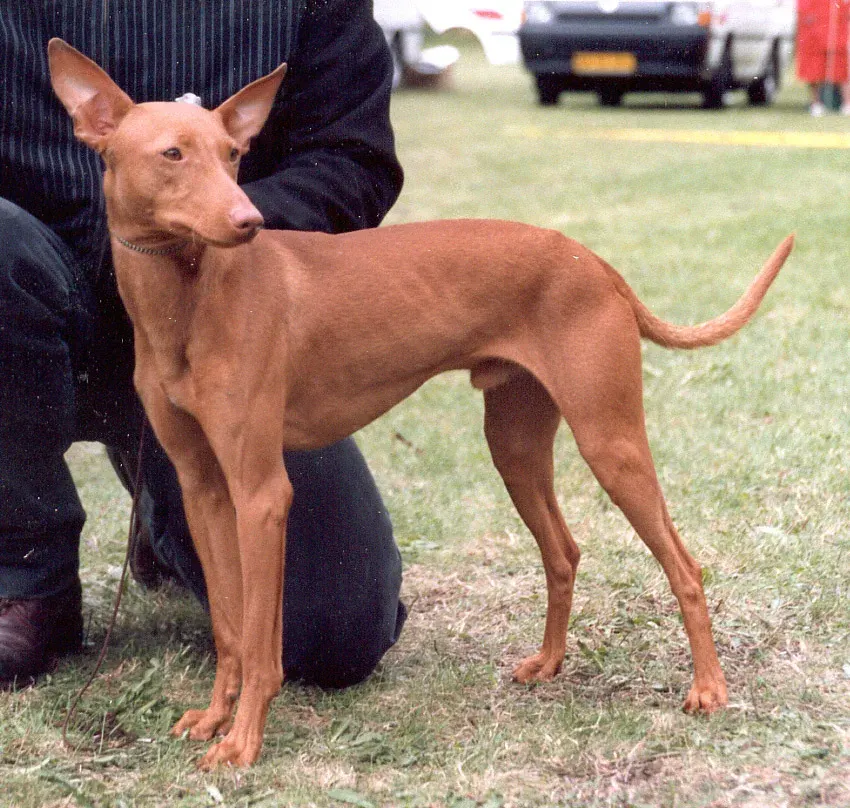
The FCI breed standard describes a medium-sized primitive-type dog with an elegant, slender but compact and strong build, square in outline, with upright ears, always alert. The coat is glassy and dense, smooth on the head, ears and legs and about 2.5 cm long and sleek on the body and tail.
Colours are fawn in all shades, from dark to light and diluted, or tan and white, with white on the head, chest, feet, tail tip and belly.
- Height at the withers: 46–50 cm for males, 44–48 cm for females (tolerance of 2 cm).
- Weight: 10–13 kg for males, 8–11 kg for females.
Temperament
Lively, affectionate and gentle with its family, the Cirneco is often good with children. It remains an independent hunter.
It learns with positive training, but its recall can be unreliable around game.
With children and other pets
The standard describes a strong-willed, uncompromising, affectionate and alert dog, resolute and very attached to its owner, and an excellent companion. It rates 4 out of 5 with children and 3 out of 5 with other dogs in our ratings.
- It is affectionate with its family.
- Its hunting instinct is strong: be careful with rabbits and other small pets.
Training tips
According to the standard, the Cirneco has been present in Sicily since ancient times, probably descending from hunting dogs of ancient Egypt brought to the Mediterranean by the Phoenicians; it appears on coins and mosaics from many centuries before Christ. It hunts wild rabbit and other small game by scent, especially among rocks and rough ground. The Royal Kennel Club calls it an all-round natural hunter from Sicily. It rates 3 out of 5 for trainability in our ratings.
- Use a secure area or long line: it follows its nose.
- Scent and search games give it an outlet.
Health
This is a robust breed with few inherited diseases.
Like other very lean dogs, it may be sensitive to some anaesthetics, so tell your veterinarian.
This is general information. For any question about your dog's health, consult a veterinarian.
Feeding
Good-quality food matched to its activity keeps it lean.
Avoid excess weight.
Exercise
It needs an hour of daily activity and free running in an enclosed area.
It loves to explore and sniff.
Medium-sized and calm indoors, it can live in an apartment if it gets regular, safe runs.
Grooming
Its short coat needs a weekly rub with a grooming mitt.
It feels the cold in winter.
Choosing a puppy
The Cirneco dell'Etna is rare outside Italy. The FCI standard states that only healthy dogs with breed-typical conformation should be used for breeding.
- Meet the mother: she should be alert and affectionate.
- Ask about the health of the parents and relatives.
Our guide on how to recognise a responsible breeder explains what to ask.
Similar breeds
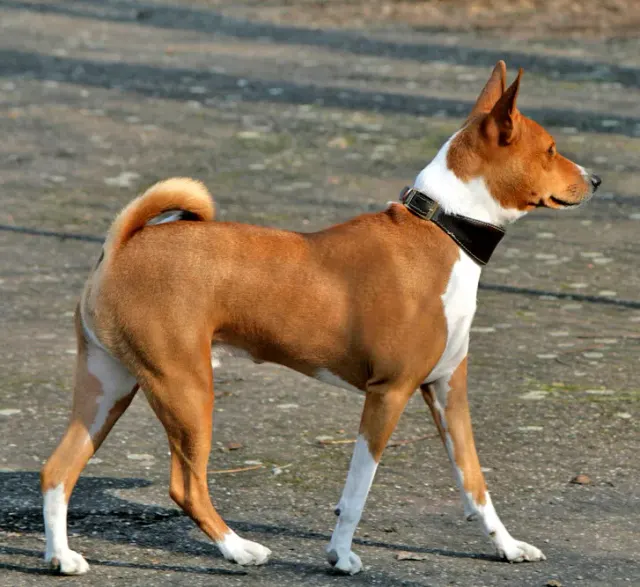
The Pharaoh Hound and Ibizan Hound are larger Mediterranean hounds of the same type. The Basenji and Canaan Dog are other primitive-type breeds.