A small dog with a wrinkled face and a comic nature, the Pug is affectionate, sociable and made for indoor life, away from the heat.
History and origins
The Pug is a very old breed from China, where it lived alongside emperors. Dutch traders brought it to Europe in the 16th century, and it won over several royal courts.
Its French name, 'Carlin', is said to come from a famous Italian comic actor nicknamed Carlin.
Appearance and colours
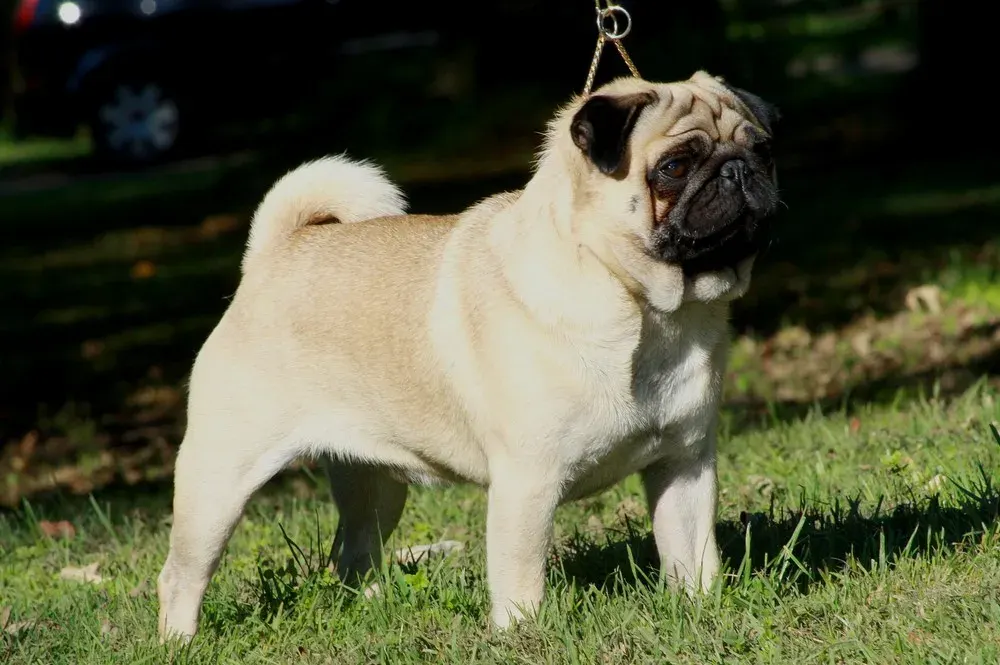
The FCI breed standard describes a decidedly square, cobby dog, "multum in parvo" (much in little), compact and hard-muscled, neither low on the legs nor leggy. The coat is fine, smooth, soft, short and glossy.
Colours are silver, apricot, fawn or black, with a clearly defined black mask, ears, cheek moles, thumb mark on the forehead and "trace" (a black line from the back of the head to the tail).
- Ideal weight: 6.3–8.1 kg.
Temperament
Cheerful, affectionate and comical, the Pug loves human company and follows its family everywhere. It is usually sociable with children and other animals.
It can be stubborn; gentle, patient, reward-based training works well.
With children and other pets
The standard describes a dog of great charm, dignity and intelligence, even-tempered, happy and lively. It rates 4 out of 5 with children and 4 out of 5 with other dogs in our ratings.
- It is a friendly companion.
- Avoid exertion in the heat: it rates 1 out of 5 for heat tolerance.
Training tips
According to the standard, the Pug seems to come from China, where snub-nosed dogs were always favoured; Dutch East India Company traders brought it to Europe, it was admired in the Netherlands from the 1500s, and it reached England with William III. Black Pugs were introduced from the Orient in 1877. It rates 3 out of 5 for trainability in our ratings.
- Short, gentle, reward-based sessions suit it.
- Keep it lean: overweight makes breathing harder.
Health
Its very short muzzle exposes it to brachycephalic airway syndrome, heat intolerance, eye injuries and skin-fold infections. A serious neurological disease (Pug dog encephalitis) also exists.
Choose a breeder who selects dogs that breathe well, and see a vet quickly at the first sign of distress.
Common health issues in detail
A study of Pugs under veterinary care in England found that 68% had at least one disorder recorded in a year; the most common were overweight or obesity (13.2%), corneal disorders (8.7%) and ear infections (7.5%), and eye, skin and ear problems were the most common groups of disorders.
The Royal Kennel Club recommends as a minimum for breeding dogs breathing testing for brachycephalic obstructive airway syndrome (BOAS) under its Respiratory Function Grading scheme and eye testing, and as best practice a DNA test for Pug dog encephalitis (PDE) and hip scoring. It notes that the breed has a breed club health scheme and can be affected by conformation-related problems.
This is general information. For any question about your dog's health, consult a veterinarian.
Feeding
Very greedy, it gains weight easily, which worsens its breathing problems, so measure portions strictly.
Limit treats.
Exercise
Short, calm walks are enough. Never make it run in hot weather.
Use a harness rather than a collar.
Never leave it in a car. It is perfectly suited to apartments. Noisy panting or a purplish tongue are veterinary emergencies.
Grooming
Its short coat sheds a lot: brush weekly, more during the moult. Clean and dry the facial folds regularly.
Keep an eye on its prominent eyes.
Choosing a puppy
Choose a breeder who has the parents' breathing graded, eye-tests them and breeds for open nostrils and moderate features.
- Ask for the parents' BOAS grades, eye results and PDE DNA results.
- Watch the parents breathe at rest and after a short walk: noisy breathing is a warning sign.
- Meet the mother: she should be lively and friendly.
Our guide on how to recognise a responsible breeder explains what to ask.
Similar breeds
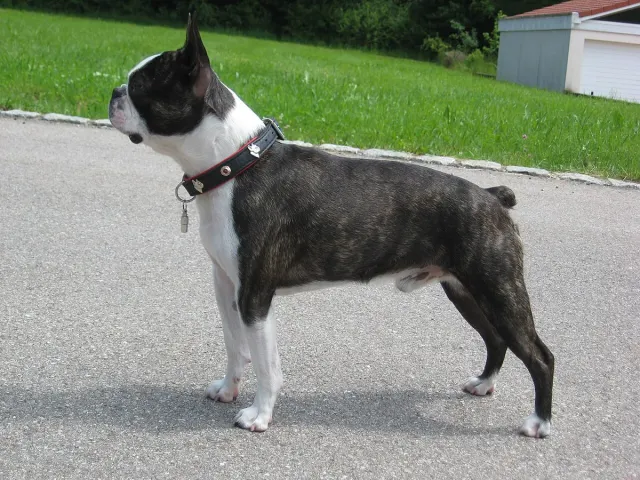
The French Bulldog, Boston Terrier, Pekingese and King Charles Spaniel are other short-faced companions.