An athletic Thai dog with a ridge of hair along its back, the Thai Ridgeback is independent, loyal and perfectly suited to heat.
History and origins
The Thai Ridgeback is an ancient breed from eastern Thailand, where it guarded homes, hunted and accompanied carts. Long isolated, it has stayed close to a primitive type.
Like the Rhodesian Ridgeback, it has a ridge of hair growing in the opposite direction along its back.
Appearance and colours
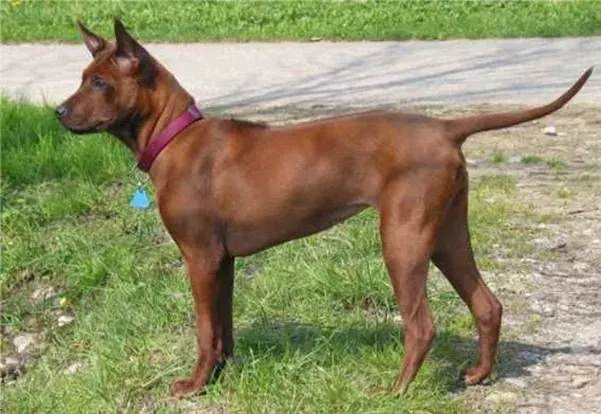
The FCI breed standard describes a medium-sized dog with short hair forming a ridge along the back, slightly longer than tall, with well-developed muscles. The coat is short and smooth; the ridge, formed by hair growing in the opposite direction, may have various shapes but must be symmetrical.
The colour is solid red, black, blue or very light fawn (isabella); a black mask is preferred in reds.
- Height at the withers: 56–61 cm for males, 51–56 cm for females (± 2.5 cm).
Temperament
Independent, watchful and very attached to its family, the Thai Ridgeback is wary of strangers and can be intolerant of other dogs.
Intelligent but stubborn, it needs an experienced owner, early socialisation and patient training.
With children and other pets
The standard describes a tough, active dog with excellent jumping ability and a loyal family dog. It rates 3 out of 5 with children and 2 out of 5 with other dogs in our ratings.
- It is loyal to its family but independent.
- It can jump well: it needs a secure garden.
Training tips
According to the standard, the Thai Ridgeback appears in Thai documents written about 360 years ago; it was used mainly for hunting in eastern Thailand, and also to escort carts and as a watchdog, and poor transport in the region helped it keep its original type. It rates 2 out of 5 for trainability in our ratings.
- Use patient, consistent, reward-based training.
- Socialise it early with people and other dogs.
Health
This is a hardy breed. Puppies should be checked for dermoid sinus (a skin malformation along the spine).
Regular veterinary follow-up is recommended.
This is general information. For any question about your dog's health, consult a veterinarian.
Feeding
Good-quality food matched to its activity suits it.
Avoid excess weight.
Exercise
It needs an hour or more of daily activity, with runs in a secure area.
It jumps and digs, so solid fencing is essential.
It needs a house with a well-fenced garden and experienced owners; it is poorly suited to apartments.
Grooming
Its very short coat needs only a weekly rub with a grooming mitt.
It is clean and has little odour.
Choosing a puppy
The FCI standard says only healthy dogs with typical breed conformation should be used for breeding.
- Ask what health checks the parents have had.
- Meet the mother: she should be confident and calm.
Our guide on how to recognise a responsible breeder explains what to ask.
Similar breeds
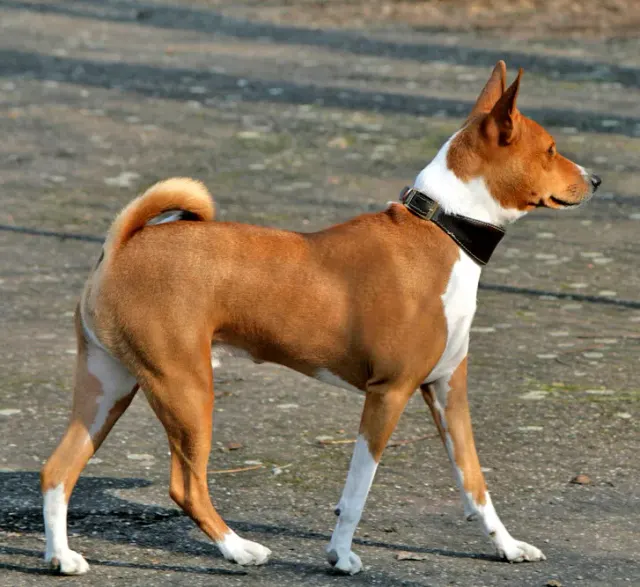
The Rhodesian Ridgeback is the other ridged breed. The Basenji, Korean Jindo and Pharaoh Hound are other primitive-type dogs.