Famous for its 'smile' and white coat, the Samoyed is gentle, sociable and playful, but copes very poorly with heat.
History and origins
The Samoyed is named after the Samoyedic peoples (now the Nenets) of northern Siberia, who used it to herd reindeer, pull sleds and keep warm.
It later took part in several polar expeditions.
Appearance and colours
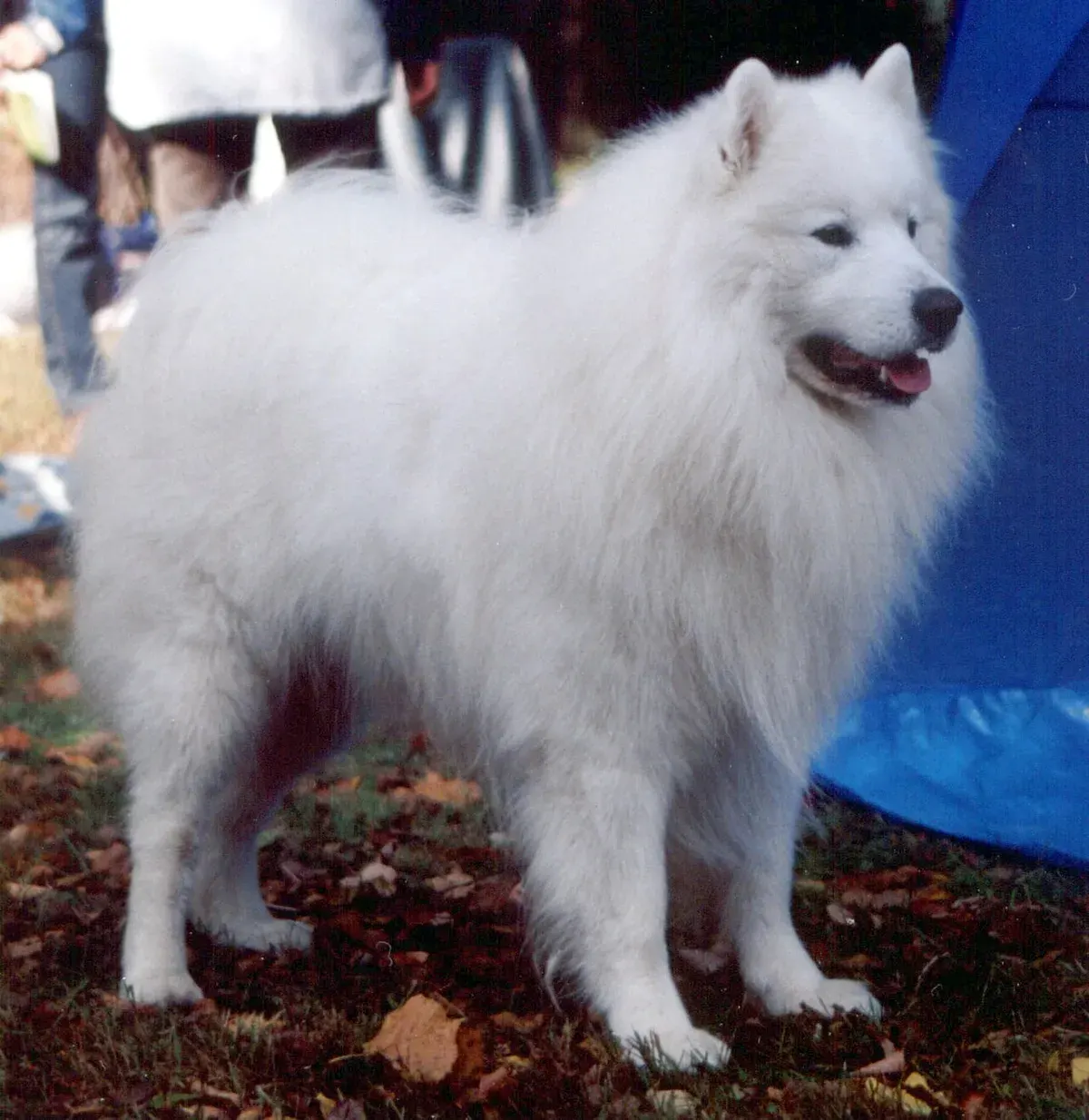
The FCI breed standard describes a medium-sized, elegant white Arctic spitz giving an impression of power, endurance, charm, suppleness, dignity and self-confidence, with the famous "Samoyed smile" formed by the eye shape and the slightly upturned corners of the mouth. It has a profuse, thick polar double coat with a ruff around the neck and shoulders.
The colour is pure white, cream, or white with biscuit markings.
- Ideal height at the withers: 57 cm for males, 53 cm for females (± 3 cm).
Temperament
Friendly, cheerful and very sociable, the Samoyed loves everyone and is no guard dog. It adores company and copes poorly with being alone.
Independent, it can be stubborn, so positive, patient training is needed. It barks and howls readily.
With children and other pets
The standard describes a friendly, open, alert and lively dog with very little hunting instinct, never shy or aggressive, so sociable that it cannot be used as a guard dog. It rates 5 out of 5 with children and 4 out of 5 with other dogs in our ratings.
- It is a sociable family dog that needs company.
- It sheds a great deal (5 out of 5 in our ratings).
Training tips
According to the standard, the name comes from the Samoyed peoples of northern Russia and Siberia, whose white dogs in the north hunted and pulled sledges and lived so close to their owners that they slept in their shelters; the British zoologist Ernest Kilburn Scott brought the first dogs to England after 1889. The Royal Kennel Club notes that the dogs also herded and guarded reindeer. It rates 3 out of 5 for trainability in our ratings.
- Use patient, reward-based training.
- Avoid exercise in the heat: it rates 1 out of 5 for heat tolerance.
Health
Hip dysplasia, some eye diseases, diabetes and an inherited kidney disease should be monitored.
Heatstroke is a major risk in hot countries.
Common health issues in detail
A 2017 genetic study identified a recessive mutation that causes enamel hypoplasia, poorly formed tooth enamel, in Samoyeds; the authors also found that breeders had generally kept good genetic diversity in the breed.
The Royal Kennel Club recommends as best practice for breeding dogs DNA tests for X-linked hereditary nephritis (XLHN), a kidney disease, and X-linked progressive retinal atrophy (XL-PRA), plus hip and elbow scoring and eye testing.
This is general information. For any question about your dog's health, consult a veterinarian.
Feeding
Good-quality food matched to its activity suits it.
Avoid excess weight.
Exercise
It needs one to two hours of daily activity, only during the cool hours in summer: walks, games and light pulling.
It gets bored quickly if left alone.
It needs a cool (often air-conditioned) home, constant shade and water, and no daytime exertion in summer. It is more comfortable in mountain regions. Think carefully about the climate before adopting one.
Grooming
Its thick double coat sheds enormously: brush several times a week, daily during the moult.
Do not shave it: the white coat also protects it from the sun.
Choosing a puppy
Choose a breeder who does the DNA tests, hip and elbow scoring and eye testing recommended by the Royal Kennel Club.
- Ask for the parents' XLHN, XL-PRA, hip, elbow and eye results.
- Look at the parents' teeth.
- Meet the mother: she should be friendly and lively.
Our guide on how to recognise a responsible breeder explains what to ask.
Similar breeds
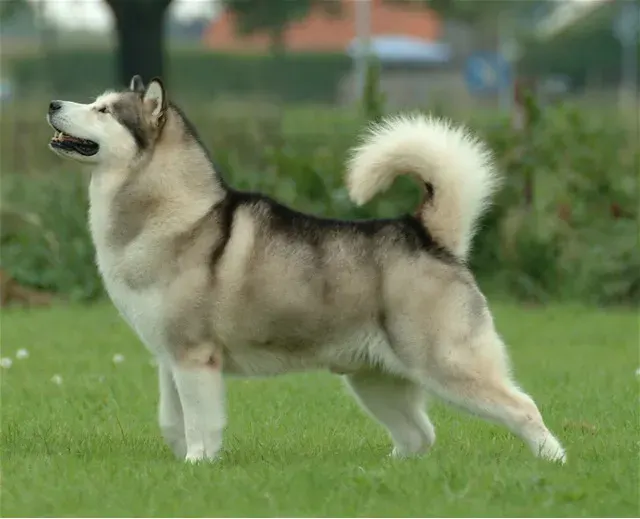
The Siberian Husky and Alaskan Malamute are other Arctic sled dogs. The Japanese Spitz and German Spitz are other white or spitz-type dogs.