Guard dogs and livestock guardians: what owners must know
How livestock guardian dogs and protection breeds differ, how working guardians are raised, the problems to expect, and what to consider before choosing a guarding breed.
8 min read
“Guard dog” can mean two very different things: a large dog that lives day and night with a flock of sheep or goats and keeps predators away, or a dog that protects its family and home. Both kinds of breed are impressive, loyal and capable, and both can be a real challenge for an owner who is not prepared. This guide explains how they differ, how working guardians are raised, the problems owners commonly meet, and what to think about before bringing a guarding breed home.
Two different jobs
- Livestock guardian dogs live with the animals they protect. A US Department of Agriculture bulletin describes a guardian as a dog that stays with the sheep without harming them and drives predators away, because it has been raised with them since puppyhood. It is not a herding dog: herding dogs move livestock on a handler’s signals, while guardians are discouraged from chasing or biting the flock and act independently of people.
- Protection breeds were selected to guard property and people and to work closely with a handler. They tend to be more responsive to training than livestock guardians.
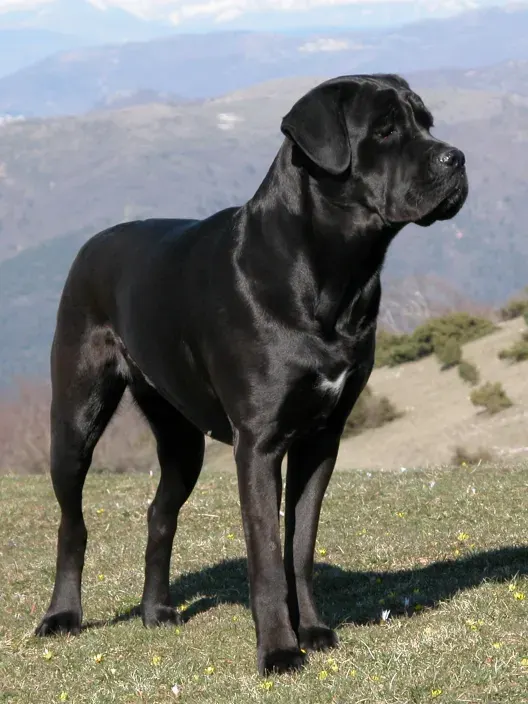
Many breeds sit between the two. The FCI standard of the Cane Corso, for example, describes it as a guardian of property, family and livestock.
The livestock guardian breeds
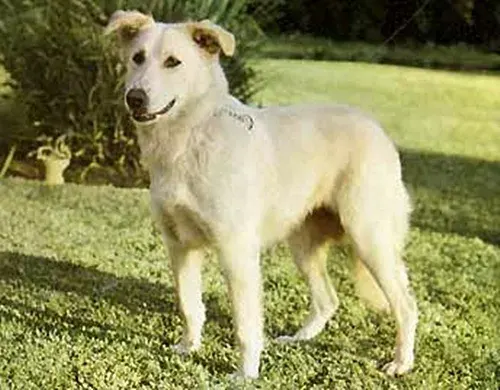
The USDA bulletin traces the use of livestock guardian dogs back many centuries BC in Europe and Asia, and the FCI standard of the Aidi describes it as present in the mountains of North Africa since time immemorial. Among the breeds on Caninpedia:
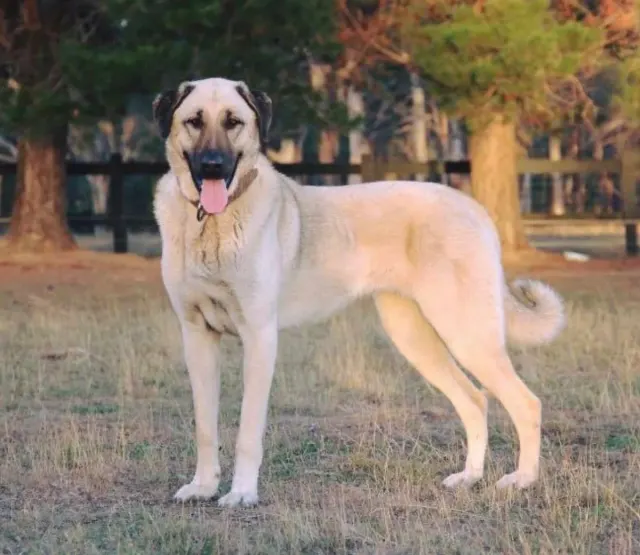
- the Kangal Shepherd Dog, described by its FCI standard as steady and bold without aggression, loyal to its owners but wary of strangers when on duty;
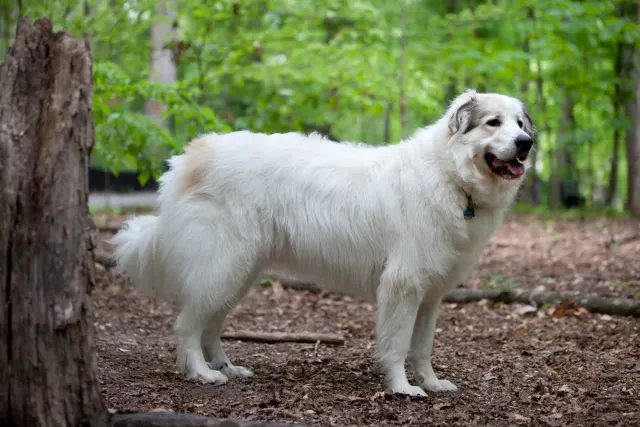
- the Pyrenean Mountain Dog, whose standard notes a propensity for independence and initiative that demands a certain authority from its owner;
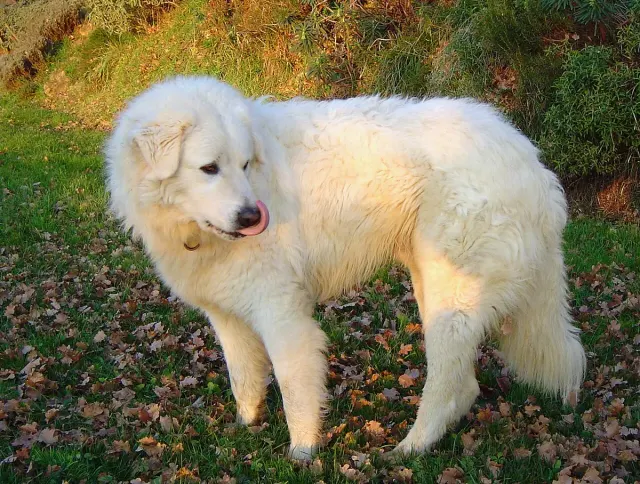
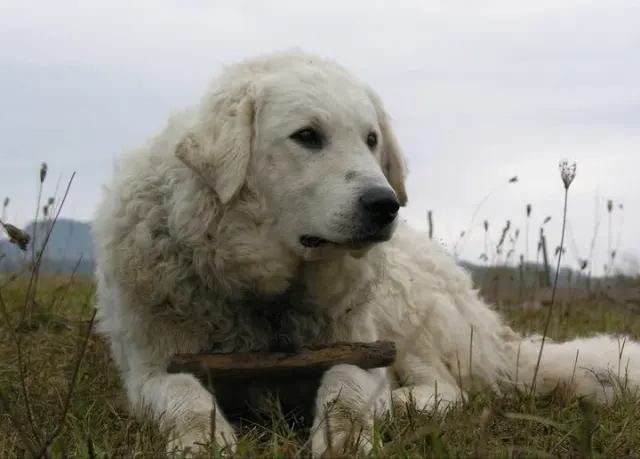
- the Maremma Sheepdog, the Kuvasz and the Komondor; the Komondor’s standard describes a suspicious nature and a dog that regards its territory as its own;
- the Central Asian Shepherd Dog, Caucasian Shepherd Dog, Tibetan Mastiff and Spanish Mastiff;
- the Aidi, or Atlas Mountain Dog of North Africa, used to guard its owner’s flocks and belongings.
Experts point out that individuals vary as much as breeds do. A University of California fact sheet notes that current research suggests as much variation between individual dogs as between the common guardian breeds, and that working parents matter more than coat or colour.
How a working guardian is raised
The behaviour of an adult guardian comes from both its genes and how it was raised, and the first months are the most important. Extension services that work with farmers advise:
- Start from working parents. Buy from a breeder who knows the parents’ behaviour, ideally with puppies raised around the same kind of livestock. The University of California warns against puppies crossed with non-guardian breeds.
- Bond the puppy to livestock early. Texas A&M AgriLife recommends starting at about eight weeks old. Puppies older than about 16 weeks often do not form permanent bonds to livestock, which can lead to roaming and to a dog that guards the whole farm rather than the flock.
- Raise it with the animals, in a secure pen with livestock, then move it to larger areas as it grows, so that it bonds to the species rather than to a few individual animals.
- Teach a few essentials: its name, coming when called, walking on a lead, being tied up calmly and riding in a vehicle. These make vet visits and moves possible.
- Socialise it with people too. Handling the feet, mouth and ears, and rewarding calm behaviour, keep the dog manageable.
- Correct problem behaviour immediately. A young guardian should not stalk, chase or bite livestock. Guardian breeds have been selected against prey drive, but some young dogs still show it.
Patience is essential. The USDA bulletin notes that guardian breeds mature slowly, some reaching behavioural maturity only at 18 to 30 months, and that a young dog will almost certainly make mistakes. Texas A&M adds that many dogs go through a phase of chasing and biting between about 8 and 18 months. Above all, the USDA warns that no amount of training and early exposure to livestock will guarantee that a dog becomes a good guardian: instinct must be there.
Do livestock guardians work?
They can, but they are not magic. The USDA bulletin stresses that a guardian rarely solves predator problems at once and works best as one tool in the overall management of a farm. Research gives a mixed picture:
- In a study that tracked free-ranging Maremma Sheepdogs with GPS collars, the dogs spent about 90% of their time in the paddocks where their sheep grazed; most trips away happened at night. The authors noted that free-ranging guardians need large properties.
- In a case study of two Maremmas guarding free-range hens, the dogs spent most of the night close to the farmhouse rather than near the chickens, showing a stronger bond with people than with the birds. In a survey of 59 poultry producers in the same study, about half (52%) still had predation problems despite their dogs.
- A review of methods for reducing livestock losses to large carnivores found limited rigorous evidence for most of them, guardian dogs included.
Common problems with guardian breeds
- Roaming. Guardians patrol, and some extend their territory well beyond the owner’s land. The USDA bulletin describes roaming as the most common problem when several dogs work together, and recommends starting with a single puppy, early training and neutering to help reduce it.
- Chasing wildlife. Some young guardians chase deer, rabbits or other wildlife, which takes them away from the flock; in many places, harassing wildlife is against the law.
- Barking. Guardians bark at anything unusual, often at night, which is part of their job but can trouble neighbours.
- Strangers. A guardian may confront people who enter its territory. The USDA bulletin says it is the owner’s responsibility to protect people who may be at risk: warn neighbours and guests and, where needed, put up signs.
- Other dogs. In a survey of owners of more than 700 guardian dogs reported in the USDA bulletin, most dogs were aggressive towards predators and other dogs.
- Independence. The USDA bulletin describes guardian breeds as relatively hard-headed and unresponsive to verbal commands, because they were selected to act on their own.
Guardian breeds as family pets
Many people are drawn to the calm, noble look of a livestock guardian. Some live happily as companions, but their instincts do not disappear in a house with a garden. Before choosing one, consider that it will:
- grow very large and strong, and mature slowly;
- want to patrol its territory and guard it from strangers and visiting dogs;
- need very secure, high fencing, and rarely be reliable off lead;
- bark, especially at night;
- think for itself rather than wait for instructions.
Every breed profile on Caninpedia gives size, trainability and apartment suitability. Most livestock guardian breeds rate low for trainability and are not suited to apartments; see our guide to choosing your first dog.
Protection breeds
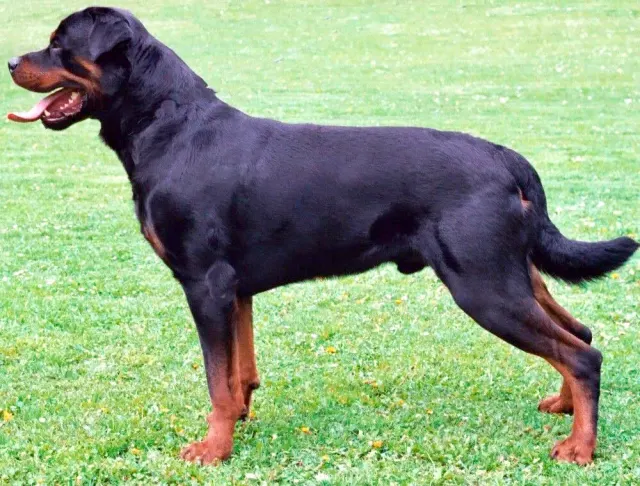
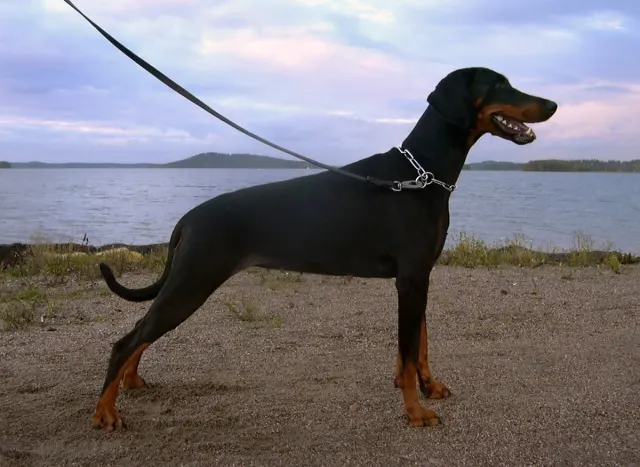
Breeds such as the Rottweiler, Dobermann, German Shepherd, Belgian Malinois and Giant Schnauzer were developed to work with people. Their FCI standards describe very different temperaments from the stereotype: the Rottweiler as good-natured, placid, devoted and eager to work; the Dobermann as friendly, calm and very devoted to its family, with a medium threshold of irritation. These dogs are intelligent and trainable, but they need:
- Plenty of exercise and mental work every day; see our guide to exercise needs by breed type.
- Reward-based training from the start, with a qualified trainer if needed.
- Extensive socialisation with people, children, other dogs and everyday situations, so they learn what is normal and what is not.
- Never encouraging aggression. Protection work is a specialist discipline; a family dog does not need it.
Why socialisation matters so much
The RSPCA, a UK animal welfare charity, explains that guarding breeds have been selected to show aggression when threatened, but the level of threat they respond to is learned through experience. A puppy from a very defensive guarding breed raised well may show aggression only in extreme circumstances, while a puppy from the least defensive breed raised badly could become aggressive in many situations. The RSPCA also notes that these breeds are not necessarily more likely to be aggressive, but because of their size and strength, any bite is likely to have more serious consequences. Our guide to dogs and children explains the warning signs every family should know.
Some regions restrict ownership of certain guarding breeds; check your local regulations before choosing one.
Before you choose a guarding breed
- I understand whether I want a livestock guardian or a companion, and which breeds suit that role.
- I have secure, high fencing and space for a large dog to patrol.
- My neighbours and visitors will be safe, and I can manage barking.
- I can give years of patient training and socialisation, starting on day one.
- I have found a responsible breeder who knows the parents’ temperament and health.
- I have checked my local regulations and insurance.
- I know which trainer or behaviourist I will call if problems appear.
Sources
Studies, veterinary and welfare organisations and breed standards this guide is based on.
- Aggression in dogs — RSPCA
- Livestock Guarding Dogs: Protecting Sheep from Predators (Agriculture Information Bulletin No. 588, revised 1996) — US Department of Agriculture, via AgEcon Search
- LGD bonding and early training procedures (ANSC-PU-151) — Texas A&M AgriLife
- Selecting a livestock guardian dog puppy (Livestock Protection Tools Fact Sheet No. 5) — University of California Cooperative Extension
- Where do livestock guardian dogs go? Movement patterns of free-ranging Maremma sheepdogs (van Bommel & Johnson, PLoS One, 2014) — PubMed Central (US National Library of Medicine)
- Chicken's best friend? Livestock guardian dog bonding with free-ranging chickens (McKellar et al., Translational Animal Science, 2023) — PubMed Central (US National Library of Medicine)
- Limited evidence on the effectiveness of interventions to reduce livestock predation by large carnivores (Eklund et al., Scientific Reports, 2017) — PubMed Central (US National Library of Medicine)
- Kangal Shepherd Dog: FCI breed standard No. 331 — Fédération Cynologique Internationale (FCI)
- Pyrenean Mountain Dog: FCI breed standard No. 137 — Fédération Cynologique Internationale (FCI)
- Komondor: FCI breed standard No. 53 — Fédération Cynologique Internationale (FCI)
- Atlas Mountain Dog (Aidi): FCI breed standard No. 247 — Fédération Cynologique Internationale (FCI)
- Cane Corso Italiano: FCI breed standard No. 343 — Fédération Cynologique Internationale (FCI)
- Rottweiler: FCI breed standard No. 147 — Fédération Cynologique Internationale (FCI)
- Dobermann: FCI breed standard No. 143 — Fédération Cynologique Internationale (FCI)