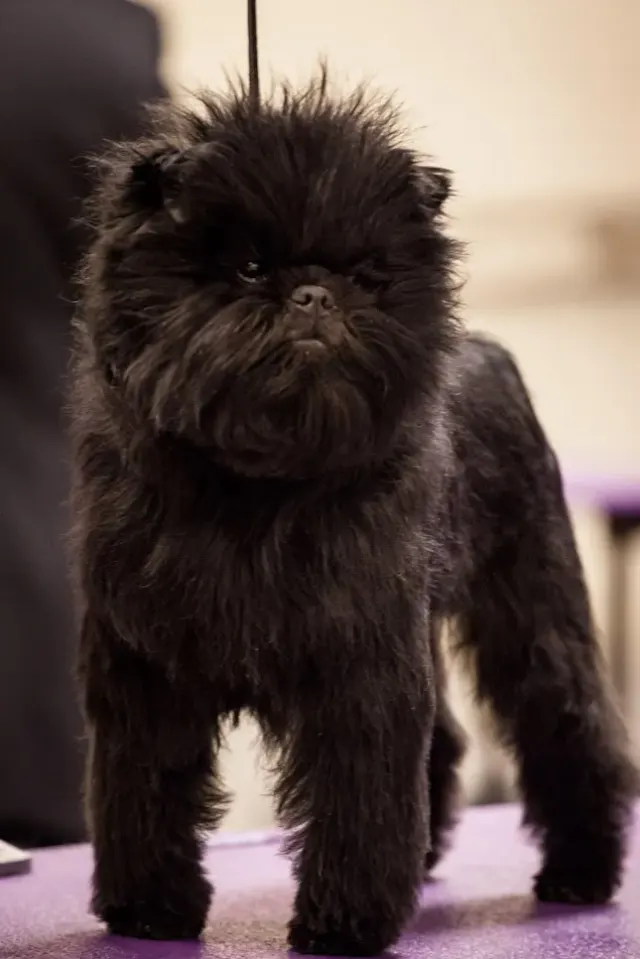
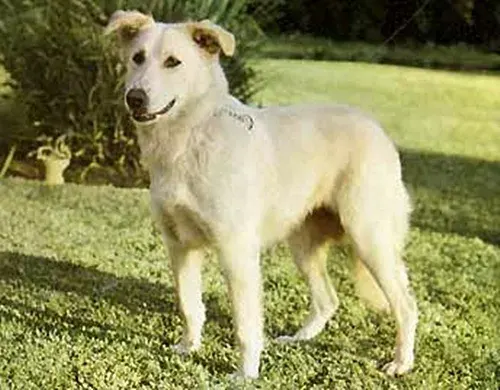
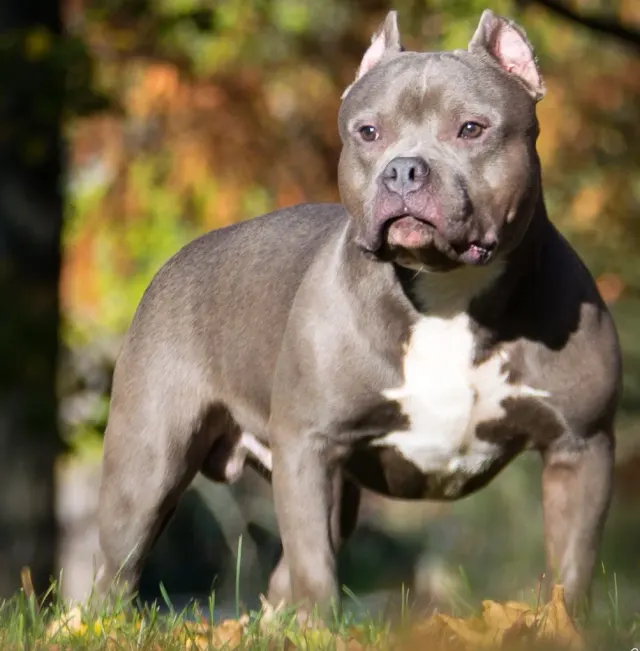
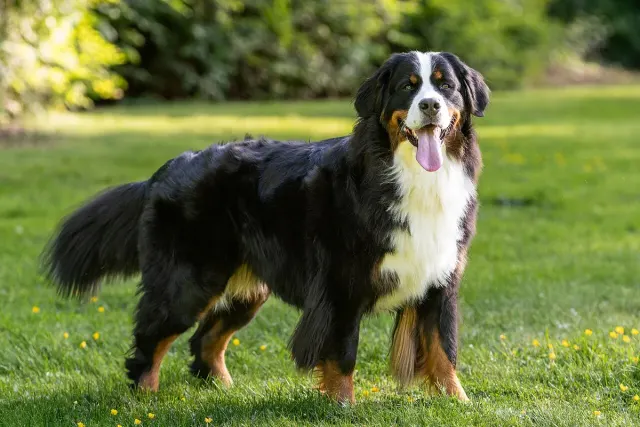
Big, powerful and very energetic, the Giant Schnauzer is an intelligent, protective working dog for active, experienced owners.
History and origins
The Giant Schnauzer comes from southern Germany, where it drove cattle to market and guarded breweries and butcher's shops. It was later used as a police and military dog.
It is the largest of the three Schnauzer breeds.
Appearance and colours
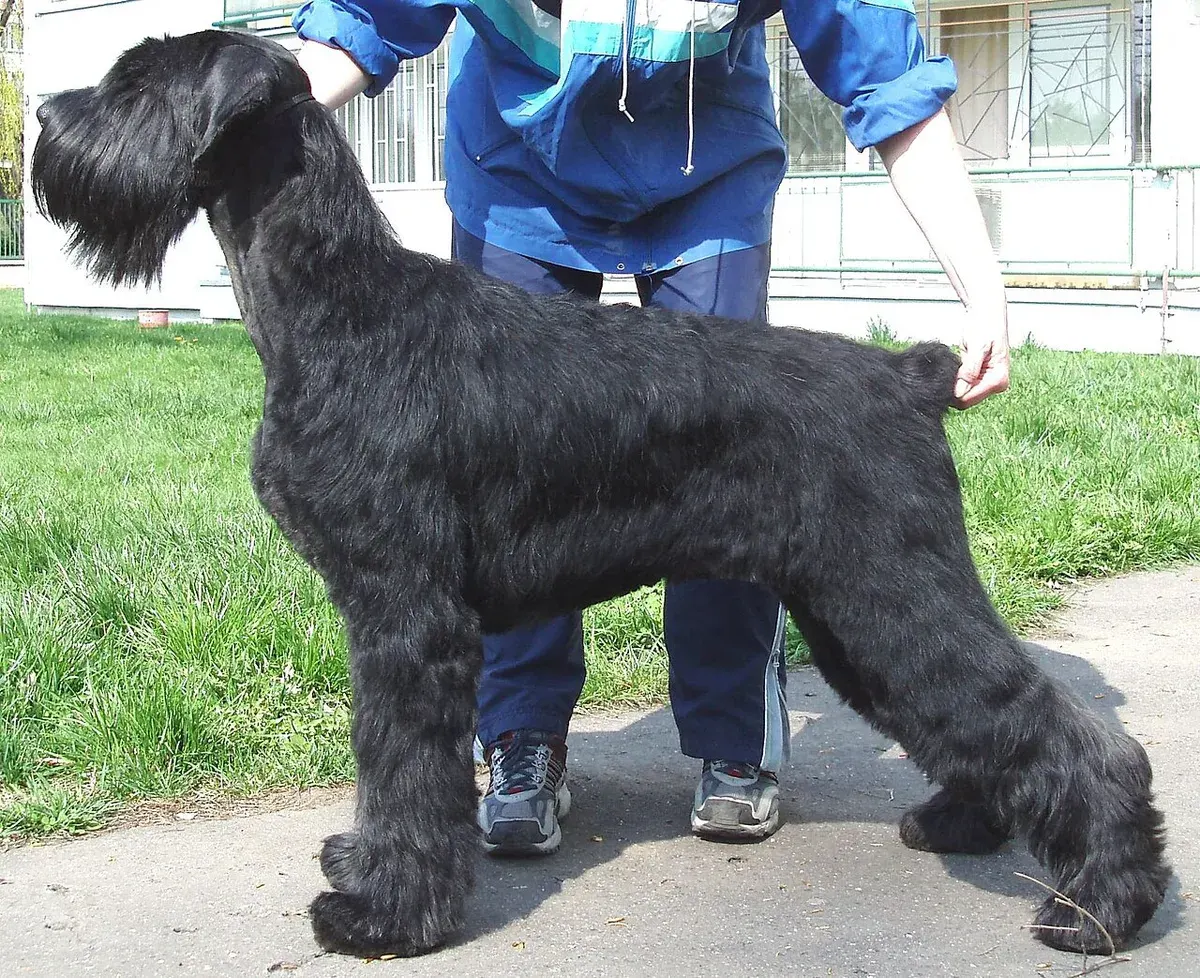
The FCI breed standard describes a large, powerful dog, stocky rather than slim, an enlarged and powerful image of the Schnauzer, almost square in build. The coat is wiry, harsh and dense, with a dense undercoat, a not-too-soft beard and bushy eyebrows.
Colours are pure black, or pepper and salt in shades from dark iron grey to silver grey.
- Height at the withers: 60–70 cm.
- Weight: 35–47 kg.
Temperament
Loyal, watchful and very energetic, the Giant Schnauzer is a natural guardian, reserved with strangers. It is affectionate with its family but can be dominant.
It needs firm, consistent training, early socialisation and plenty to do.
With children and other pets
The standard describes a good-natured, even-tempered dog with incorruptible loyalty to its owner, and calls it an imperturbable dog, prepared for defence. It rates 3 out of 5 with children and 2 out of 5 with other dogs in our ratings.
- It suits experienced, active owners.
- The coat needs regular grooming (4 out of 5 in our ratings).
Training tips
According to the standard, the Giant Schnauzer was used in southern Germany to drive cattle; breeders recognised its working ability around the turn of the 20th century, and it was officially recognised as a working dog in 1925. The Royal Kennel Club notes that it was once known as the Munich Schnauzer. It rates 4 out of 5 for trainability in our ratings.
- It needs daily mental work as well as exercise.
- It rates 5 out of 5 for energy.
Health
Hip dysplasia, hypothyroidism and certain toe cancers (in black dogs) have been reported.
Regular veterinary follow-up and screened breeding dogs are recommended.
Common health issues in detail
The Royal Kennel Club recommends as a minimum for breeding dogs hip and elbow scoring and a DNA test for progressive retinal atrophy (prcd-PRA), and as best practice DNA tests for dilated cardiomyopathy (DCM), PRA5 and hyperuricosuria (HUU), and eye testing.
In a UK study of giant breeds under veterinary care, the median age at death of Giant Schnauzers was 10.7 years, based on 22 deaths.
This is general information. For any question about your dog's health, consult a veterinarian.
Feeding
Good-quality food for large, active dogs in two meals suits it.
Avoid exercise straight after meals.
Exercise
It needs at least two hours of daily activity: running, obedience, tracking and working sports.
Without enough exercise it becomes difficult.
A shorter maintenance clip helps. It needs a house with a garden and very committed owners.
Grooming
Its wiry coat needs weekly brushing and regular stripping or clipping at the groomer. It sheds little.
Clean its beard after meals.
Choosing a puppy
Choose a breeder who does the hip, elbow, eye and DNA tests recommended by the Royal Kennel Club.
- Ask for the parents' hip and elbow scores and DNA results.
- Meet the mother: she should be confident and steady.
- Ask how the puppies are socialised.
Our guide on how to recognise a responsible breeder explains what to ask.
Similar breeds
The Standard Schnauzer is its medium-sized relative. The Black Russian Terrier, Bouvier des Flandres and Dobermann are other large working dogs.