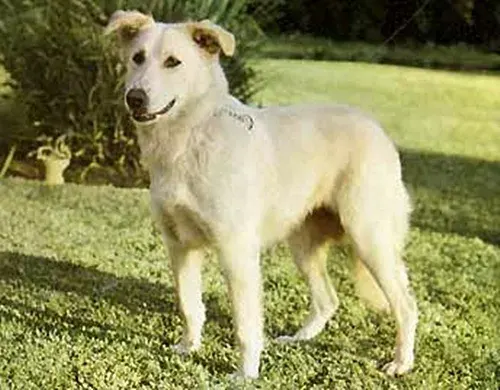
A large livestock guardian from Turkey, the Kangal is calm, independent and remarkably loyal to its family.
History and origins
The Kangal is a livestock guardian dog from the Sivas region of central Turkey, where it has protected sheep from wolves and jackals for centuries. It is regarded as a national breed in Turkey.
The Fédération Cynologique Internationale recognises it as the Kangal Shepherd Dog.
Appearance and colours
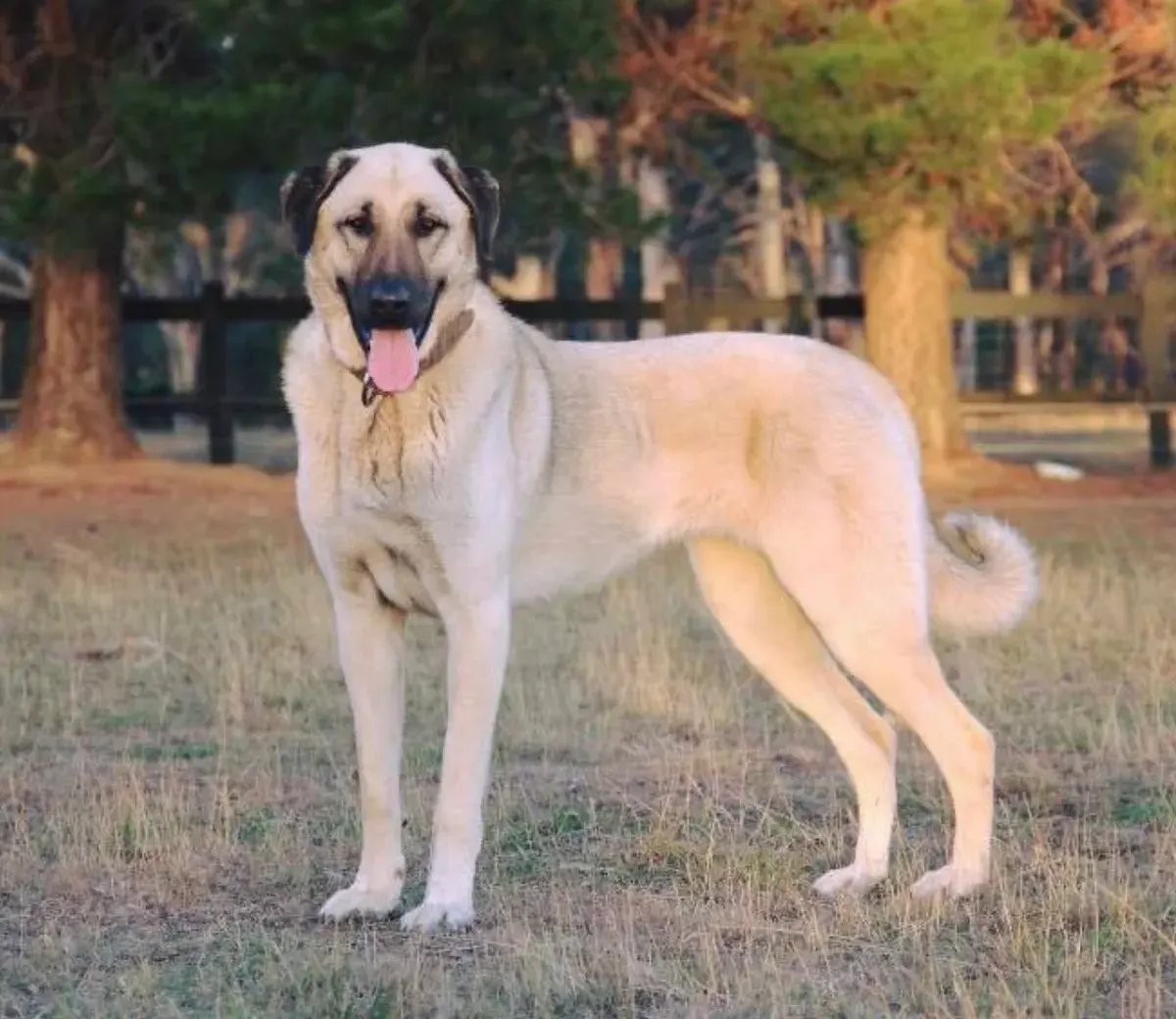
The FCI breed standard describes a large, upstanding, powerfully built livestock guardian with a dark mask, capable of great speed; a robust, rectangular molosser with a thick, medium-length coat. The coat is 3–7 cm long, with a thick, harsh outer coat and a dense undercoat.
The whole body should be one colour, from fawn to wolf sable, always with a black mask and dark ears; a little white on the chest and feet is allowed.
- Height at the withers: 72–78 cm for males, 65–73 cm for females (± 2 cm).
- Weight: 48–60 kg for males, 40–50 kg for females.
Temperament
Calm, observant and independent, the Kangal makes its own decisions to protect its territory and family. It is gentle with household members but wary of strangers and unfamiliar dogs.
It is not an obedience dog: it needs early socialisation, a calm, experienced owner and clear structure.
With children and other pets
The standard describes a steady, bold dog without aggression, naturally independent, very intelligent and tractable, proud and confident; loyal and affectionate to its owners but wary of strangers when on duty. It rates 3 out of 5 with children and 2 out of 5 with other dogs in our ratings.
- It is a working guardian that suits experienced owners with space.
- It needs a securely fenced area.
Training tips
According to the standard, the Kangal is Turkey's highly praised national dog; Turkish peoples migrating from Central Asia, who lived from nomadic herding, probably brought their livestock guardians with them. The standard describes a hard-working sheep guardian able to endure extremes of heat and cold. The Royal Kennel Club notes that it lives outdoors in all weathers as a flock guard. It rates 2 out of 5 for trainability in our ratings.
- Use calm, consistent training and early socialisation.
- It is an independent thinker, as befits a flock guardian.
Health
This is a hardy breed. As with other giant dogs, hip dysplasia, eyelid problems and bloat can occur.
Puppy growth should be slow and supervised by a veterinarian.
This is general information. For any question about your dog's health, consult a veterinarian.
Feeding
Despite its size, it often eats less than you might expect for its weight. Good-quality large-breed food in two meals suits it.
Avoid excess weight during growth.
Exercise
It does not need intense sport, but daily walks and above all a large area to watch over. It is often more active in the evening and at night.
Fencing must be high and solid: it covers long distances while patrolling.
It is also comfortable in the cold of the high plateaus. It is an excellent guardian for farms, large plots and flocks, but completely unsuited to apartment life. Its size and protective instinct call for responsible owners and solid fencing.
Grooming
Its short, dense coat with undercoat needs weekly brushing, more often during the spring and autumn moults.
Check ears regularly and look for ticks if it lives in the countryside.
Choosing a puppy
The FCI standard says only healthy dogs with typical breed conformation should be used for breeding.
- Ask what health checks the parents have had.
- Meet the mother: she should be calm and steady, not aggressive.
- Ask whether the parents work with livestock or live as companions.
Our guide on how to recognise a responsible breeder explains what to ask.
Similar breeds
The Central Asian Shepherd Dog and Caucasian Shepherd Dog are other large flock guardians. The Pyrenean Mountain Dog and Maremma Sheepdog are white livestock guardians.