A large white livestock guardian, the Maremma Sheepdog is calm, independent and deeply loyal to whatever it protects.
History and origins
The Maremma and Abruzzese Sheepdog is a livestock guardian from central Italy. It accompanied shepherds on seasonal migrations between the Abruzzo mountains and the Maremma plains.
Its white coat helped it blend in with the sheep and be told apart from wolves.
Appearance and colours
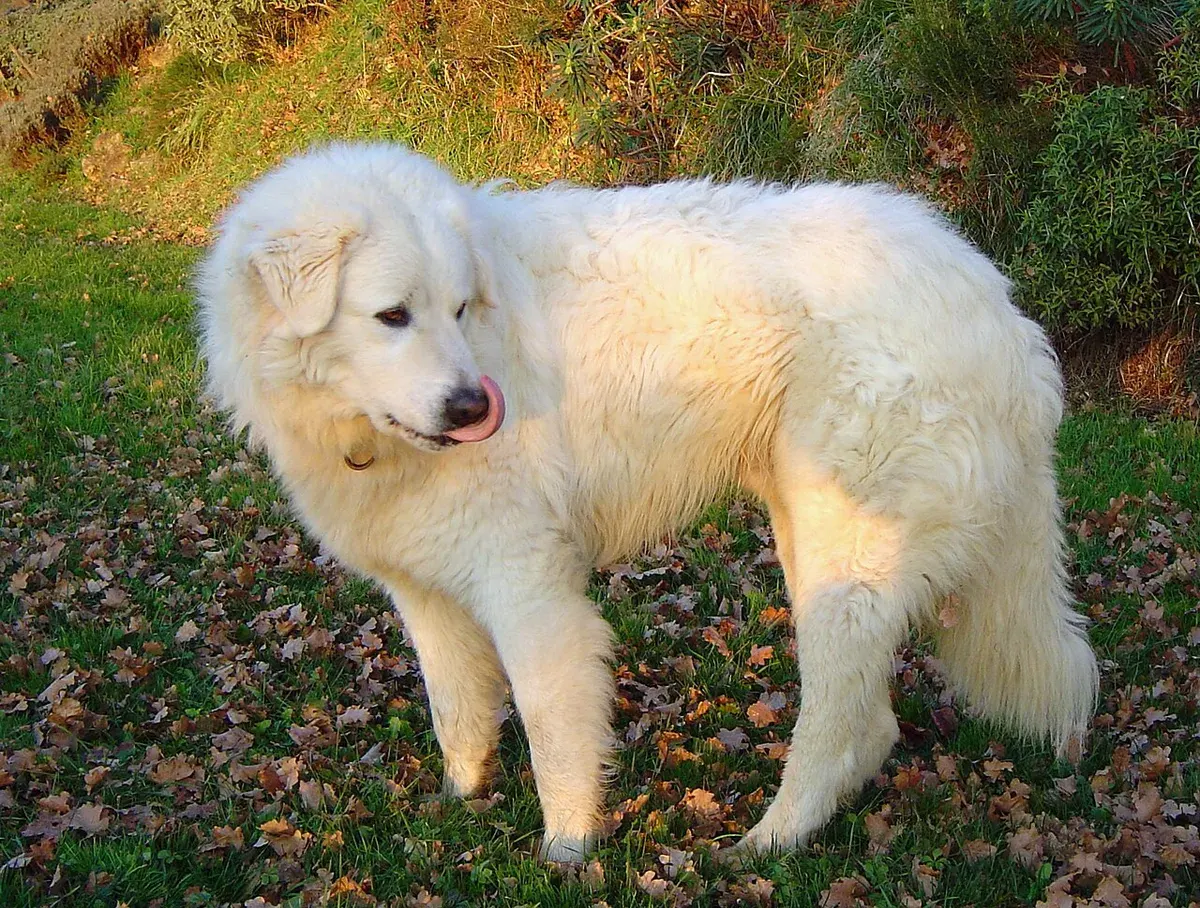
The FCI breed standard describes a big, strongly built dog of rustic yet majestic appearance, longer than tall, with a large, flat, conical head reminiscent of a polar bear's. The coat is long, rather harsh, close to horsehair, lying flat (a slight wave is tolerated), with a large collar around the neck; the undercoat is abundant only in winter.
The colour is solid white; shades of ivory, pale orange or lemon are tolerated within limits.
- Height at the withers: 67–73.5 cm for males, 62–70 cm for females.
- Weight: 40–52 kg for males, 35–45 kg for females.
Temperament
Calm, thoughtful and independent, the Maremma is not an obedience dog: it makes its own decisions to protect its flock or family. It is wary of strangers and barks at night to deter intruders.
It needs an experienced, patient owner and early socialisation.
With children and other pets
The standard describes a dog whose main function is to guard and defend flocks and property, which it does with perception and with devotion to its owner and household. It rates 3 out of 5 with children and 3 out of 5 with other dogs in our ratings.
- It is a working guardian that suits experienced owners with space.
- It sheds a lot (4 out of 5 in our ratings).
Training tips
According to the standard, this ancient breed of flock guardians descends from shepherd dogs still used in the Abruzzo and those once found in the Tuscan Maremma and Lazio; since about 1860, the seasonal movement of flocks between these regions led to a natural crossing of the two. The Royal Kennel Club notes that white sheepdogs of northern Italy were mentioned by the Roman writer Varro. It rates 2 out of 5 for trainability in our ratings.
- Use calm, consistent training and early socialisation.
- It is an independent guardian by nature.
Health
This is a hardy breed. Hip dysplasia and bloat can occur, as in other large dogs.
Regular veterinary follow-up is recommended.
Common health issues in detail
The Royal Kennel Club recommends hip scoring as best practice for breeding dogs and notes that the breed can be affected by conformation-related problems.
We found no large population study of health in the Maremma Sheepdog.
This is general information. For any question about your dog's health, consult a veterinarian.
Feeding
It often eats less than you would expect for its size. Good-quality large-breed food in two meals suits it.
Puppies should grow slowly.
Exercise
It does not need intense exercise, but a large area to watch over and daily walks.
Provide solid fencing: it likes to patrol.
Its white coat reflects some of the sun. It is a natural flock guardian, ideal in rural areas, but unsuited to apartment life and city noise.
Grooming
Its thick white coat is fairly self-cleaning; weekly brushing is enough, more during the moult.
Do not shave it: the coat insulates it from the sun.
Choosing a puppy
Choose a breeder who hip-scores the parents.
- Ask for the parents' hip scores.
- Meet the mother: she should be calm and confident.
- Ask whether the parents work with livestock or live as companions.
Our guide on how to recognise a responsible breeder explains what to ask.
Similar breeds
The Pyrenean Mountain Dog and Kuvasz are other white flock guardians. The Kangal Shepherd Dog and Komondor are other livestock guardians.