Travelling with your dog: car, plane and hot weather
How to make car journeys safe and calm, prevent car sickness, protect your dog from heat on the road, prepare for travel abroad, and when to leave your dog at home.
7 min read
Whether it is a trip to the vet, a weekend away or a move abroad, most dogs travel at some point. A dog that is used to travelling, safely restrained and kept cool will cope much better than one that is not. This guide covers car journeys, car sickness, heat, travel abroad and the alternatives to taking your dog with you.
Car travel: restrain your dog every time
The PDSA, a veterinary charity, gives three reasons to restrain a dog in the car:
- Its safety: a crate or harness helps prevent serious injury in an accident.
- Your safety: a loose dog can seriously injure people in the car in a crash.
- Preventing accidents: a loose dog can distract the driver or get in the way of the controls.
In some countries, including the UK, restraining animals in a car is also expected by law. The main options, according to Dogs Trust and the PDSA:
- A crate placed securely in the boot or on the back seat.
- A boot guard that keeps the dog in the boot, away from passengers; the PDSA notes that a guard protects the passengers but not the dog.
- A car harness of the right size, correctly fitted and attached to the seat belt fixing on the back seat.
The PDSA points out that, unlike child seats, pet restraints do not have to be crash-tested, so look for products that have been independently tested. Do not let your dog hang its head out of the window, where it could be hit by objects or fall.
Teaching your dog to enjoy the car
Dogs that travel from a young age are much more likely to be relaxed passengers, so introduce the car as part of your puppy’s socialisation. For any dog, Dogs Trust and the PDSA recommend small, positive steps:
- Reward calm behaviour near the car, even just walking around it.
- Invite your dog in with the doors open and the engine off, and reward it. A blanket that smells of home can reassure it.
- Sit inside together with a long-lasting chew, then close the doors or start the engine.
- Get your dog used to its restraint.
- Take short, slow journeys, a minute or two at first, driving smoothly, then build up a few minutes at a time.
- Teach calm entry and exit: ask your dog to sit while you open the door, and let it out only when invited. Jumping in and out excitedly risks injury.
If your dog is frightened of the car, Dogs Trust advises never forcing it to travel. Avoid journeys where possible and ask an experienced behaviourist for help.
Car sickness
Car sickness is common in puppies but can affect older dogs too. The PDSA explains that it is thought to come from motion affecting the balance centre of the brain, combined with anxiety, and that it tends to get worse if not managed. Besides vomiting, signs include drooling, panting, swallowing a lot, lip licking and retching, and some dogs become afraid of the car, barking, whimpering, shaking or refusing to get in.
- Do not feed just before a journey; give time to digest, or feed afterwards.
- Restart travel training with very short journeys, moving on only when your dog is relaxed at each step.
- Keep the car cool and give your dog a non-slip, comfortable place.
- Ask your vet about licensed anti-sickness medicines for severe cases. The PDSA notes that human travel-sickness medicines are often ineffective and can have side effects, and that there is no evidence that herbal remedies such as ginger work.
Heat: the biggest danger on the road
Never leave a dog alone in a parked car, at any time of year. The PDSA warns that on a 22 °C day, the temperature inside a car can reach 47 °C within an hour, even parked in the shade with the windows open, and that a body temperature above 41 °C can be fatal for a dog. If you cannot take your dog out of the car with you, leave it at home.
When travelling in warm weather, the PDSA recommends:
- Travel early in the morning or late in the evening.
- Check the temperature where your dog travels: the back seat and boot can get much hotter than the front, especially in a crate.
- Use air conditioning or open windows, aim the fans towards the back, and remove the parcel shelf.
- Offer water regularly, for example from a non-spill bowl.
- Stop regularly, and stop at once if your dog pants heavily or looks hot.
- Avoid traffic jams and long waits in the car.
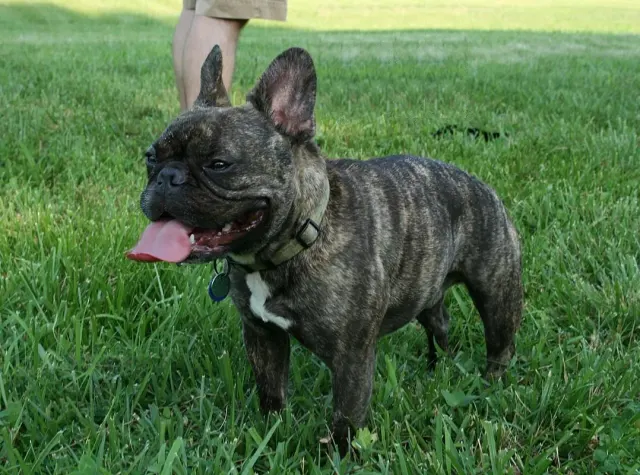
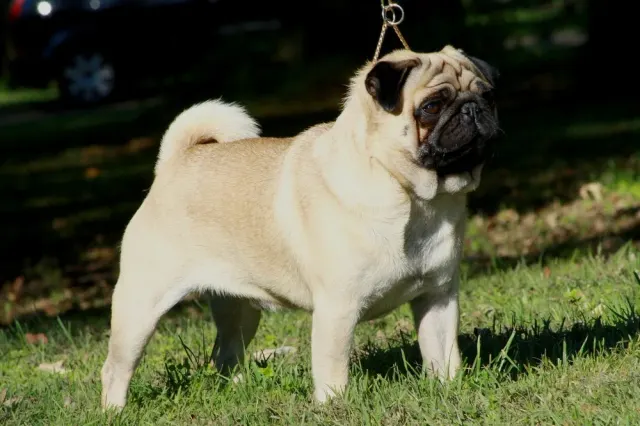
Flat-faced breeds such as the French Bulldog and Pug are at particular risk: a large UK veterinary study found that flat-faced dogs had about twice the odds of heatstroke of dogs with a medium-length muzzle. Read our guide to dogs in hot climates and heatstroke to recognise the signs and give first aid.
Long journeys
- Plan breaks for a walk, a drink and a toilet stop.
- Pack food, water, bowls, poo bags, a towel, a familiar blanket and any medication.
- Make sure your dog wears a collar with an identification tag and, where required, is microchipped with your details up to date.
- Bring a copy of your dog’s vaccination record.
Travelling abroad
Dogs Trust advises thinking carefully before taking a dog abroad: your dog may meet diseases it is not exposed to at home, and your vet can reduce but not remove the risk. If you go:
- Start months ahead. Some requirements, such as blood tests or waiting periods after vaccination, take time. Contact your vet early.
- Check the rules of each country, including the one you return to. Requirements commonly include a microchip, a rabies vaccination given a set time before travel, an official health certificate and, for some destinations, a tapeworm treatment. Some countries restrict certain breeds.
- Protect against local parasites: flea and tick treatment, and repellents against biting flies and mosquitoes where advised. Our guide to vaccinations and parasite prevention explains heartworm and other risks.
- Check where dogs are allowed, for example on beaches, and plan for the climate.
- Check your insurance covers travel.
Flying and ferries
Dogs Trust does not recommend taking a dog on a plane, and strongly discourages it for short trips. If air travel cannot be avoided, check the airline’s and the destination’s rules well in advance. Where a sea or land route is possible, it is usually a better choice, but check whether dogs must stay in the vehicle: Dogs Trust advises never leaving a dog alone in a car, which can make some ferry crossings unsuitable.
When your dog should stay at home
Many dogs are happier in a familiar place than on a busy trip. The PDSA lists the options: a friend or family member, a professional pet sitter in your home, “home from home” boarding with a carer, or a reputable boarding kennel. Whatever you choose:
- Visit in person and ask your vet or friends for recommendations.
- Book early for busy holiday periods.
- Make sure vaccinations are up to date, as good kennels require them.
- Leave enough of your dog’s usual food, any medication with written instructions, your contact details and your vet’s.
- Pack a blanket that smells of home and a favourite toy.
A dog that is used to short absences copes better with being cared for by others; see our guide to leaving your dog alone.
Sources
Studies, veterinary and welfare organisations and breed standards this guide is based on.
- Safe car travel for pets — PDSA (veterinary charity)
- Car sickness and motion sickness in dogs — PDSA (veterinary charity)
- Dogs die in hot cars (and on hot walks) — PDSA (veterinary charity)
- Train your dog to travel in the car — Dogs Trust
- A guide to dog-friendly holidays — Dogs Trust
- Pet boarding, kennels, and holiday care — PDSA (veterinary charity)
- Incidence and risk factors for heat-related illness (heatstroke) in UK dogs under primary veterinary care in 2016 (Hall, Carter & O'Neill, Scientific Reports, 2020) — Scientific Reports (Nature Portfolio)