Often considered the most trainable dog of all, the Border Collie is a tireless herding dog that needs a real job.
History and origins
The Border Collie comes from the border region between Scotland and England, where it was bred for centuries for its ability to gather sheep rather than for its looks.
It remains the most widely used herding dog in the world and shines in every dog sport.
Appearance and colours
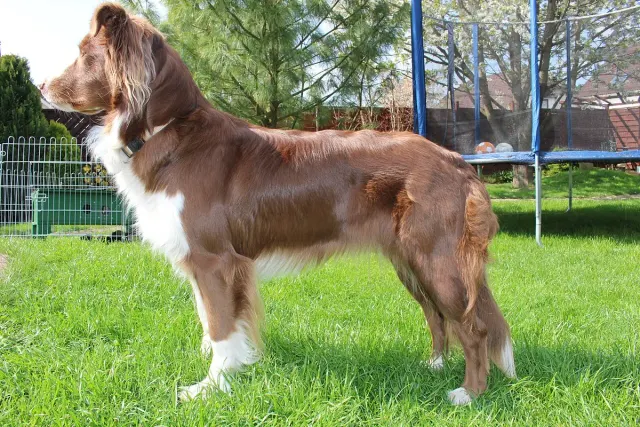
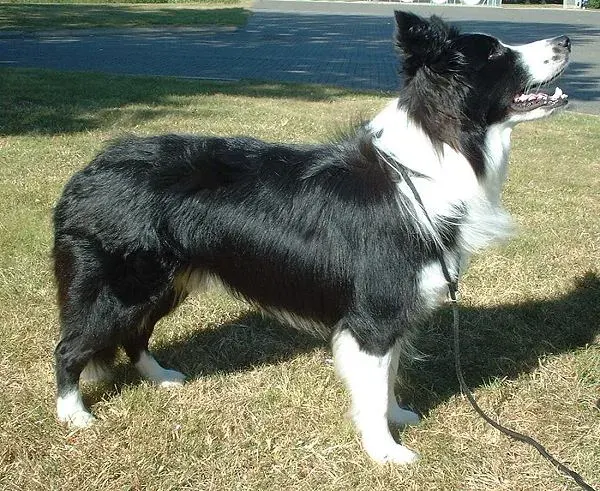
The FCI breed standard describes a well-proportioned dog with a smooth outline showing quality, gracefulness and perfect balance, combined with enough substance to suggest endurance. The skull and foreface are about equal in length, and the athletic body is slightly longer than the dog is tall. The Royal Kennel Club points to its stealthy gait and carriage when working.
There are two coat varieties, moderately long and smooth. Both have a dense, medium-textured topcoat and a soft, dense undercoat that gives good weather resistance; the longer coat forms a mane, breeching and a brush tail. A variety of colours is permitted, but white should never predominate.
- Ideal height at the withers: 53 cm for males, slightly less for females.
Temperament
Extremely intelligent, focused and sensitive, the Border Collie lives to work with its owner. It is affectionate with its family and often reserved with strangers.
Without enough stimulation it can develop obsessions (chasing cars or shadows) or anxiety. Its instinct may lead it to 'herd' children.
With children and other pets
The standard describes a tenacious, hard-working dog of great tractability, keen, alert, responsive and intelligent, neither nervous nor aggressive. It rates 4 out of 5 with children and with other dogs in our ratings.
- Its herding instinct can make it chase, circle or nip at running children, bikes or other pets. Redirect it to a toy and teach children to stand still and call an adult.
- It needs structure at home: a daily routine with work, rest and quiet time helps it settle.
- Introduce cats and small pets calmly and under supervision.
Training tips
The Border Collie is still used to work sheep and cattle, and the Royal Kennel Club notes its success in obedience, agility and as a detection dog. It rates 5 out of 5 for trainability in our ratings.
- Use reward-based training and keep it varied: tricks, obedience, agility, scent work or herding.
- Teach it to switch off: rewarding calm on its bed is as important as any active exercise.
- Mix sniffing, searching and training games into its exercise.
- Give it a job every day, even a short one.
Health
This is a fairly robust breed. Hip dysplasia, some inherited eye diseases, epilepsy and, in some lines, sensitivity to certain drugs should be monitored.
Genetic tests exist, so ask the breeder for them.
Common health issues in detail
Research on Border Collies has looked at two inherited problems, congenital deafness and pectinate ligament dysplasia, and the Royal Kennel Club recommends tests for both.
We found no large population study of the breed's general health.
Deafness. In a UK study of 4,143 Border Collie puppies whose hearing was tested at 4–10 weeks, 2.0% were deaf in one ear and 0.4% in both. Deafness was moderately heritable and genetically linked to blue eye colour and to the merle coat. The Royal Kennel Club recommends hearing tests (BAER) for breeding dogs and litters, and does not register puppies from merle-to-merle matings because of the risks to sight and hearing.
Eyes. Pectinate ligament dysplasia, an abnormality of the eye's drainage angle linked to glaucoma, was moderate or severe in 14% of 102 UK Border Collies examined by gonioscopy.
Health tests. The Royal Kennel Club recommends:
- an eye examination, including gonioscopy (minimum)
- hip and elbow scoring by X-ray and hearing tests by BAER, including litter screening (best practice)
This is general information. For any question about your dog's health, consult a veterinarian.
Feeding
Good-quality food matched to its actual activity suits it. A working or sporting dog needs richer rations.
Fresh water should always be available.
Exercise
It needs at least two hours of daily activity, combining running and mental work: obedience, agility, frisbee, tricks and herding.
It is a dog for very active owners, not a sedentary household.
The Border Collie copes fairly well with moderate heat, but its enthusiasm for work exposes it to heatstroke. In summer, work it at dawn or in the evening and enforce breaks in the shade with water. It is very poorly suited to a city apartment without a job. It thrives in the countryside, on farms or with owners who practise a dog sport.
Grooming
Whether smooth or rough-coated, brushing once or twice a week is enough, more during the moult.
Check its paw pads regularly if it runs a lot.
Choosing a puppy
Choose a breeder who carries out the recommended tests on both parents and has the litter's hearing tested, and who shows you the results.
- Ask for the parents' eye examinations, including gonioscopy, hip and elbow scores and BAER hearing results, and the litter's hearing results.
- Avoid puppies from two merle parents.
- Be honest about your time: this is a breed for active owners who will train it every day.
- Consider an adult from a breed rescue.
Our guide on how to recognise a responsible breeder explains what to ask.
Similar breeds
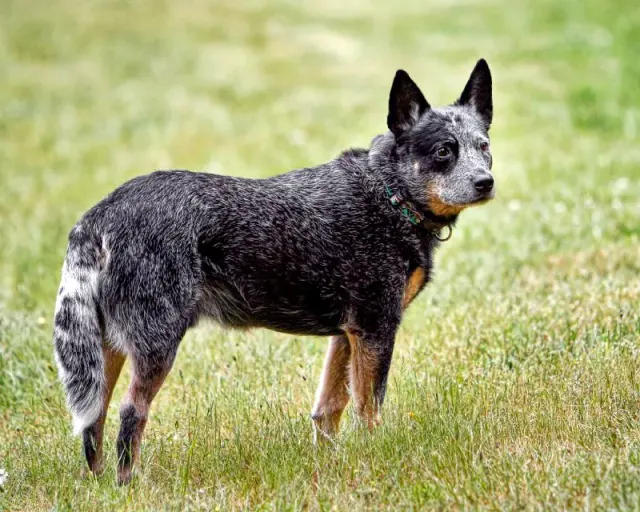
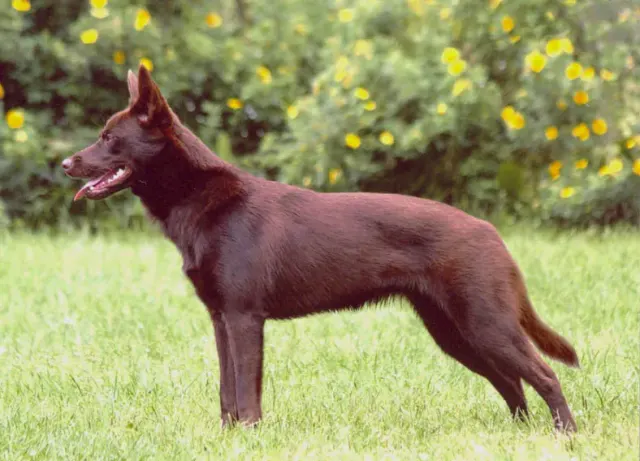
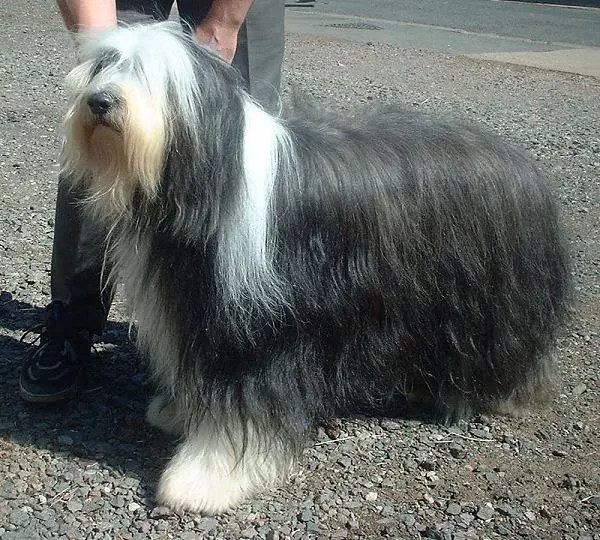
The Australian Shepherd is another highly energetic, trainable herding dog, slightly heavier. The Australian Kelpie is a tireless working sheepdog of similar size. The Shetland Sheepdog is a smaller herding dog with a long coat, and the Rough Collie a larger one with a calmer energy level in our ratings.