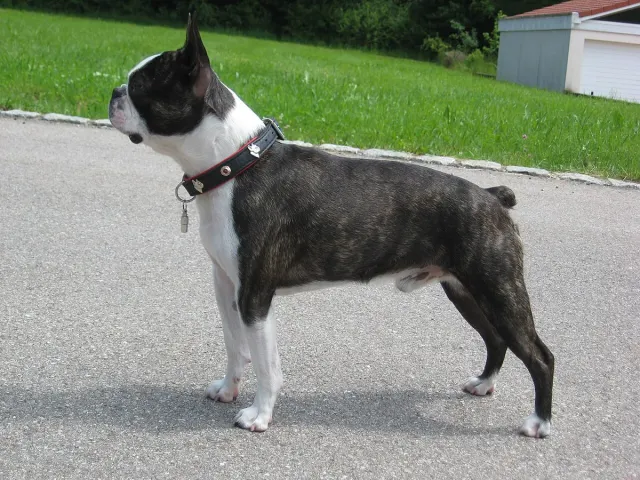
Gentle, affectionate and always good-natured, the Cavalier King Charles is an ideal family companion, in a house or an apartment.

History and origins
The Cavalier King Charles Spaniel descends from small companion spaniels popular at the English court, especially with King Charles II in the 17th century. The modern breed was recreated in the 1920s from dogs with longer muzzles.
Today it is one of the most popular companion dogs.
Appearance and colours
The FCI breed standard describes an active, graceful and well-balanced toy spaniel with a gentle expression. The Royal Kennel Club explains that the breed was revived by breeders who wanted to bring back the longer muzzle and flatter skull of the old toy spaniels, after fashion had favoured a domed skull and shorter muzzle.
The coat is long and silky, free from curl, with plenty of feathering; a slight wave is allowed and the standard asks that it be left untrimmed. There are four recognised colours: Blenheim, ruby, black and tan, and tricolour.
- Blenheim: rich chestnut markings well broken up on a pearly white ground, ideally with a chestnut spot, the "lozenge", between the ears.
- Ruby: whole-coloured rich red.
- Black and tan: raven black with bright tan markings.
- Tricolour: black and white, well broken up, with tan markings.
- Weight: 5.4–8 kg; a small, well-balanced dog well within this range is preferred.
Temperament
Affectionate, gentle and sociable, the Cavalier loves everyone: children, strangers and other animals. It copes poorly with being alone.
It learns easily with positive training.
With children and other pets
The standard calls the Cavalier sporting, affectionate and absolutely fearless, gay, friendly and non-aggressive, with no tendency towards nervousness. It rates 5 out of 5 with children and with other dogs in our ratings.
- Gentle with everyone, it still needs protecting from rough handling by small children.
- It usually welcomes other pets, introduced gradually.
- It thrives on company: plan the household so it is not often left alone for long.
Training tips
It rates 4 out of 5 for trainability in our ratings and usually responds well to gentle, reward-based methods.
- Keep sessions short and positive, with food rewards from its daily ration.
- Teach a reliable recall early, with generous rewards.
- Get it used to brushing, ear checks and veterinary handling from the first weeks, which will help with the regular heart checks it needs.
Health
The breed is heavily affected by heart valve disease (mitral valve disease), often early in life, and by syringomyelia, a neurological condition. Screening exists for breeding dogs.
Regular cardiac check-ups with a veterinarian are strongly recommended.
Common health issues in detail
In a study of 1,749 Cavaliers seen by vets in England, the most common problem was a heart murmur, recorded in 31% of the dogs, and heart disorders as a group affected 32%. Other common disorders were diarrhoea (11%), dental disease (9.5%), ear infections (otitis externa, 9.2%), conjunctivitis (7.4%) and anal sac infection (7.4%). The researchers concluded that heart disease, and mitral valve disease in particular, remains of particular concern in the breed.
Mitral valve disease (MVD). The Royal Kennel Club explains that this degeneration of a heart valve affects older dogs of all breeds but starts earlier in Cavaliers, often first detected as a murmur in younger dogs, and that many affected dogs still live to a good age. All Cavaliers used for breeding should first be graded under the Kennel Club heart scheme.
Syringomyelia (SM). In this condition, fluid-filled cavities develop in the spinal cord. Some dogs show no or mild signs, while in others it progresses and causes pain and neurological problems; a typical sign is scratching in the air near the neck, often when excited or on a lead. It is diagnosed by MRI scan, and the Royal Kennel Club runs a screening project with the breed clubs.
Eyes. The main inherited eye conditions are cataract and multifocal retinal dysplasia, which have become much less common thanks to testing.
This is general information. For any question about your dog's health, consult a veterinarian.
Feeding
It loves food and gains weight easily, so measure portions. A controlled weight eases the load on the heart.
A narrow bowl protects its ears.
Exercise
Daily walks of about an hour and play are enough.
It adapts to its family's pace.
It does, however, suffer in the heat: in summer, walk it during the cool hours and keep it cool. It is an excellent choice for a family with children, provided you choose a breeder who screens for heart disease.
Grooming
Its silky coat needs brushing two to three times a week. Clean and dry its ears regularly.
Keep an eye on its eyes.
Choosing a puppy
Heart health comes first. Choose a breeder who has both parents graded under the heart scheme, ideally MRI scanned for syringomyelia, and eye tested, and who shows you the certificates.
- Ask for the parents' heart grading results and their ages at the time of grading.
- Ask whether the parents have been MRI scanned for syringomyelia, and about any neck scratching or pain in the family.
- Meet the mother: she should be friendly and relaxed, never nervous, as the standard asks.
- Consider an adult from a breed rescue.
Our guide on how to recognise a responsible breeder explains what to ask.
Similar breeds
The King Charles Spaniel is its smaller, shorter-faced cousin. The Papillon and the Tibetan Spaniel are other small companion breeds. The English Cocker Spaniel is a larger, more energetic working spaniel.