The sighthounds of North Africa and the Sahel: Sloughi, Azawakh and their history
The history, appearance, temperament and care of the Sloughi and the Azawakh, two ancient sighthounds of North Africa and the Sahel, and how they differ from the Saluki.
7 min read
Sighthounds hunt by sight and speed rather than by scent. Across the dry lands of North Africa and the Sahel, two of them have lived alongside people for a very long time: the Sloughi and the Azawakh. Both are lean, elegant runners built for heat and open ground, and both remain closely tied to the cultures that shaped them. This guide tells their story, explains how to tell them apart, and what they need in a modern home.
What makes a sighthound
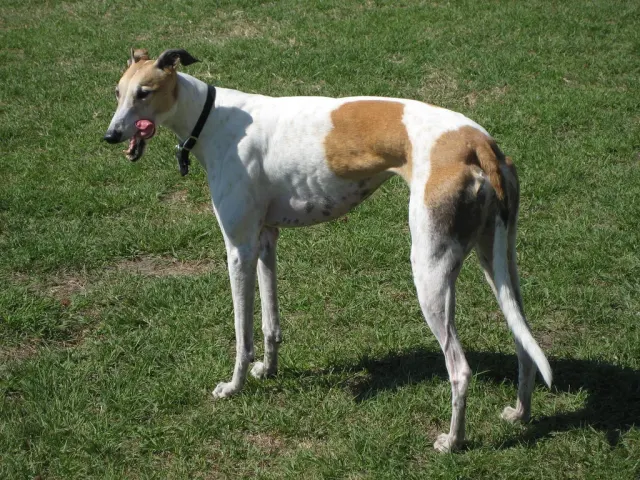
Sighthounds spot moving game at a distance and run it down with bursts of speed. They share a recognisable build: a long, narrow head, a deep chest, a slim waist, long legs and a light, supple gait. The Fédération Cynologique Internationale (FCI), the world federation of kennel clubs, groups them together in its Group 10, which also includes the Greyhound, Whippet, Saluki and Spanish Greyhound. The Sloughi and the Azawakh both belong to its section of short-haired sighthounds.
The Sloughi: the sighthound of North Africa
History
According to its FCI breed standard, the Sloughi has existed for many centuries in North Africa. Today most Sloughis are found in Morocco, the country responsible for the breed’s standard. The Royal Kennel Club describes it as one of the sighthound breeds of the band of countries bordering the Mediterranean in North Africa, Algeria, Tunisia, Morocco and Libya, and notes that dogs from the desert were lighter in frame than those used in mountainous terrain. The breed exists in a single short-haired variety.
Appearance
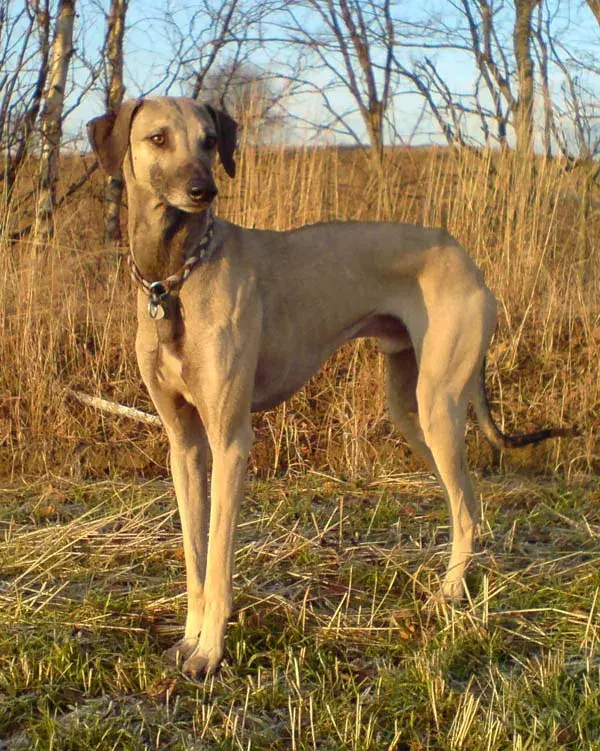
The standard describes a very racy and elegant dog, with “delicacy of tissue” and muscular leanness. The Royal Kennel Club adds that the Sloughi naturally carries no fat under the skin, part of what keeps it cool in desert conditions and gives it a very slim body.
- Height at the withers: 66–72 cm for males and 61–68 cm for females, with an ideal of about 70 cm for males and 65 cm for females.
- Coat: very short, dense and fine.
- Colour: from light sand through every shade to red sand, with or without a black mask, black mantle, black brindling or black overlay. Large white markings are not accepted.
- Head: long and refined, shaped like a long wedge, with drooping ears.
Temperament
The standard describes the Sloughi as noble and somewhat haughty, very attached to its owner and ready to defend them if needed. It is a hunter capable of sustained effort, yet it also appreciates the comforts of home. Read the full profile on our Sloughi page.
The Azawakh: the sighthound of the Sahel
History
The Azawakh takes its name from the valley of the Azawakh in the Sahel, on the northern borders of Mali and Niger. Its FCI standard describes it as an African sighthound descending from the dog types pictured in the rock paintings of the Central Sahara, which date back thousands of years. As the Sahara became ever more arid, the standard explains, Tuareg, Dahoussahaq and Peul shepherd-hunters migrated with their dogs to the more hospitable lands of the Sahel, along the dry valley of the Azawakh. In the Tuareg language the breed is known as “Oska”.
The Azawakh was a hunting dog and a guardian. The standard lists gazelles, hares and ostriches as game, and hyenas, jackals and lions among the predators it drove off, and describes it as an important companion in the family and camp life of the nomads. The Royal Kennel Club adds that Azawakhs often hunted gazelle in packs, taking turns to tire their prey, and were valued by their owners for their beauty and speed. European enthusiasts discovered the breed and, with the help of the breeders who owned the first lines, began exporting dogs to Europe from 1968. France holds the breed’s FCI patronage.
Appearance
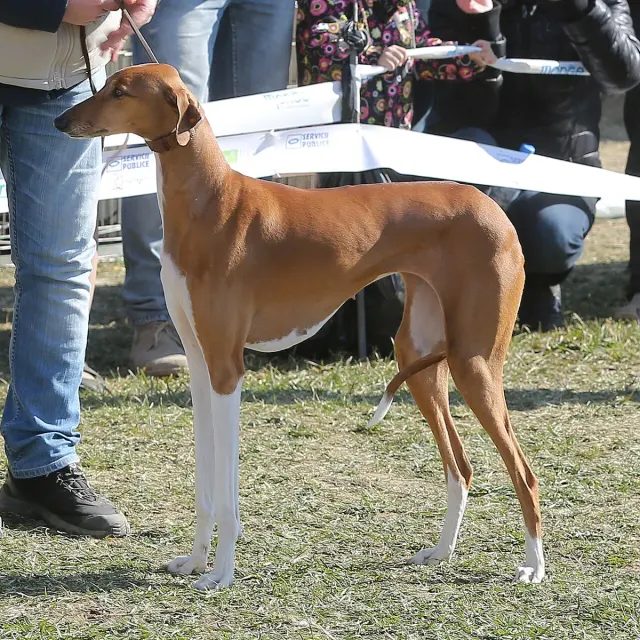
The Azawakh is particularly slim and elegant, giving an impression of great slenderness: its bones and muscles show through thin, dry skin, and its body fits into a rectangle standing on its short side, taller than it is long.
- Height at the withers: 64–74 cm for males and 60–70 cm for females.
- Weight: 20–25 kg for males and 15–20 kg for females.
- Coat: short and fine, almost absent on the belly.
- Colour: fawn in every shade from clear sand to dark fawn (mahogany), with or without black brindle and sometimes a black mask, with white markings limited to the extremities, including a white stocking at least as a trace on each foot.
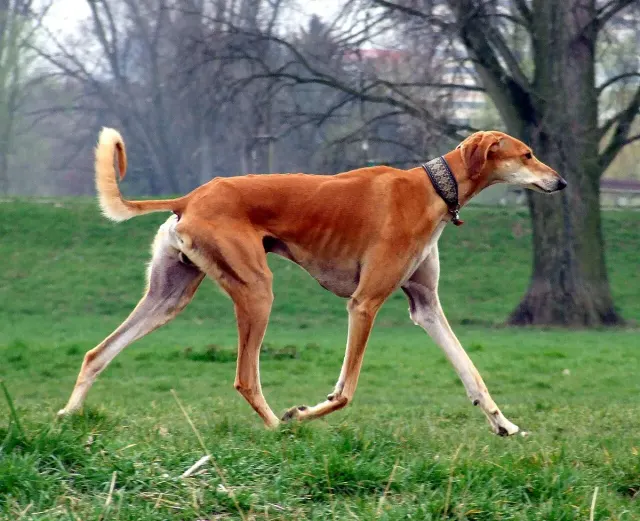
- Movement: very supple, with high action at the walk and trot and a springy gallop; the standard calls movement an essential characteristic of the breed.
Temperament
The standard describes the Azawakh as quick, attentive and distant, often very reserved with strangers but gentle and affectionate with its family and with people it chooses to accept. The Royal Kennel Club notes a very sensitive nature and intense loyalty to its owner, and advises gentle handling at all times. Read the full profile on our Azawakh page.
Sloughi, Azawakh or Saluki?
The Saluki is often confused with these breeds, but its FCI standard gives it a Middle Eastern origin. The standard explains that Salukis vary in type because they were used as hounds of the chase for thousands of years across the vast Middle East, each tribe keeping dogs suited to the game and terrain of its area, and that by tradition they were not bought or sold but given as marks of honour.
| Sloughi | Azawakh | Saluki | |
|---|---|---|---|
| Region of origin | North Africa (standard held by Morocco) | Sahel: northern borders of Mali and Niger | Middle East |
| Coat | Very short, fine | Short, fine | Smooth and silky, with feathering; a smooth variety has none |
| Colours | Light sand to red sand, black markings allowed | Fawn from sand to mahogany, white on the extremities | Any colour |
| Height at withers | 61–72 cm | 60–74 cm | About 58–71 cm |
| Character in the standard | Noble, attached to its owner, protective | Attentive, distant, affectionate with its family | Dignified, independent, reserved with strangers |
You can compare these breeds side by side: Azawakh vs Sloughi and Saluki vs Sloughi.
Living with a North African or Sahelian sighthound
These are not typical family dogs, and they suit owners who understand sighthounds:
- A safe place to run. Hounds generally have a strong prey drive and love to chase, so keep a firm hold of the lead and let them run free only in securely fenced areas.
- Calm indoors. Hounds often love to rest and relax once they are back home, but these are athletic dogs that need daily exercise outdoors.
- Gentle, patient training. Independent and sensitive, they respond to calm, reward-based methods, not to harsh handling. Socialise puppies widely so that their natural reserve with strangers does not become fear.
- Heat. Both breeds receive our highest heat-tolerance rating, but exercise in the heat still carries a risk of heatstroke for any dog; read our guide to dogs in hot climates and heatstroke.
- Other animals. Their chase instinct means introductions to cats and other small pets need great care and supervision.
Before choosing either breed, meet adult dogs, talk to breed clubs and experienced owners, and read our guide on how to recognise a responsible breeder.
Living heritage
The Sloughi and the Azawakh are more than elegant show dogs. They are part of the living heritage of the peoples of North Africa and the Sahel, shaped over generations for hunting, guarding and companionship in a harsh climate. Knowing their history helps explain the dogs they are today: fast, hardy, reserved and deeply loyal to the people they trust. Browse all the sighthounds in our encyclopedia, or the North African Aidi (Atlas Mountain Dog), a guardian breed of the Atlas mountains.
Sources
Studies, veterinary and welfare organisations and breed standards this guide is based on.
- FCI breed standard No. 188: Sloughi — Fédération Cynologique Internationale (FCI)
- FCI breed standard No. 307: Azawakh — Fédération Cynologique Internationale (FCI)
- FCI breed standard No. 269: Saluki — Fédération Cynologique Internationale (FCI)
- Sloughi: breed information — The Royal Kennel Club
- Azawakh: breed information — The Royal Kennel Club
- Dog breed groups — PDSA (veterinary charity)