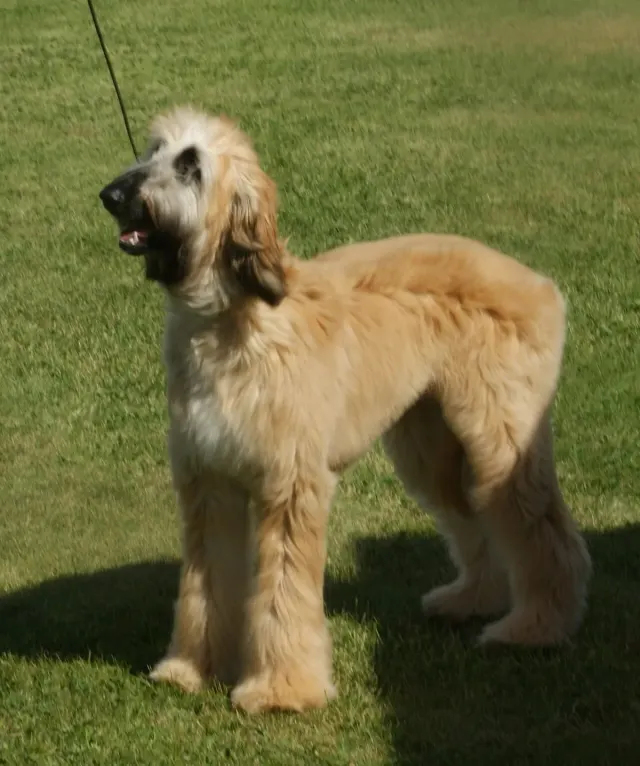
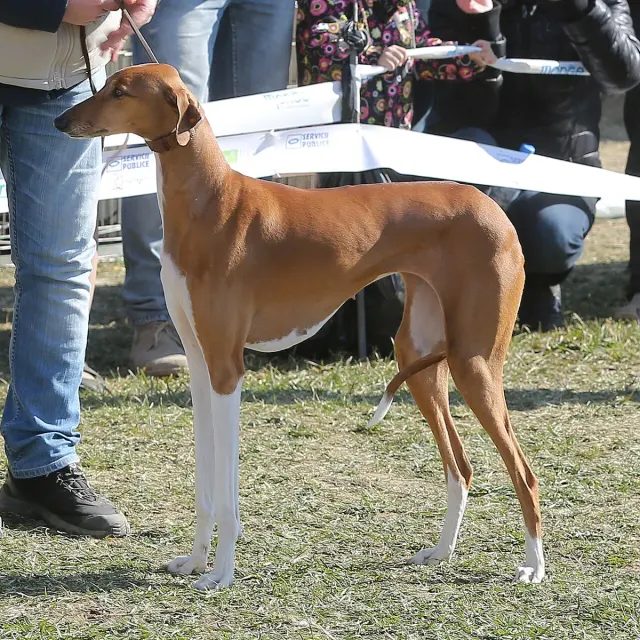
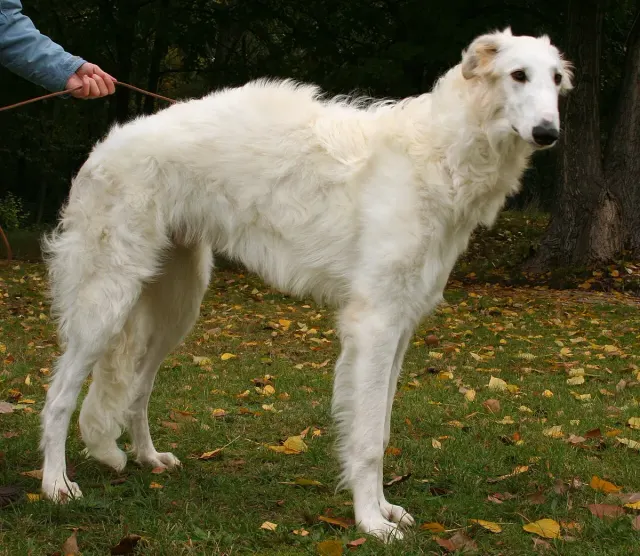
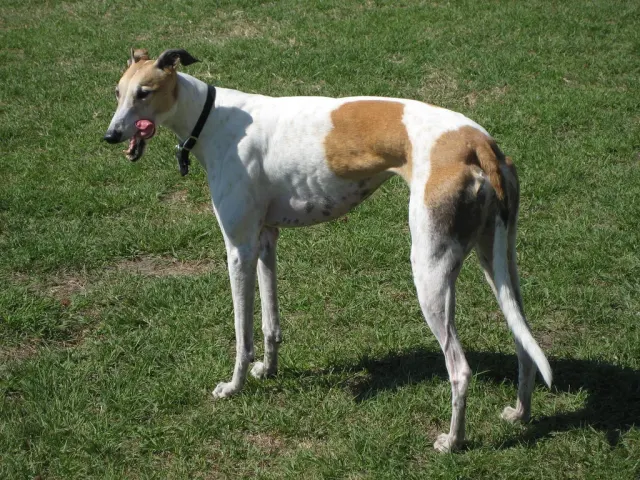
A sighthound from the Iberian Peninsula, the Galgo Español is gentle, calm and endearing; many are adopted after a life of hunting.
History and origins
The Galgo Español is an ancient sighthound of the Iberian Peninsula, used for centuries to course hare by sight on the Spanish plains.
Today many European associations rehome Galgos retired from hunting as companion dogs.
Appearance and colours
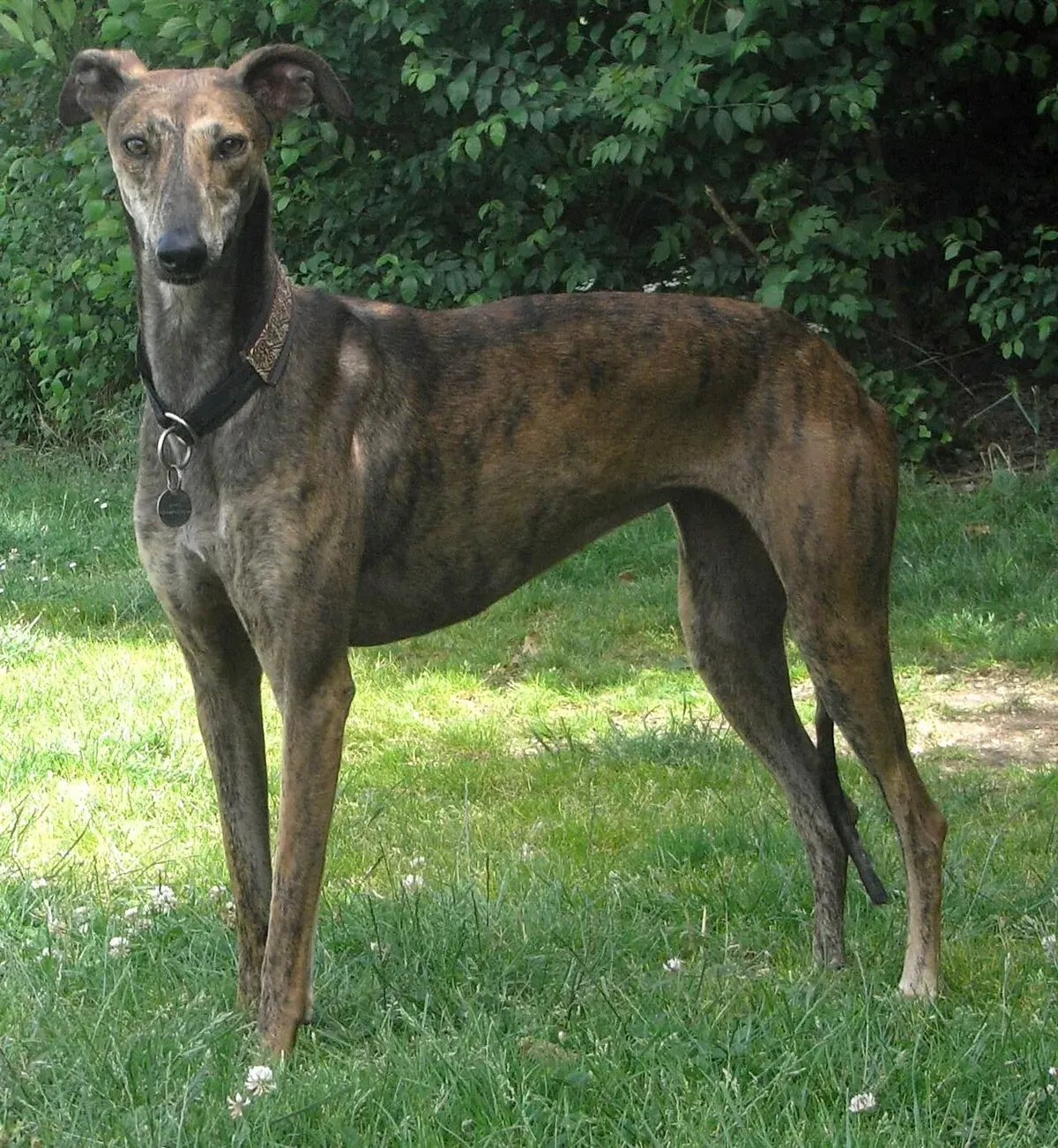
The FCI breed standard describes a sighthound of good size, slightly longer than tall, with a long, narrow head, a deep chest, a very tucked-up belly and a very long tail. There are two coats: fine and short, or semi-long and hard, the latter often forming a beard, moustache and eyebrows.
All colours are accepted; the most typical are fawn and brindles of various shades, then black and flecked colours.
- Height at the withers: 62–70 cm for males, 60–68 cm for females.
Temperament
Gentle, calm and quiet, the Galgo is affectionate and usually sociable with other dogs and respectful children. Adopted dogs may be fearful at first.
It needs patient, kind training; its chase instinct remains strong.
With children and other pets
The standard describes a serious dog, sometimes reserved, but an energetic and lively hunter. It rates 4 out of 5 with children and 4 out of 5 with other dogs in our ratings.
- It is usually calm at home.
- Its chasing instinct is strong: be careful with cats and small animals.
Training tips
According to the standard, the Spanish Galgo was known in Roman times, descends from ancient Asian sighthounds and was exported in large numbers to Ireland and England between the 16th and 18th centuries; it is one of the ancestors of the English Greyhound. Its main use has always been coursing hares in open country. It rates 3 out of 5 for trainability in our ratings.
- Let it run only in safe, fenced areas: it chases by sight.
- Use gentle, reward-based training.
Health
This is a hardy breed. Like other sighthounds, it is sensitive to anaesthetics and cold. Dogs coming from hunting homes should be tested for leishmaniasis and other parasite-borne diseases.
Regular veterinary follow-up is recommended.
Protection against leishmaniasis is essential.
This is general information. For any question about your dog's health, consult a veterinarian.
Feeding
Good-quality food matched to its activity keeps it lean.
Avoid exertion straight after meals.
Exercise
It needs daily walks and occasional runs in a fully enclosed area.
Indoors, it sleeps a lot.
Calm indoors, it lives well in an apartment if walked daily and allowed to run safely from time to time.
Grooming
Its smooth coat (a rough-coated variety also exists) needs little care: weekly brushing is enough.
Its thin skin is easily injured.
Choosing a puppy
The FCI standard says only healthy dogs with typical breed conformation should be used for breeding.
- Ask what health checks the parents have had.
- Meet the mother: she should be calm and gentle.
Our guide on how to recognise a responsible breeder explains what to ask.