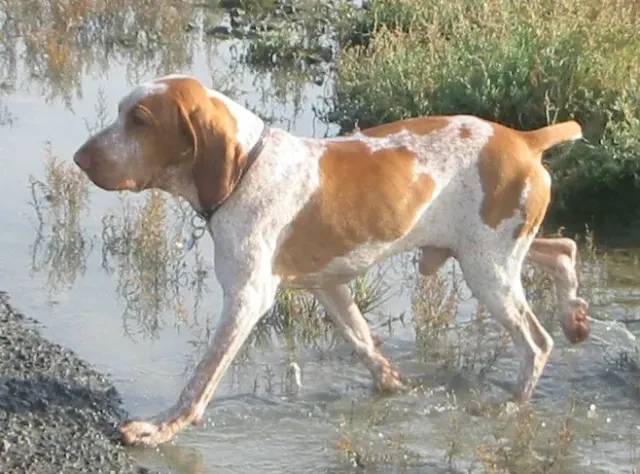
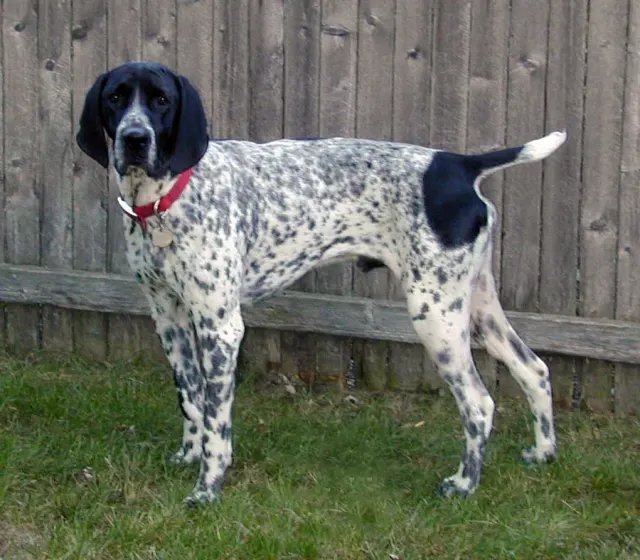
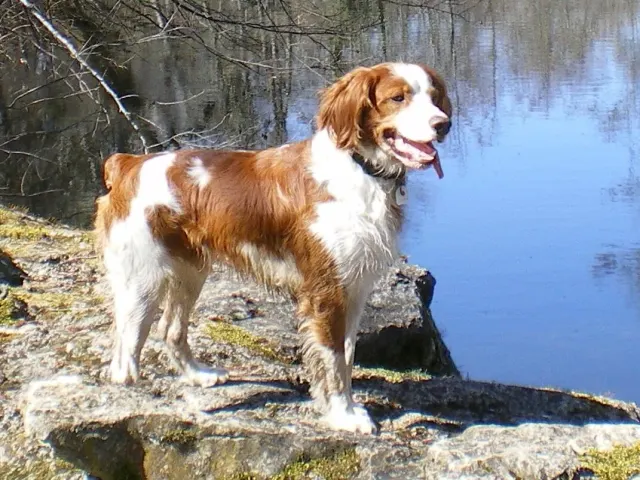
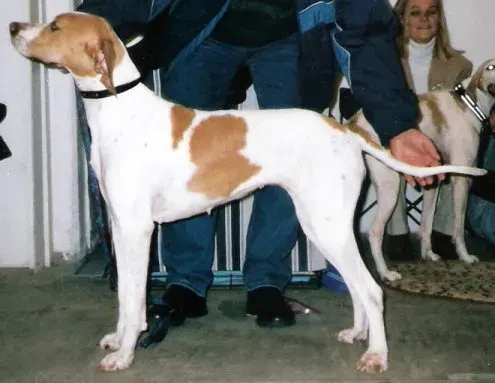
A versatile hunter with a wiry coat and bushy beard, the Drahthaar is sturdy, loyal and tireless, a true working dog.
History and origins
The German Wirehaired Pointer (Deutsch Drahthaar) was created in late 19th-century Germany by hunters who wanted a versatile pointing dog with a wiry coat to protect it from brambles and cold.
It is highly valued by hunters for its versatility in fields, woods and water.
Appearance and colours
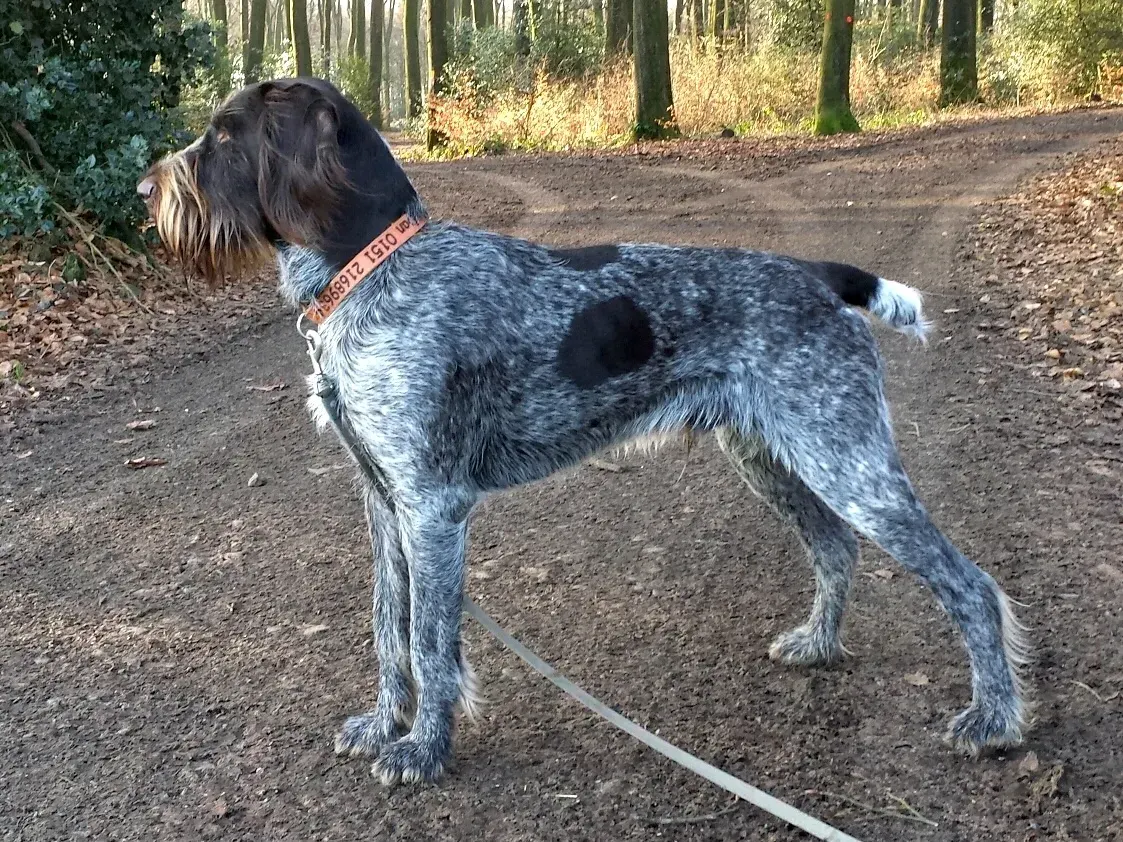
The FCI breed standard describes a pointing dog of noble appearance, with a harsh coat that fully protects the skin and an attentive, energetic expression; the body is about as long as it is tall. The coat is wiry, harsh, flat-lying and dense, about 2–4 cm long, with a dense, water-resistant undercoat, marked eyebrows and a short, harsh beard.
Colours include brown roan and black roan, with or without patches, among others.
- Height at the withers: 61–68 cm for males, 57–64 cm for females.
Temperament
Loyal, energetic and very attached to its family, the Drahthaar is often reserved with strangers and can be protective. It may be dominant with other dogs.
It needs firm, consistent training and a real job.
With children and other pets
The standard describes a firm, self-controlled, well-balanced dog, neither shy nor aggressive. It rates 4 out of 5 with children and 3 out of 5 with other dogs in our ratings.
- It suits active families who can give it work and exercise.
- The harsh coat needs little grooming.
Training tips
According to the standard, the breed was developed from the end of the 19th century as an efficient German wirehaired gundog, from the best rough-coated types (Pudelpointer, Korthals Griffon, German Broken-coated Pointing Dog) and the German Shorthaired Pointer, following the principle "by working ability to type". The Royal Kennel Club calls it a rugged worker with a protective harsh, bristly coat. It rates 4 out of 5 for trainability in our ratings.
- Retrieving, tracking and scent work suit it.
- It rates 5 out of 5 for energy: it needs long daily exercise.
Health
Hip and elbow dysplasia, von Willebrand disease and some eye conditions should be monitored.
Regular veterinary follow-up is recommended.
Common health issues in detail
The Royal Kennel Club recommends as best practice for breeding dogs a DNA test for von Willebrand disease type 2 (vWD2), a bleeding disorder, as well as hip and elbow scoring and eye testing; it adds that imported dogs must be DNA-tested for vWD2 to prevent its reintroduction into the UK population.
We found no large population study of health in the German Wirehaired Pointer.
This is general information. For any question about your dog's health, consult a veterinarian.
Feeding
It needs food suited to intense activity.
Avoid excess weight outside the hunting season.
Exercise
It needs at least two hours of daily activity, ideally hunting, tracking or demanding dog sports.
It is not made for a sedentary life.
Its wiry coat offers some sun protection, but its intensity at work means activity should be kept to the cool hours in summer. It suits hunters and very active families living in rural areas.
Grooming
Its wiry coat needs weekly brushing and light stripping a few times a year. Clean its beard.
Check for ticks and grass seeds after outings.
Choosing a puppy
Choose a breeder who does the vWD2 DNA test, hip and elbow scoring and eye testing.
- Ask for the parents' vWD2, hip, elbow and eye results.
- Meet the mother: she should be balanced and confident.
- Ask whether the parents come from hunting lines.
Our guide on how to recognise a responsible breeder explains what to ask.
Similar breeds
The German Shorthaired Pointer is its smooth-coated relative. The Wirehaired Pointing Griffon, Spinone Italiano and Wirehaired Vizsla are other rough-coated pointing dogs.