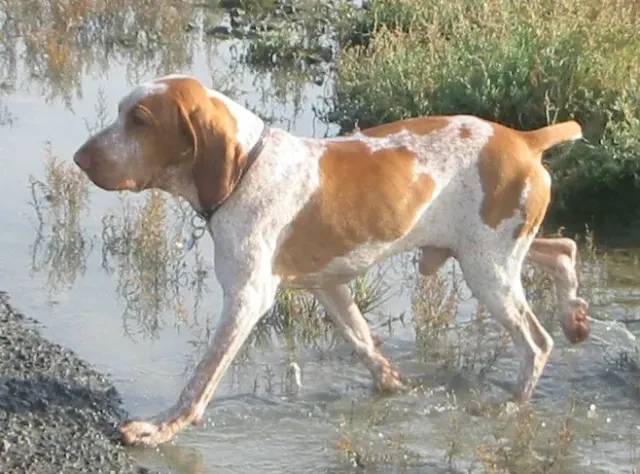
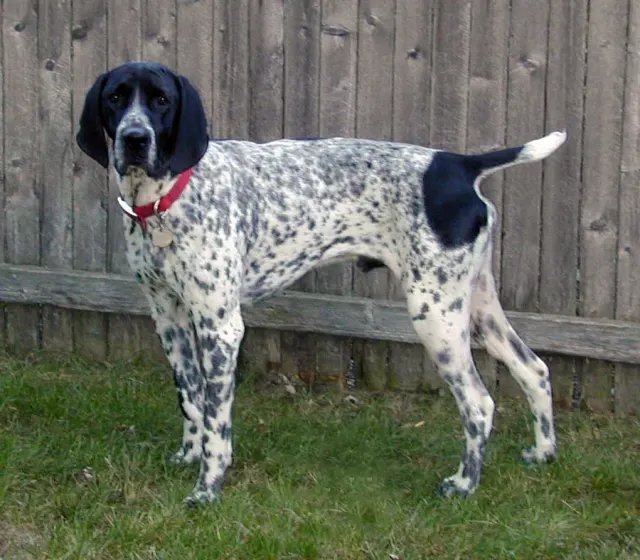
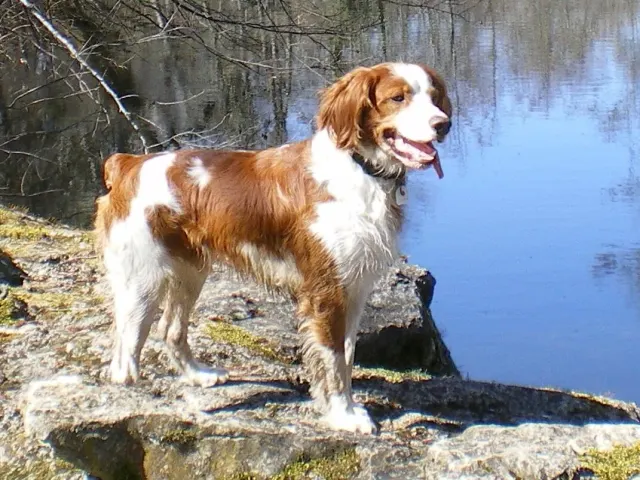
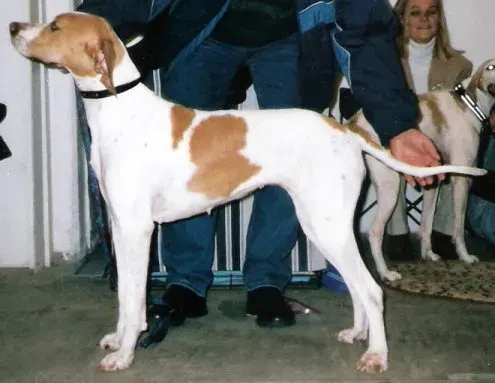
A versatile, tireless pointing dog, the German Shorthaired Pointer is cheerful, affectionate and made for very sporty families.
History and origins
The German Shorthaired Pointer was developed in 19th-century Germany as an all-round gundog: it searches, points, retrieves on land and from water, and tracks.
Today it is one of the most widespread pointing breeds in the world.
Appearance and colours
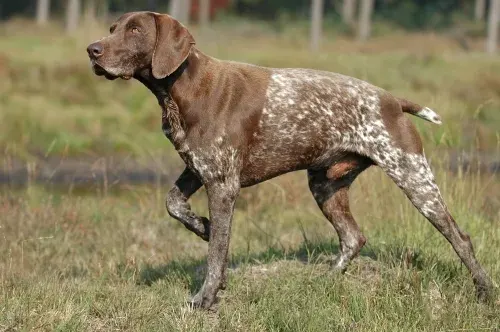
The FCI breed standard describes a noble, balanced dog built for strength, endurance and speed, with a proud attitude, smooth outlines, a lean head, a well-carried tail and a firm, shiny coat. The coat is short and dense, rough and hard to the touch.
Colours include solid brown, brown with small white or flecked markings on the chest and legs, and dark brown roan with a brown head and brown patches.
- Height at the withers: 62–66 cm for males, 58–63 cm for females.
Temperament
Enthusiastic, affectionate and very attached to its family, the GSP is usually good with children. It overflows with energy and copes poorly with inactivity and being alone.
Intelligent, it learns well with positive, consistent training.
With children and other pets
The standard describes a firm, balanced, reliable and restrained temperament, neither nervous, shy nor aggressive. It rates 4 out of 5 with children and 4 out of 5 with other dogs in our ratings.
- It suits active families.
- Its short coat needs little grooming.
Training tips
According to the standard, the breed descends from pointing dogs used with nets and falcons in Mediterranean countries that reached the German courts; after the double-barrelled gun appeared, it became a versatile gundog. Its studbook has been published since 1897, and the standard asks for a dog able to meet all hunting tasks even in old age. It rates 4 out of 5 for trainability in our ratings.
- Retrieving, tracking and scent games suit it well.
- It rates 5 out of 5 for energy: it needs long daily exercise.
Health
Hip dysplasia, bloat, some heart diseases and an inherited skin condition should be monitored.
Regular veterinary follow-up is recommended.
Leishmaniasis prevention is essential for hunting dogs.
Common health issues in detail
The Royal Kennel Club recommends as best practice for breeding dogs hip and elbow scoring and eye testing.
We found no large population study of health in the German Shorthaired Pointer that we could use here.
This is general information. For any question about your dog's health, consult a veterinarian.
Feeding
It needs a rich diet matched to its intense activity, in two meals.
Avoid exercise just after eating.
Exercise
It needs at least two hours of daily activity: running, canicross, swimming, hunting or dog sports.
A GSP that cannot burn off energy quickly becomes destructive.
It needs a house with a garden and active owners.
Grooming
Its short coat needs weekly brushing.
Check its paw pads and ears, and look for grass seeds after outings.
Choosing a puppy
Choose a breeder who scores hips and elbows and eye-tests the parents.
- Ask for the parents' hip, elbow and eye results.
- Meet the mother: she should be balanced and reliable.
- Ask whether the parents come from hunting lines.
Our guide on how to recognise a responsible breeder explains what to ask.
Similar breeds
The German Wirehaired Pointer is its rough-coated relative. The English Pointer, Hungarian Vizsla and Weimaraner are other short-coated pointing dogs.