The smallest French pointing dog is also one of the most popular: the Brittany is lively, affectionate and passionate about hunting.
History and origins
The Brittany (Épagneul Breton) comes from Brittany in western France, where it was established in the early 20th century as a versatile pointing dog for woodcock and small game.
Today it is one of the most widespread pointing breeds in France and a favourite of hunters.
Appearance and colours
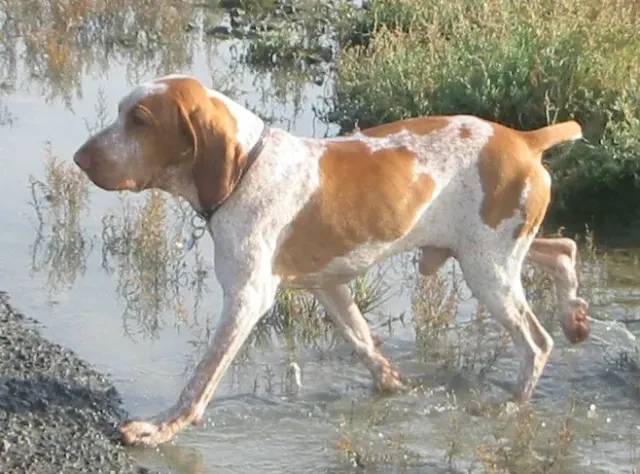
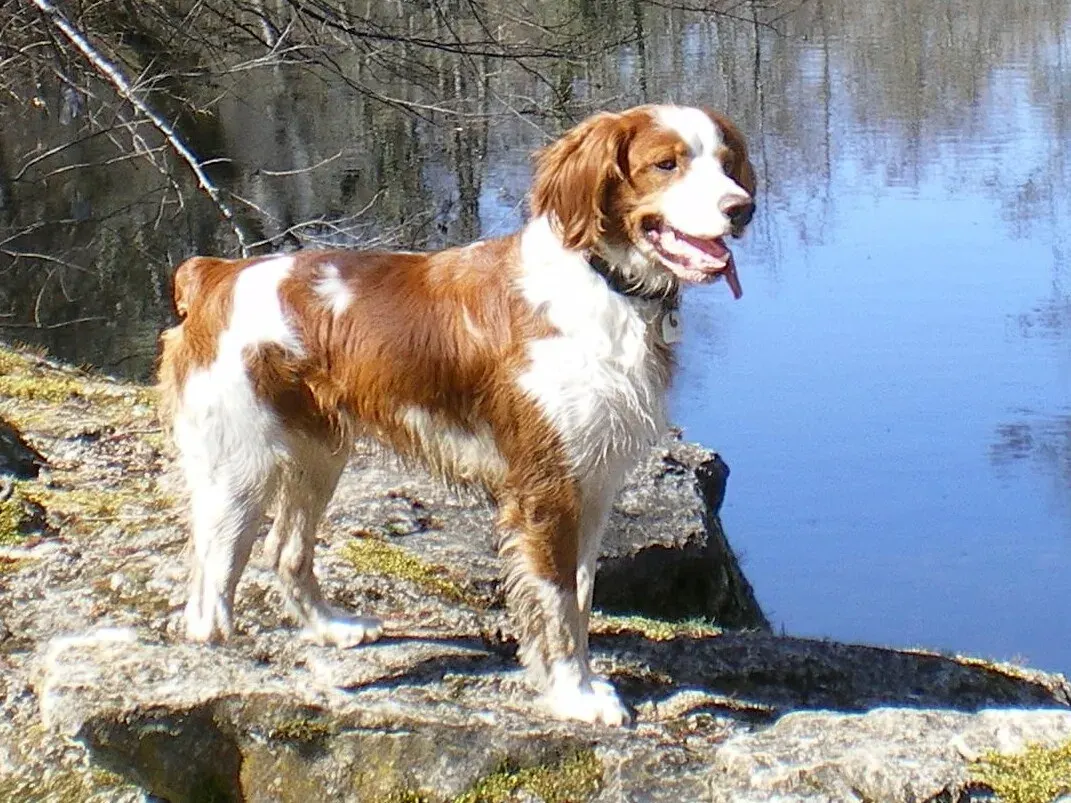
The FCI breed standard describes the smallest of the pointing breeds, a dog with a spaniel-type head and a short or absent tail, harmoniously built on a solid but not heavy frame, compact and well knit yet elegant, with a bright look and an intelligent expression. The Royal Kennel Club calls it a hunt, point and retrieve breed.
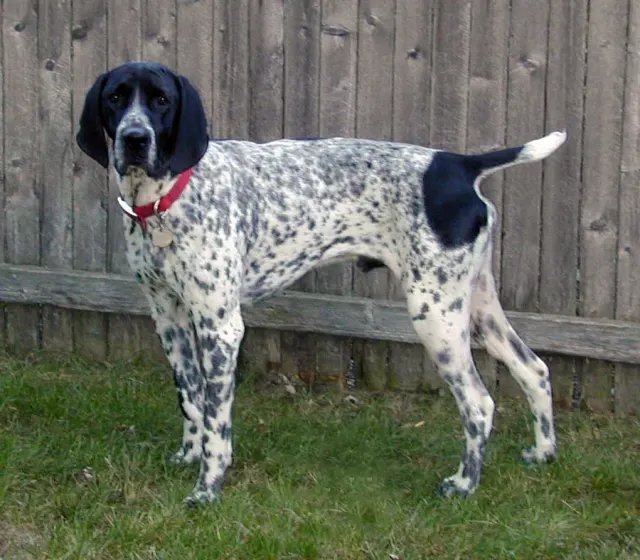
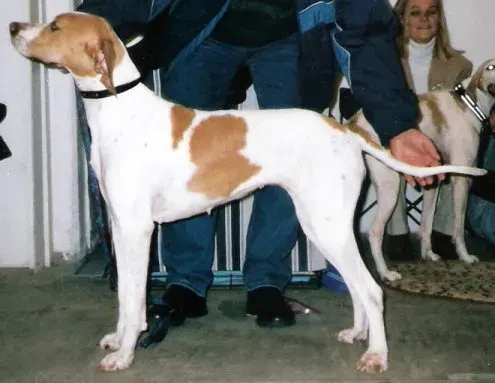
The coat is fine but not silky, lying flat or slightly wavy, never curly, with abundant feathering on the back of the legs. Colours are white and orange, white and black or white and liver, with irregular patches or roan; the Royal Kennel Club also lists tricolours.
- Height at the withers: 48–51 cm for males (ideal 49–50 cm), 47–50 cm for females (ideal 48–49 cm), with a tolerance of 1 cm.
Temperament
Cheerful, affectionate and very cooperative, the Brittany loves to please. It is usually good with children and other dogs.
Sensitive, it learns very well with gentle, positive training. It copes poorly with loneliness and inactivity.
With children and other pets
The standard describes a sociable dog that adapts to any environment, mentally balanced, with an intelligent, attentive expression. It rates 4 out of 5 with children and 4 out of 5 with other dogs in our ratings.
- It is a cheerful, sociable family dog when its exercise needs are met.
- It is a hunting dog: be careful with small pets.
Training tips
According to the standard, the Brittany comes from central Brittany, is probably one of the oldest spaniel-type dogs, was improved in the early 20th century, and is now the most numerous French sporting breed. It is a versatile pointer for any game on any terrain, quick to show its passion for hunting and remarkable for its search, scenting, pointing, retrieving and aptitude for training. It rates 5 out of 5 for trainability and 5 out of 5 for energy in our ratings.
- It needs a lot of daily exercise: running, retrieving and scent games.
- Use reward-based training; it learns quickly.
Health
This is a fairly robust breed. Hip dysplasia, epilepsy and some eye conditions should be monitored.
Regular veterinary follow-up is recommended.
Leishmaniasis prevention is essential.
Common health issues in detail
The Royal Kennel Club recommends hip scoring as best practice for breeding dogs.
We found no large population study of health in the Brittany.
This is general information. For any question about your dog's health, consult a veterinarian.
Feeding
Good-quality food matched to its activity suits it.
Adjust the ration between the hunting season and rest periods.
Exercise
It needs at least one and a half to two hours of daily activity: running, hunting, search games and agility.
It is an excellent companion for sporty families.
It needs a house with a garden and regular activity.
Grooming
Its fine, slightly wavy coat needs weekly brushing. Check the ears and look for grass seeds.
It is easy to care for.
Choosing a puppy
Choose a breeder who hip-scores the parents.
- Ask for the parents' hip results.
- Ask whether the parents are hunting dogs, and how much exercise they need.
- Meet the mother: she should be sociable and balanced.
Our guide on how to recognise a responsible breeder explains what to ask.
Similar breeds
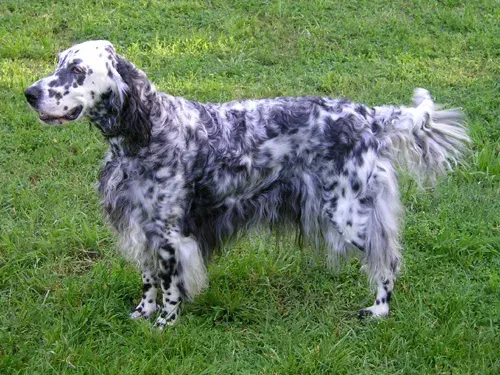
The English Springer Spaniel and Welsh Springer Spaniel are spaniels of similar size. The German Shorthaired Pointer is another versatile pointer, and the English Setter a feathered pointing dog.