Lively, alert and covered in an abundant coat, the German Spitz comes in several sizes and makes an excellent watchdog.
History and origins
The German Spitz descends from very old spitz-type dogs of central Europe. It guarded farms, boats and carts, and raised the alarm when strangers approached.
The Fédération Cynologique Internationale recognises several sizes under this name; on this site, the Pomeranian and the Keeshond have their own profiles.
Appearance and colours
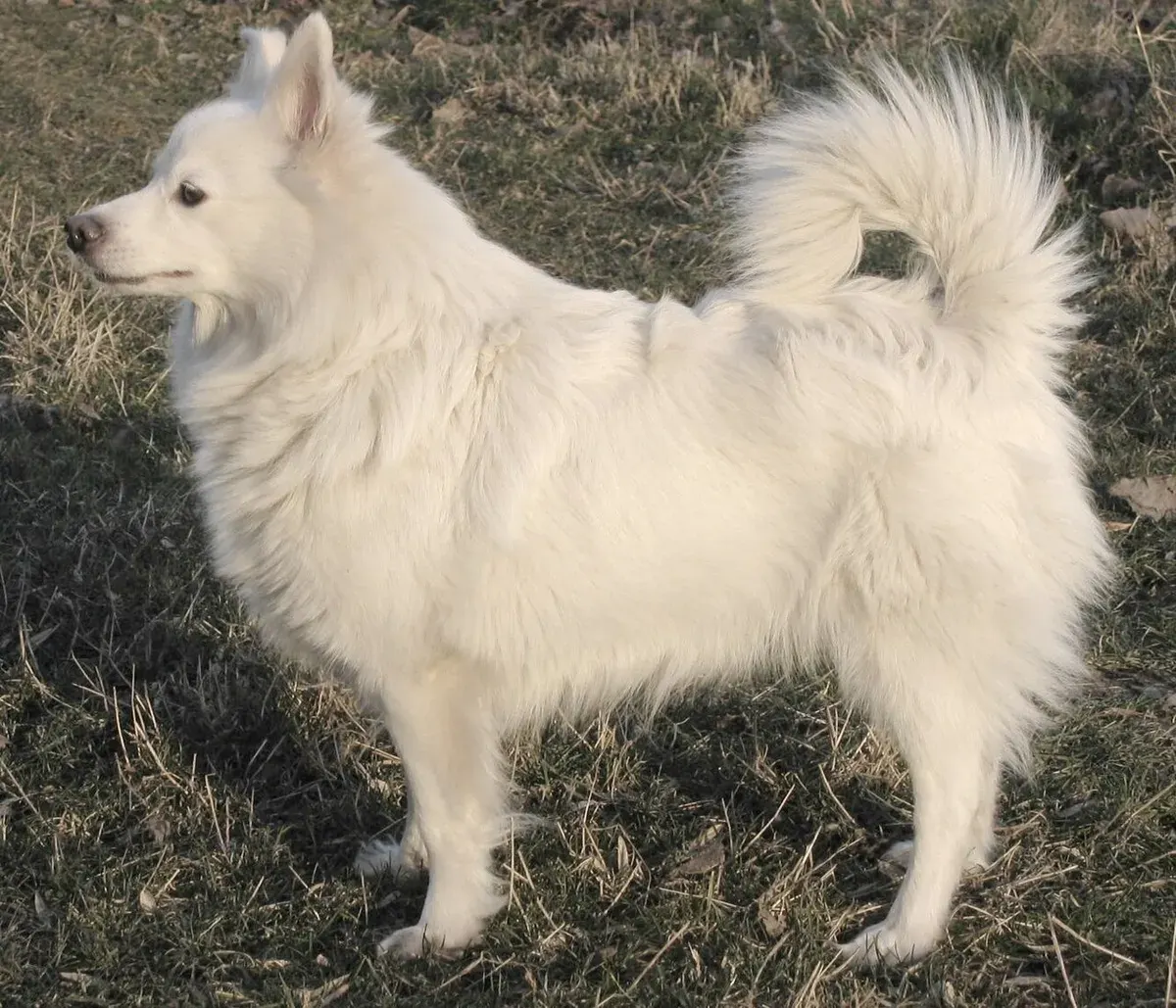
The FCI breed standard describes the Spitz breeds as captivating for their beautiful coat, made to stand off by a plentiful undercoat, with a strong, mane-like ruff around the neck and a bushy tail carried boldly over the back; the fox-like head, alert eyes and small, pointed, closely set ears give it a cheeky look. The body is as long as it is tall.
Giant Spitz come in white, black or brown; Medium and Miniature Spitz come in white, black, brown, orange, grey-shaded and other colours.
- Height at the withers: Giant Spitz 45 cm (± 5 cm), Medium Spitz 35 cm (± 5 cm), Miniature Spitz 27 cm (± 3 cm), with a weight to match the size.
Temperament
Lively, attentive and very attached to its family, the German Spitz is a natural watchdog that barks easily. It is wary of strangers but rarely aggressive.
Early training to manage barking is helpful.
With children and other pets
The standard describes a dog that is always attentive, lively and extraordinarily attached to its owner, very teachable, neither timid nor aggressive. Its natural distrust of strangers and lack of hunting instinct make it, says the standard, an ideal companion, family dog and watchdog. It rates 3 out of 5 with children and 3 out of 5 with other dogs in our ratings.
- It is a good watchdog that will announce visitors.
- Its coat needs regular brushing (4 out of 5 for grooming needs in our ratings).
Training tips
According to the standard, the German Spitz descends from the Stone Age "peat dog" and the later lake-dwelling Spitz and is the oldest dog breed in Central Europe; many other breeds were developed from it. The Royal Kennel Club notes that German Spitz breeds are thought to descend from larger spitz dogs brought from Scandinavia by the Vikings. It rates 3 out of 5 for trainability in our ratings.
- Short, cheerful, reward-based sessions suit it.
- Avoid exercise in the heat: it rates 2 out of 5 for heat tolerance.
Health
This is a fairly robust breed. Kneecap luxation (small sizes), some eye diseases, epilepsy and hair-loss-related skin problems should be monitored.
Regular veterinary follow-up is recommended.
Common health issues in detail
The Royal Kennel Club recommends eye testing as best practice for breeding dogs, and notes that the breed can be affected by conformation-related problems. The FCI standard lists robustness and longevity among the breed's most outstanding attributes.
We found no large population study of health in the German Spitz.
This is general information. For any question about your dog's health, consult a veterinarian.
Feeding
Choose food suited to its size, in measured portions.
Avoid excess weight.
Exercise
It needs daily walks and play; larger sizes enjoy more exercise.
It likes to stay close to its family.
Smaller sizes adapt well to apartments. Its alert barking should be managed early in apartment buildings.
Grooming
Its very full double coat needs brushing several times a week and more during moults.
Do not shave it.
Choosing a puppy
Choose a breeder who eye-tests the parents.
- Ask for the parents' eye test results.
- Meet the mother: she should be lively and confident, not nervous.
- Ask which size the parents are and how large the puppy is expected to be.
Our guide on how to recognise a responsible breeder explains what to ask.
Similar breeds
The Keeshond and Pomeranian are the largest and smallest German Spitz varieties. The Japanese Spitz and Samoyed are other spitz breeds.