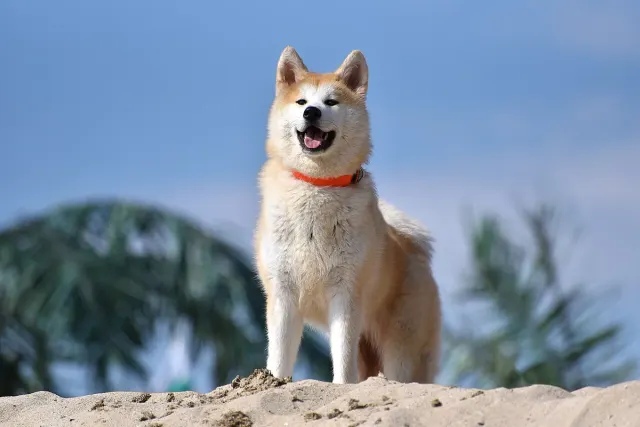
Heavier than the Japanese Akita, the American Akita is a powerful, calm and very loyal guardian for experienced owners only.
History and origins
The American Akita descends from Akitas brought from Japan to the United States after the Second World War. American breeders favoured a heavier, more massive type in a wide range of colours.
The Fédération Cynologique Internationale has recognised it as a separate breed since 2006.
Appearance and colours
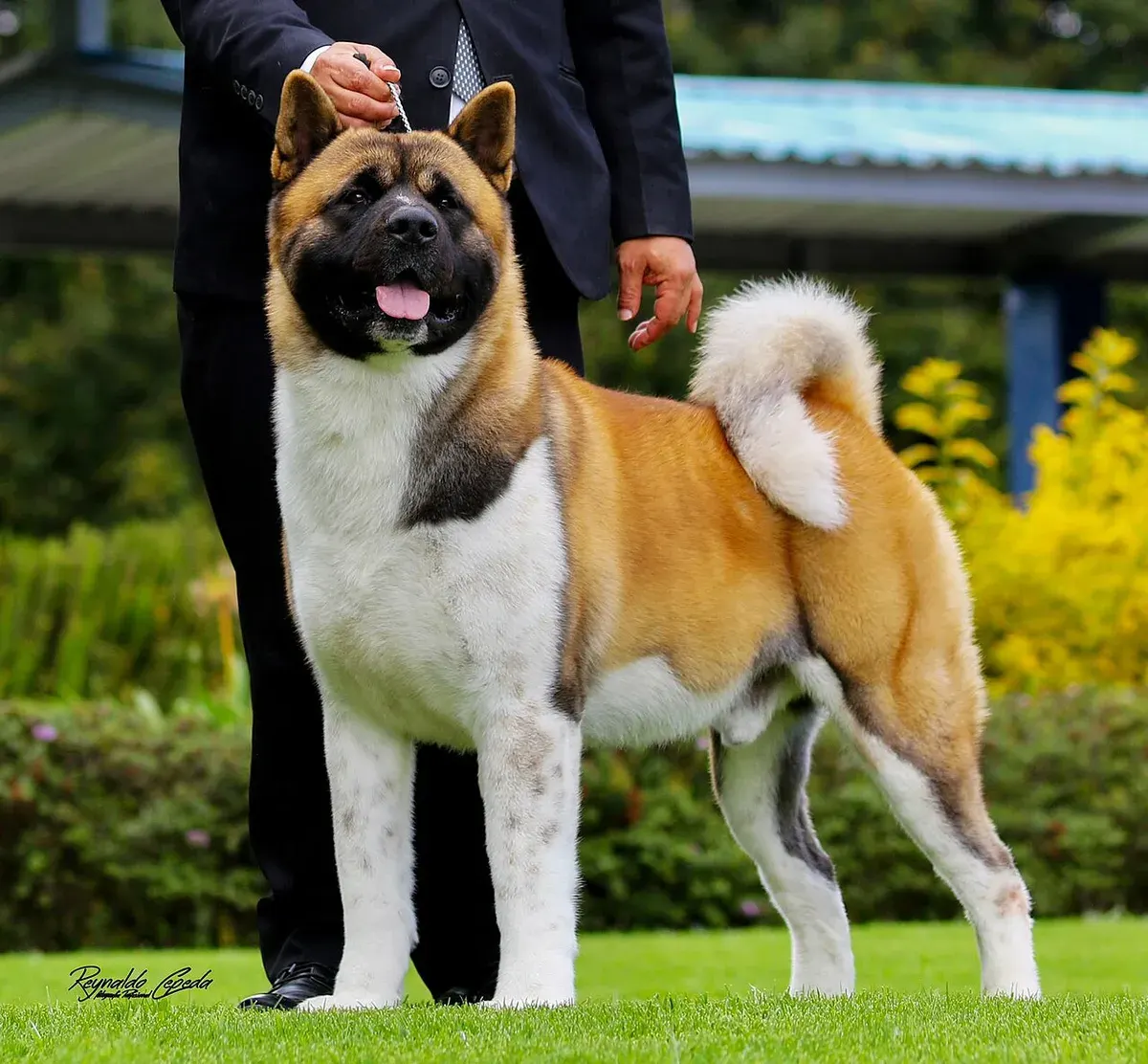
The FCI breed standard describes a large, sturdily built, well-balanced dog with much substance and heavy bone. Its broad head forms a blunt triangle, with a deep muzzle, relatively small eyes and erect ears carried forward. The body is slightly longer than tall, and the large, well-furnished tail is carried curled over the back or against the flank.
The double coat has a thick, soft undercoat and a straight, harsh outer coat, about 5 cm long at the withers and rump. Unlike the Japanese Akita, the American Akita may be any colour, including red, fawn, white, pinto and brindle, with or without a mask or blaze; merle and liver are disqualifying. The Royal Kennel Club lists more than twenty standard colours.
- Height at the withers: 66–71 cm for males, 61–66 cm for females.
Temperament
Calm, brave and very attached to its family, the American Akita is a natural guardian, wary of strangers and often intolerant of other dogs.
It requires early socialisation, firm and respectful training and an experienced owner.
Some regions restrict ownership of this breed; check your local regulations.
With children and other pets
The standard describes the American Akita as alert and responsive, dignified and courageous, and warns that it may be highly reactive to other dogs, particularly of the same sex. It rates 3 out of 5 with children and 1 out of 5 with other dogs in our ratings.
- It is powerful and protective: supervise it with children and visitors.
- Plan carefully before keeping it with another dog, especially one of the same sex.
Training tips
The standard explains that after the Second World War, Akitas of the Dewa line, showing Mastiff and German Shepherd influence, were taken to the United States, where breeders developed them. Because there was no exchange of pedigrees between the American and Japanese kennel clubs, the American dogs became considerably different from those in Japan, and the FCI now recognises them as a separate breed. It rates 2 out of 5 for trainability in our ratings.
- Start socialisation early and keep it going all its life.
- Use calm, consistent, reward-based training; avoid confrontation.
Health
Hip dysplasia, hypothyroidism, some autoimmune diseases and bloat should be monitored.
Regular veterinary follow-up is recommended.
Common health issues in detail
The Royal Kennel Club recommends eye testing and hip scoring as best practice for breeding dogs.
We found no large population study of health in the American Akita.
This is general information. For any question about your dog's health, consult a veterinarian.
Feeding
Good-quality large-breed food in two meals suits it.
Avoid excess weight and exercise after meals.
Exercise
It needs about an hour of daily on-lead activity.
Avoid conflict situations with other dogs.
It needs a house with a well-fenced garden.
Grooming
Its dense double coat needs weekly brushing, daily during moults.
It is very clean.
Choosing a puppy
Choose a breeder who eye-tests and hip-scores the parents and gives special attention to temperament.
- Meet both parents if possible: they should be confident and steady. The standard disqualifies aggressive or overly shy dogs.
- Ask how the puppies have met people, children and other dogs.
Our guide on how to recognise a responsible breeder explains what to ask.
Similar breeds
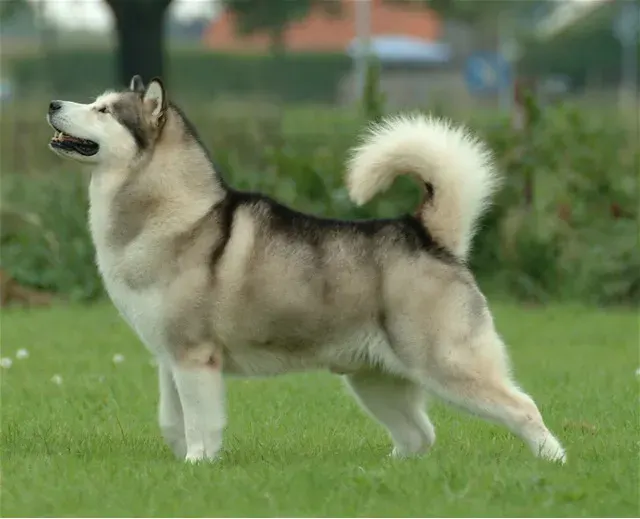
The Akita is the Japanese form, lighter and limited to four colours. The Alaskan Malamute is a powerful spitz of similar weight. The Shiba Inu and Korean Jindo are smaller Asian spitz breeds.