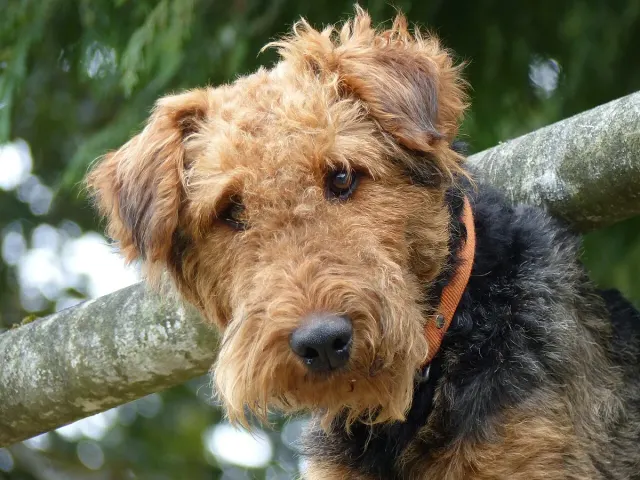
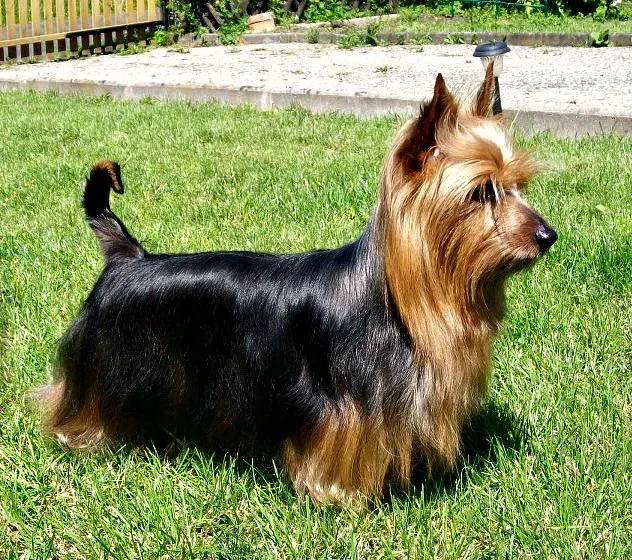
A short-legged terrier with a silky grey coat, the Cesky is calmer than most terriers, gentle and easy to live with.
History and origins
The Cesky Terrier (Český teriér) was created in the mid-20th century in Czechoslovakia by geneticist František Horák from the Scottish Terrier and the Sealyham Terrier, to produce a lighter earth dog.
Today it is mainly a companion dog.
Appearance and colours
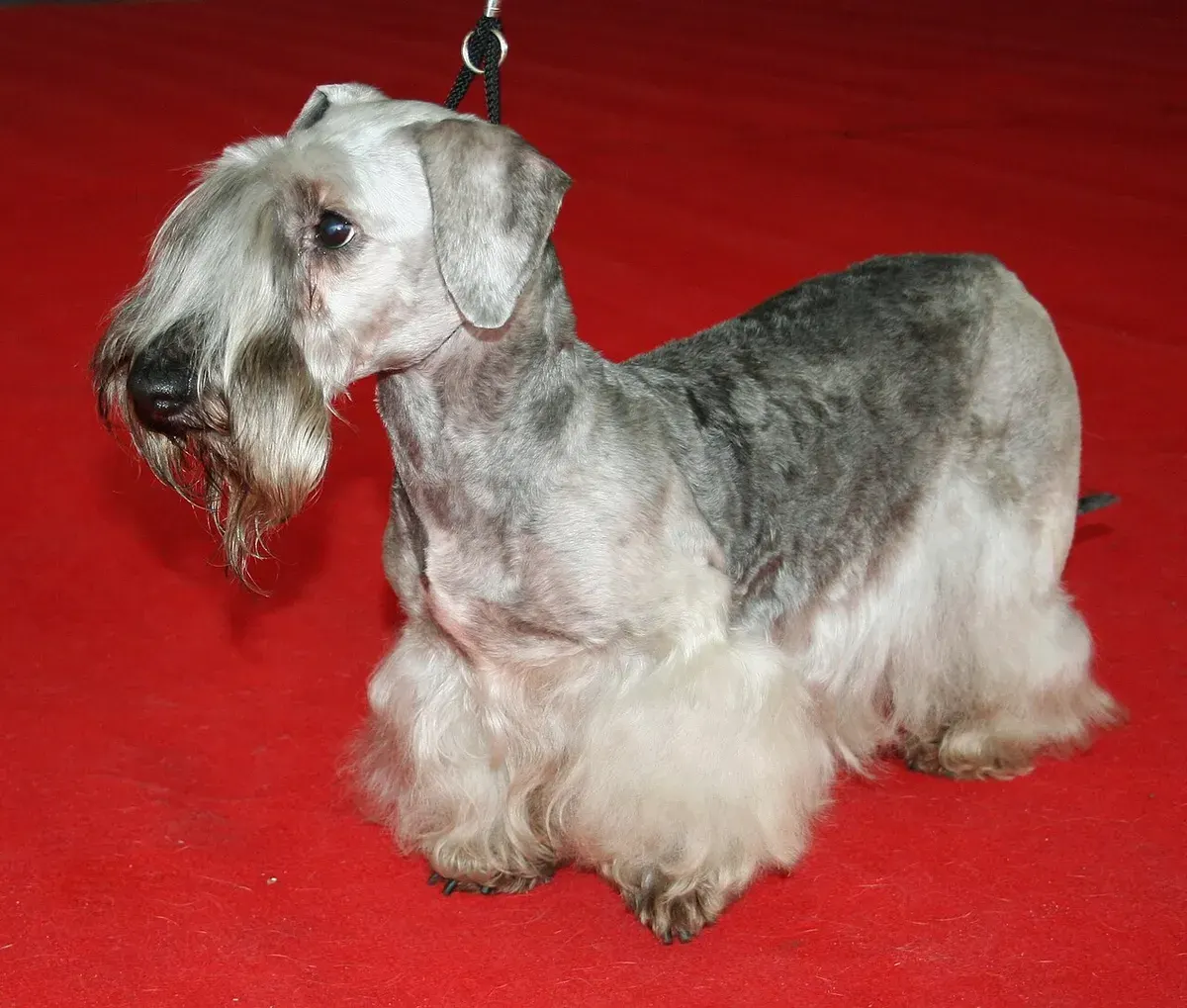
The FCI breed standard describes a short-legged, long-haired, well-made and well-muscled terrier of rectangular build, with smallish drop ears and a head shaped like a long, blunt wedge. The coat is long, fine but firm, slightly wavy with a silky gloss, and is clipped with scissors, except on the front of the head (forming eyebrows and beard), the lower legs, chest and belly.
There are two colour varieties: grey-blue (puppies are born black) and light coffee-brown (puppies are born chocolate brown), both with permitted yellow, grey or white markings on the head, neck, chest, belly and legs.
- Height at the withers: 25–32 cm (ideal 29 cm for males, 27 cm for females).
- Weight: 6–10 kg.
Temperament
Calm, gentle and affectionate, the Cesky is less highly strung and less scrappy than many terriers. It is reserved with strangers and a good watchdog.
It learns well with gentle, patient training.
With children and other pets
The standard describes a balanced, non-aggressive, pleasant and cheerful companion, somewhat reserved with strangers, with a calm and kind disposition. The Royal Kennel Club calls it the gentle national dog of the Czech Republic. It rates 4 out of 5 with children and 3 out of 5 with other dogs in our ratings.
- It is a calm, easy-going terrier that suits family life.
- It may still chase small animals.
Training tips
According to the standard, the Cesky Terrier was created by crossing a Sealyham Terrier with a Scottish Terrier, aiming for a light, short-legged, well-pigmented hunting terrier, easy to groom and to train; František Horák began fixing the breed in 1949 near Prague, it was first shown in 1959 and the FCI recognised it in 1963. Formerly used to hunt fox and badger, it is now mostly a house and companion dog. It rates 3 out of 5 for trainability in our ratings.
- The standard calls it easy to train: use short, reward-based sessions.
- Daily walks and games meet its moderate needs.
Health
An inherited neurological condition called 'Scottie cramp', some eye diseases and kneecap luxation should be monitored.
Genetic tests exist, so ask the breeder for them.
Common health issues in detail
The Royal Kennel Club notes that the breed can be affected by conformational concerns.
We found no large population study of health in the Cesky Terrier.
This is general information. For any question about your dog's health, consult a veterinarian.
Feeding
Small-breed food in measured portions suits it.
Avoid excess weight, which strains its long back.
Exercise
Daily walks and play, about an hour a day, are enough.
It loves to rummage and sniff.
Calm indoors, it is well suited to apartment life.
Grooming
Its silky, wavy coat is clipped rather than stripped: brush two to three times a week and trim every six to eight weeks. It sheds little.
Clean its beard.
Choosing a puppy
Choose a breeder who raises puppies in the home and is open about the health of the parents and relatives.
- Meet the mother: she should be calm and friendly.
- Ask how the coat is clipped and how often.
Our guide on how to recognise a responsible breeder explains what to ask.
Similar breeds
The Scottish Terrier is one of its two ancestors, according to the FCI standard. The West Highland White Terrier and Cairn Terrier are other short-legged terriers. The Miniature Schnauzer is another small, clipped and bearded dog.