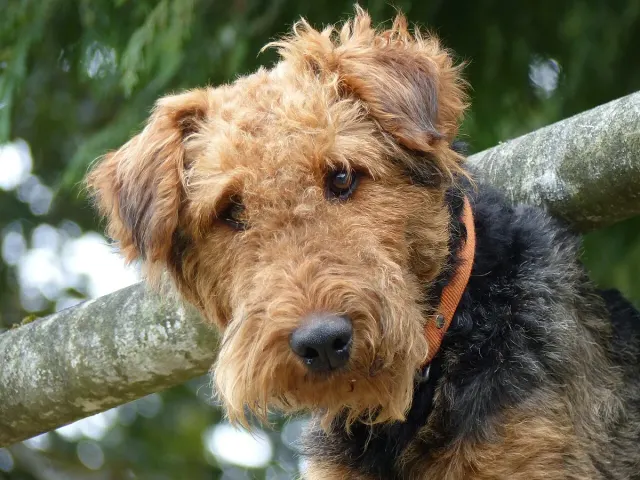
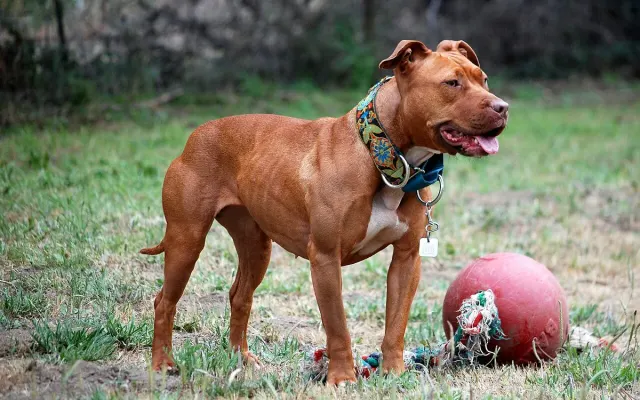
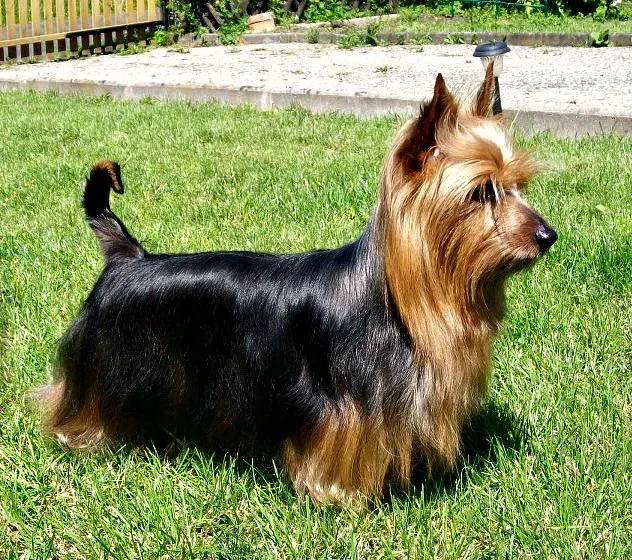
A small bearded terrier with a famous silhouette, the Scottie is dignified, independent and loyal, with a big personality.
History and origins
The Scottish Terrier, or 'Scottie', was bred in the Scottish Highlands to hunt foxes, badgers and rodents underground. The breed was fixed in the 19th century.
Its distinctive outline was popularised by advertising and by several politicians who owned one.
Appearance and colours
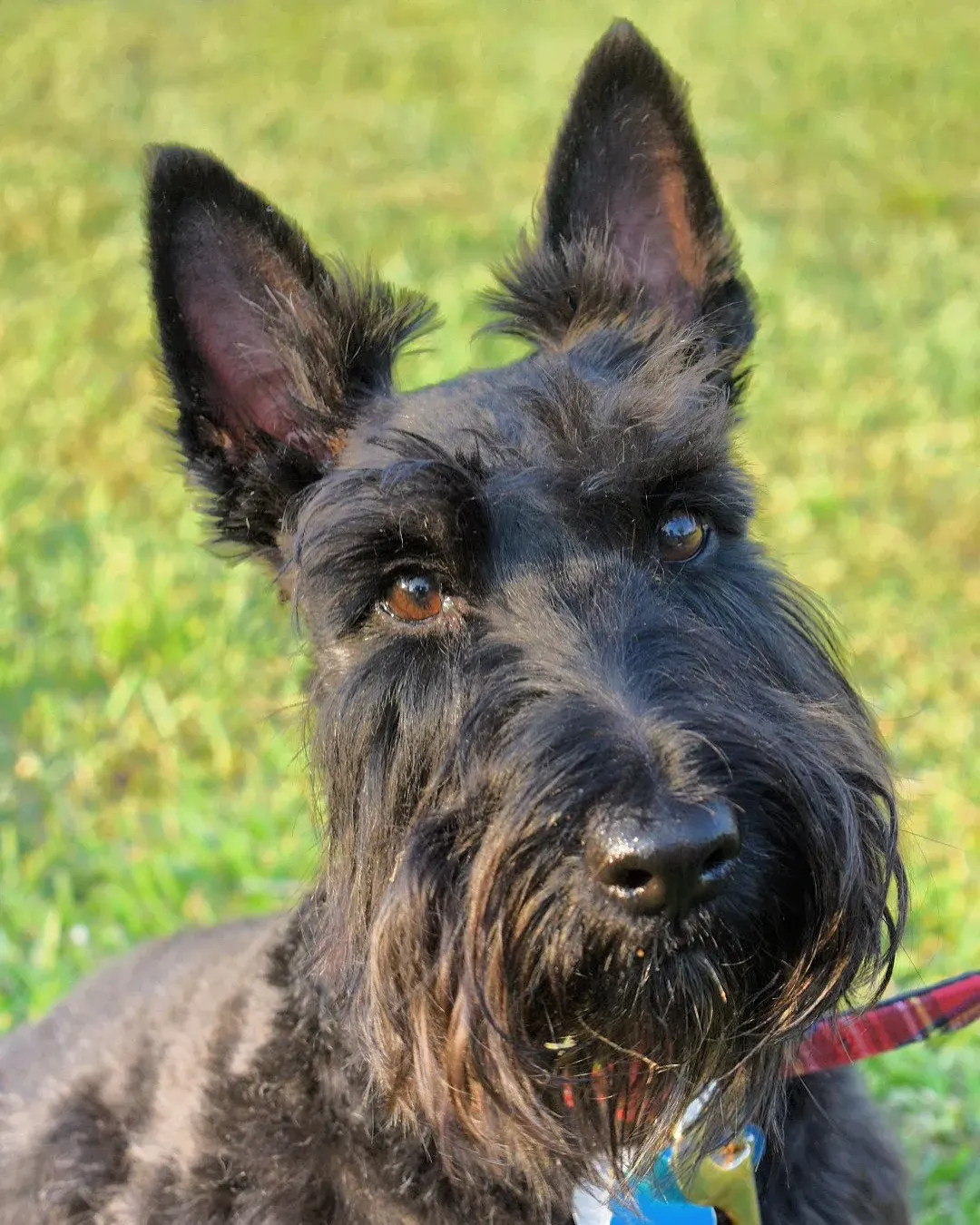
The FCI breed standard describes a thick-set, short-legged terrier, small enough to go to ground, alert in carriage, suggesting great power and activity in a small frame, with a head that looks long for the dog's size. It has a close-lying double coat: a short, dense, soft undercoat and a harsh, dense, wiry outer coat.
Colours are black, wheaten or brindle of any shade.
- Height at the withers: 25–28 cm.
- Weight: 8.5–10.5 kg.
Temperament
Dignified, brave and independent, the Scottie is very attached to its family but reserved with strangers. It is often described as a 'big dog in a small body'.
Stubborn, it needs patient, respectful training. It likes calm children.
With children and other pets
The standard describes a loyal, faithful, dignified, independent and reserved dog, courageous and highly intelligent, bold but never aggressive; to family and friends it is affectionate and cheerful, and quick to guard the home. It rates 3 out of 5 with children and 2 out of 5 with other dogs in our ratings.
- It is a loyal companion and an alert watchdog.
- Introduce it carefully to other dogs.
Training tips
According to the standard, the Scottish Terrier Club was formed in 1882, a year after the first standard, and three years after Captain Gordon Murray began the breed as we know it. The Royal Kennel Club notes that it was bred to go to ground after fox and badger and was once called the Aberdeen Terrier. It rates 2 out of 5 for trainability in our ratings.
- Use patient, consistent, reward-based training.
- Avoid exercise in the heat: it rates 2 out of 5 for heat tolerance.
Health
The breed has a higher risk of certain cancers (notably of the bladder), a neurological condition known as 'Scottie cramp' and a clotting disorder (von Willebrand disease).
Regular veterinary follow-up is recommended.
Common health issues in detail
Scottish Terriers have a much higher risk of bladder cancer (urothelial carcinoma) than other breeds, about 20 times higher according to a US study. Among 120 Scotties aged 6 or over screened for three years, 32 developed the cancer; it was associated with living with cigarette smokers, living within a mile of a marsh or wetland, and previous bladder infections.
This is general information. For any question about your dog's health, consult a veterinarian.
Feeding
Good-quality small-breed food in measured portions suits it.
Avoid excess weight.
Exercise
Daily walks of about an hour and play are enough.
It loves to dig, so give it a dedicated spot or keep an eye on the garden.
It can live in an apartment if walked every day.
Grooming
Its wiry coat needs brushing twice a week and stripping or clipping every two to three months. Clean its beard.
It sheds little.
Choosing a puppy
Choose a breeder who can tell you about cancer and other health problems in the puppy's family.
- Ask about the health and causes of death of the parents' relatives.
- Meet the mother: she should be confident and steady.
- Keep your dog away from cigarette smoke.
Our guide on how to recognise a responsible breeder explains what to ask.
Similar breeds
The West Highland White Terrier, Cairn Terrier, Cesky Terrier and Norwich Terrier are other short-legged terriers.