American Pit Bull Terrier
Athletic, tenacious and very people-oriented, the American Pit Bull Terrier is a demanding dog for experienced owners who know the local regulations.
History and origins
The American Pit Bull Terrier comes from bulldog and terrier crosses made in the United Kingdom in the 19th century and later developed in the United States. Sadly these dogs were used for fighting, which is now banned, but also as farm and family dogs.
The breed is recognised by American registries such as the United Kennel Club, but not by the Fédération Cynologique Internationale. The word 'pit bull' is often wrongly used for several different breeds or crosses.
Temperament
Enthusiastic, energetic and usually very affectionate with people, the Pit Bull is also a persistent and powerful dog. Its tolerance of other dogs can be low, even with good socialisation.
It needs early, positive and consistent training, daily supervision and owners able to anticipate risky situations.
Some regions restrict ownership of this breed; check your local regulations.
Health
It is generally robust but can be prone to skin allergies, hip dysplasia or certain inherited heart conditions depending on the line.
Regular veterinary follow-up, a healthy lifestyle and a controlled weight support its long-term health.
This is general information. For any question about your dog's health, consult a veterinarian.
Feeding
Being very active, it needs good-quality, protein-rich food matched to what it actually burns. Too much food and too many treats quickly lead to excess weight that strains its joints.
Fresh water should always be available, especially after exercise.
Exercise
This dog needs a lot of activity: at least one to two hours a day, with long walks, structured games and obedience exercises. Activities that channel its energy, such as scent work or canicross, suit it well.
Always keep it on a lead in public places.
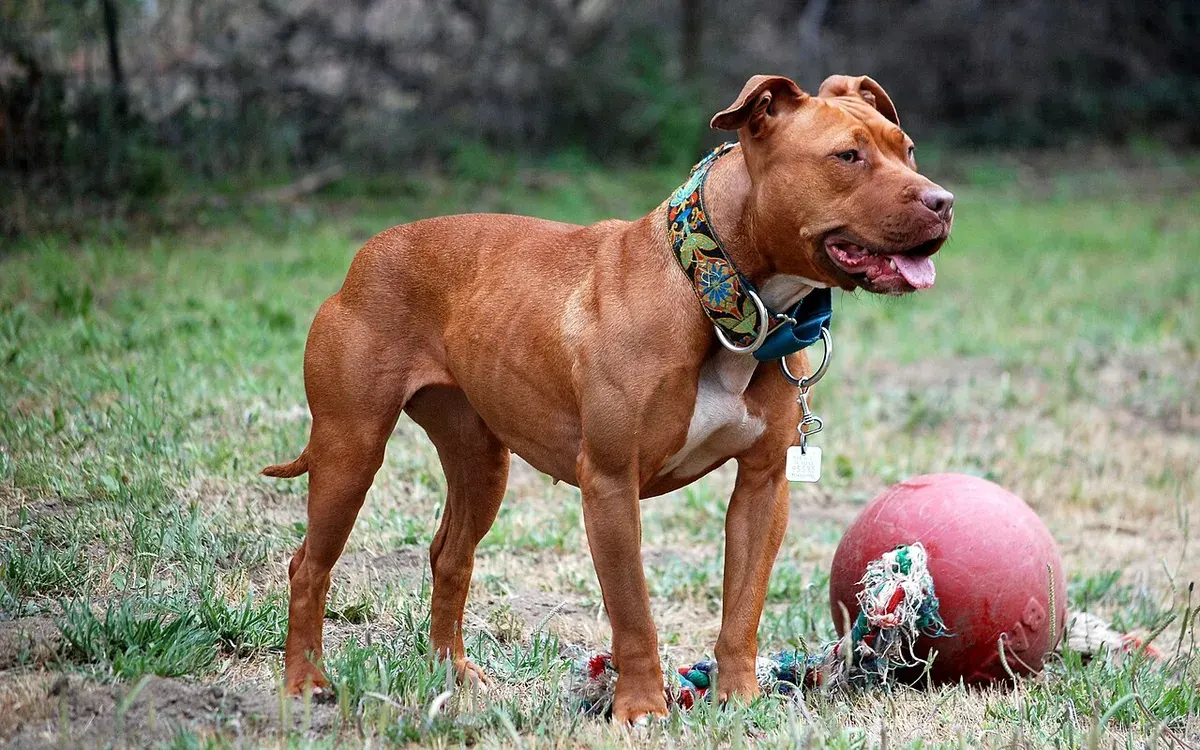
On a practical level, its very short coat gives little sun protection and its high energy makes it a poor fit for a city apartment. Avoid exercise in the hot hours and provide a secure, well-fenced space.
Grooming
Its short coat needs little care: weekly brushing and an occasional bath are enough.
Its skin can be sensitive to sun and irritation, so watch for redness and itching.