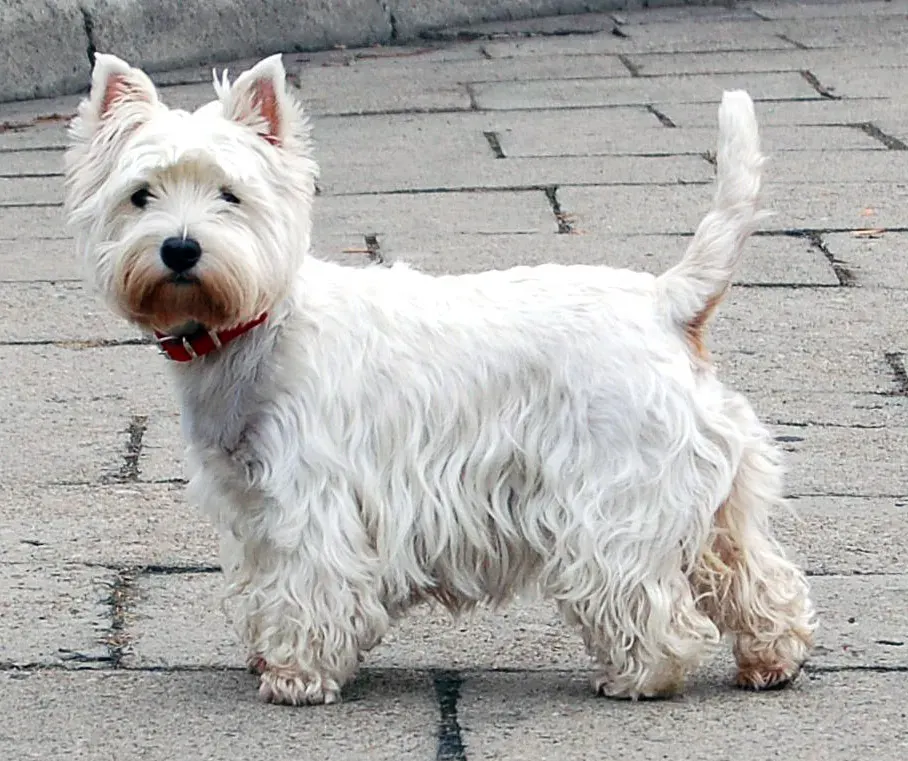
A small, all-white Scottish terrier, the Westie is cheerful, self-confident and very endearing. It adapts well to city life.
History and origins
The West Highland White Terrier comes from the western Highlands of Scotland, where it hunted foxes and rodents among the rocks. Its white coat is said to have been chosen to distinguish it from the quarry.
It has become one of the most popular companion terriers.
Appearance and colours
The FCI breed standard describes a strongly built terrier, deep in chest, with a level back and powerful hindquarters, combining strength and activity in a marked degree. It has a double coat: a harsh outer coat about 5 cm long, free from curl, over a short, soft, close undercoat.
The colour is white.
- Height at the withers: about 28 cm.
Temperament
Merry, curious and confident, the Westie is affectionate with its family while keeping an independent terrier character. It barks readily and loves to dig.
It needs consistent, patient training.
With children and other pets
The standard describes a small, active, game and hardy terrier with no small amount of self-esteem; alert, gay, courageous, self-reliant but friendly. It rates 3 out of 5 with children and 3 out of 5 with other dogs in our ratings.
- It is a cheerful, confident companion.
- Its coat needs regular grooming.
Training tips
The Royal Kennel Club notes that the breed was developed from Cairn Terrier stock by the Malcolms of Poltalloch in Argyllshire, who bred a white strain in the mid-19th century because white dogs were easier to see when working on the moors. It rates 3 out of 5 for trainability in our ratings.
- Use short, varied, reward-based sessions.
- Its terrier instinct is strong: be careful with small animals.
Health
The breed is often affected by skin allergies (atopic dermatitis). Pulmonary fibrosis, kneecap luxation and a jaw bone condition in puppies are also reported.
See a veterinarian if itching persists.
Common health issues in detail
A UK study of more than 6,600 Westies under veterinary care found a median lifespan of 13.4 years, males living slightly longer than females. The most common problems were dental (periodontal) disease (15.7%), ear infections (10.6%), overgrown nails (7.2%), allergic skin disease (6.5%) and obesity (6.1%); skin disorders were the most common group, and lower respiratory disease and cancer the most common causes of death.
This is general information. For any question about your dog's health, consult a veterinarian.
Feeding
Good-quality food, sometimes a sensitive-skin formula, suits it.
Avoid excess weight.
Exercise
It needs about an hour of activity a day, with walks and scent games.
Its hunting instinct may lead it to run off.
In summer, walk it during the cool hours; its pale skin is sensitive to the sun. Dust and heat can worsen its skin problems, so regular grooming and veterinary follow-up help.
Grooming
Its wiry coat needs brushing twice a week and stripping or clipping every two to three months.
Use gentle shampoos suited to its sensitive skin.
Choosing a puppy
Choose a breeder who can tell you about skin, dental and breathing problems in the puppy's family.
- Ask whether the parents have had allergic skin disease.
- Meet the mother: she should be confident and friendly.
- Plan regular dental care from puppyhood.
Our guide on how to recognise a responsible breeder explains what to ask.
Similar breeds
The Cairn Terrier, Scottish Terrier and Norwich Terrier are other short-legged terriers. The Bichon Frise is another small white dog.