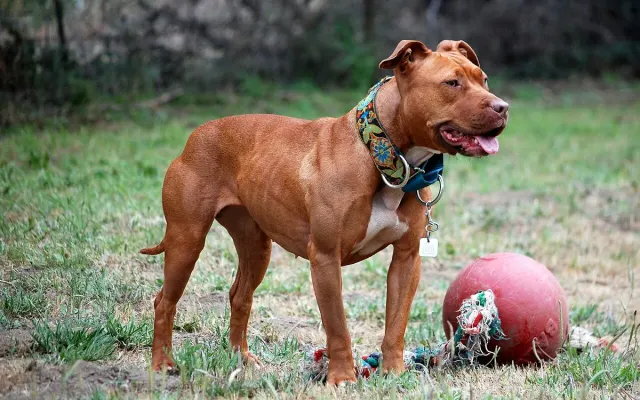
American Staffordshire Terrier
Muscular, brave and very affectionate with its family, the American Staffordshire Terrier needs a responsible owner and serious training.
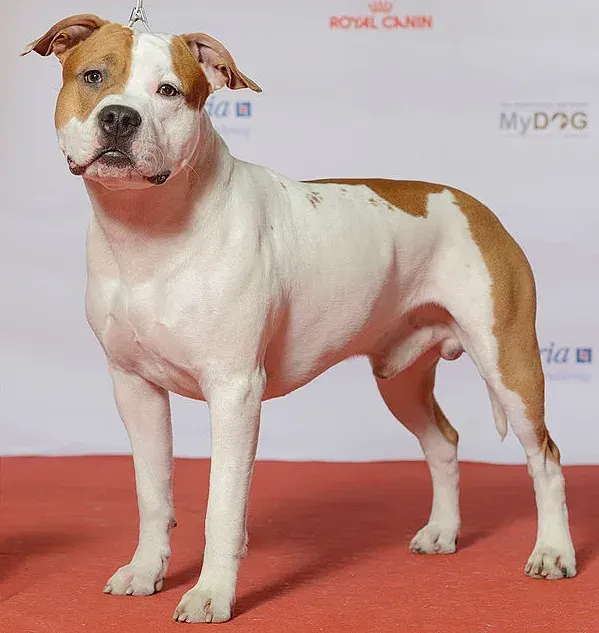
History and origins
The American Staffordshire Terrier descends from bull-and-terrier type dogs brought from England to the United States in the 19th century. It long shared its roots with the American Pit Bull Terrier before being recognised separately by American breed clubs in the 1930s, with breeding focused on a written standard and stable temperament.
It is recognised by the Fédération Cynologique Internationale in the terrier group.
Temperament
Cheerful, playful and very demonstrative with its family, the AmStaff is often described as a real 'velcro dog'. It is confident, brave and persistent.
Its strength and tenacity call for consistent training, careful socialisation from an early age and close supervision around other dogs, which it may not tolerate well.
Some regions restrict ownership of this breed; check your local regulations.
Health
This is a fairly robust breed. Some lines can show hip dysplasia, skin allergies or specific inherited conditions, so ask the breeder which screenings have been carried out.
Regular veterinary check-ups help detect skin and joint problems early.
This is general information. For any question about your dog's health, consult a veterinarian.
Feeding
Food-motivated, the AmStaff gains weight easily if it does not get enough exercise. Good-quality food in measured amounts and limited treats keep it in athletic shape.
Adjust portions to its real activity level and check its weight regularly.
Exercise
It needs around an hour of activity a day: brisk walks, structured tug games and obedience exercises. Dog sports suit it well when practised positively.
Choose secure areas and keep it on a lead around other dogs.
Its very short coat offers little protection from the sun: avoid outings during the hottest hours and give it shade. It can live in an apartment if it gets enough exercise and is well trained, but it copes poorly with long periods alone.
Grooming
Its short, stiff coat is very easy to care for: weekly brushing and an occasional bath are enough.
Keep an eye on its sometimes sensitive skin, as well as its nails and teeth.