Miniature Schnauzer
A small, bearded, cheerful and watchful dog, the Miniature Schnauzer is an ideal city companion that sheds very little.
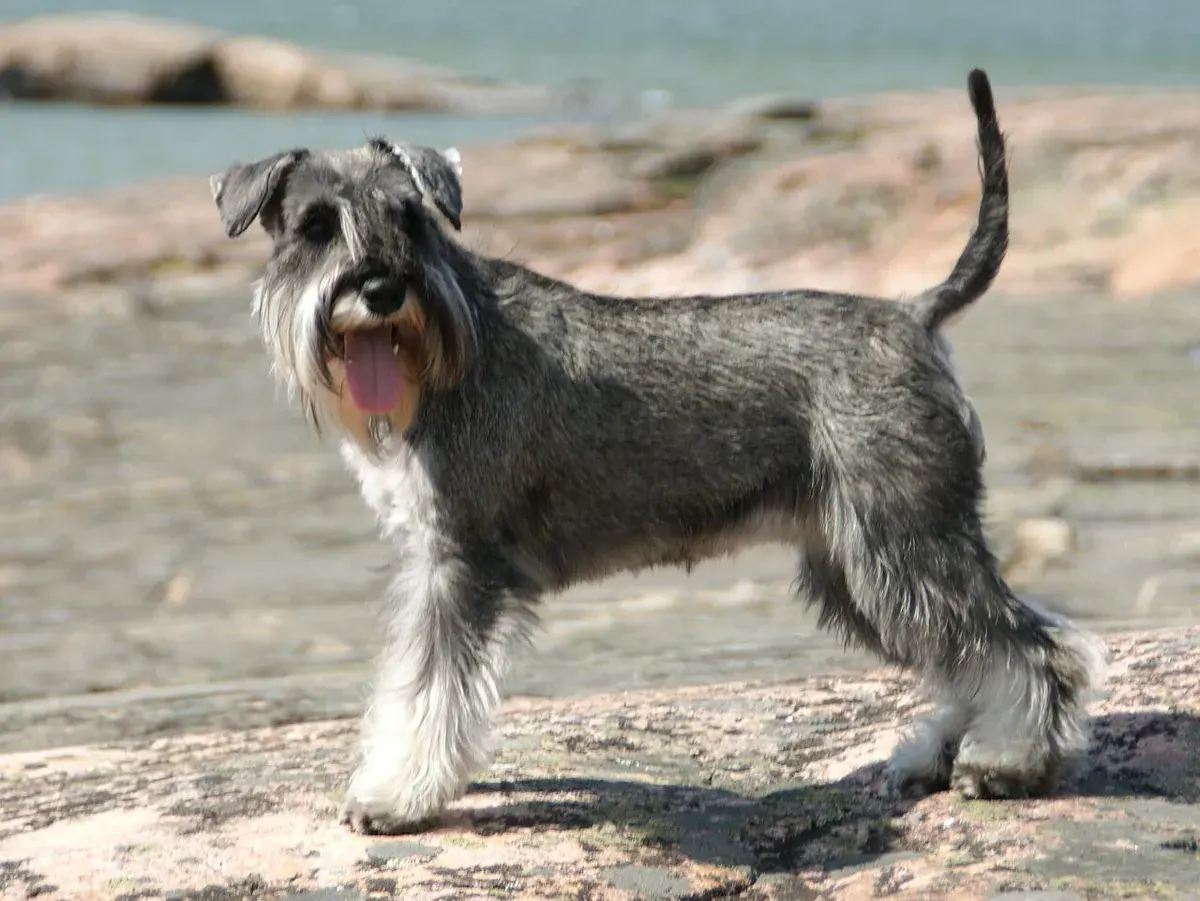
History and origins
The Miniature Schnauzer was developed in late 19th-century Germany from the Standard Schnauzer crossed with smaller breeds, to catch rats on farms.
Today it is the most popular of the three Schnauzers.
Temperament
Cheerful, intelligent and very attached to its family, the Mini Schnauzer is a good watchdog that barks readily. It usually gets on well with children.
It learns quickly but can be stubborn; positive training works well.
Health
The breed is predisposed to pancreatitis (often linked to overly fatty food), bladder stones, some eye diseases and diabetes.
Regular veterinary follow-up and an appropriate diet are important.
This is general information. For any question about your dog's health, consult a veterinarian.
Feeding
Avoid fatty foods and table scraps, which encourage pancreatitis. Small-breed food in measured portions suits it.
Fresh water helps prevent bladder stones.
Exercise
Daily walks and play are enough, about an hour a day.
It enjoys agility and scent games.
In summer, a shorter clip and walks during the cool hours improve its comfort. Budget for regular grooming, and keep fatty foods away during festive meals.
Grooming
Its wiry coat needs weekly brushing and a clip or stripping every six to eight weeks. It sheds very little.
Clean its beard after meals.