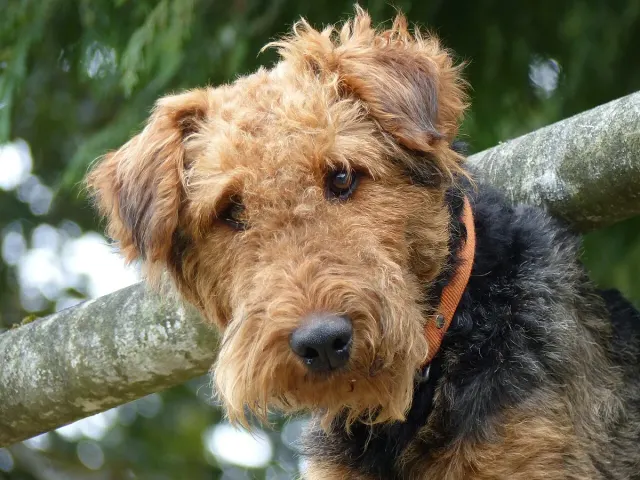
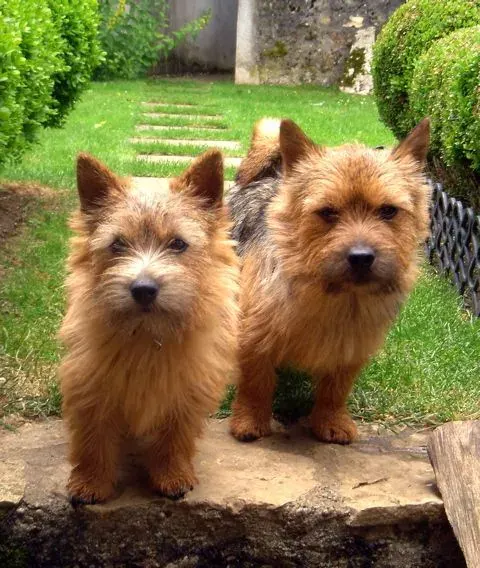
One of the smallest terriers, the prick-eared Norwich is cheerful, sociable and fearless, an ideal city companion.
History and origins
The Norwich Terrier comes from eastern England around the city of Norwich, where it caught rats in stables and was a favourite of Cambridge students in the 19th century.
It differs from its close cousin, the Norfolk Terrier, by its upright ears.
Appearance and colours
The FCI breed standard describes one of the smallest terriers: low, keen, compact and strong, with good substance and bone; honourable scars from fair wear and tear are not to be penalised. The coat is hard, wiry and straight, close-lying with a thick undercoat, longer and rougher on the neck to frame the face.
Colours are all shades of red, wheaten, black and tan, or grizzle; white marks are tolerated.
- Ideal height at the withers: 25 cm.
Temperament
Cheerful, confident and affectionate, the Norwich is more sociable with other dogs than many terriers. It remains brave and curious.
It learns well with positive training, but its hunting instinct calls for vigilance.
With children and other pets
The standard describes a lovable, not quarrelsome dog, tremendously active, hardy, gay and fearless. It rates 4 out of 5 with children and 4 out of 5 with other dogs in our ratings.
- It is a cheerful, sturdy family dog.
- It enjoys activity despite its size.
Training tips
According to the standard, the Norwich and Norfolk Terriers take their names from the English county and city; in the early 1800s they were simply farm dogs, and Glen of Imaal, red Cairn and Dandie Dinmont terriers are among the breeds behind them. They were used on fox, badger and rats. The Royal Kennel Club notes that the prick-eared Norwich and the drop-eared Norfolk were shown as one breed until 1964. It rates 3 out of 5 for trainability in our ratings.
- Use short, reward-based sessions.
- Teach a reliable recall early.
Health
This is a fairly robust breed. Some upper-airway problems, kneecap luxation and epilepsy should be monitored.
Regular veterinary follow-up is recommended.
Common health issues in detail
The breed is predisposed to upper airway syndrome, which narrows the airway in a similar way to breathing problems in flat-faced breeds. A study of 401 Norwich Terriers examined by laryngoscopy linked the condition to a variant in the ADAMTS3 gene, which may cause swelling of the airway tissues.
The Royal Kennel Club notes that the breed can be affected by conformation-related problems.
This is general information. For any question about your dog's health, consult a veterinarian.
Feeding
Food-loving, it gains weight easily: measure small-breed portions.
Limit treats.
Exercise
Daily walks and play are enough, about an hour a day.
Keep it on a lead outside fenced areas.
In summer, walk it during the cool hours and watch its breathing during exercise. It is a good choice for a first terrier.
Grooming
Its wiry coat needs weekly brushing and hand-stripping twice a year.
It sheds little.
Choosing a puppy
Choose a breeder who can tell you about breathing problems in the puppy's family.
- Ask whether the parents have had their airways checked.
- Watch the parents breathe at rest and after exercise: noisy breathing is a warning sign.
- Meet the mother: she should be cheerful and confident.
Our guide on how to recognise a responsible breeder explains what to ask.
Similar breeds
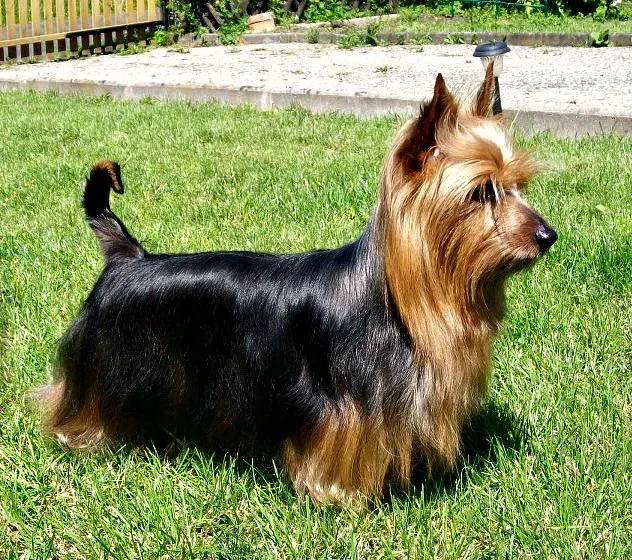
The Cairn Terrier, Border Terrier, West Highland White Terrier and Australian Terrier are other small working terriers.