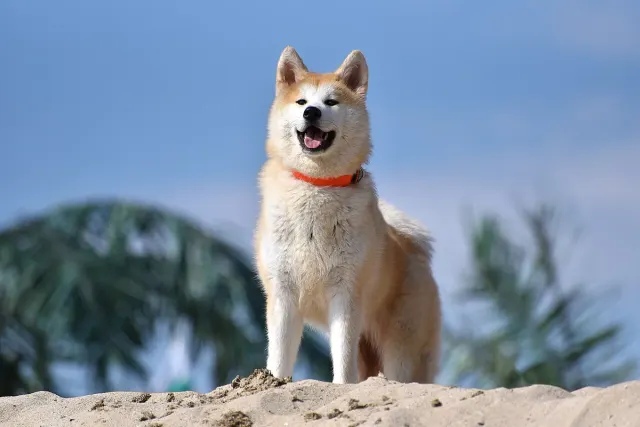
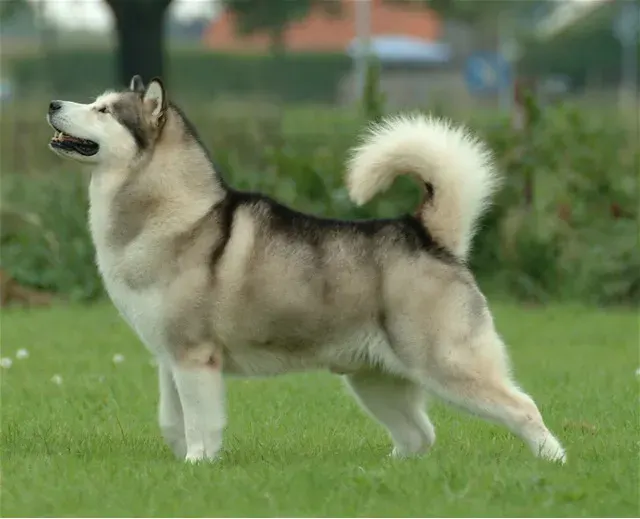
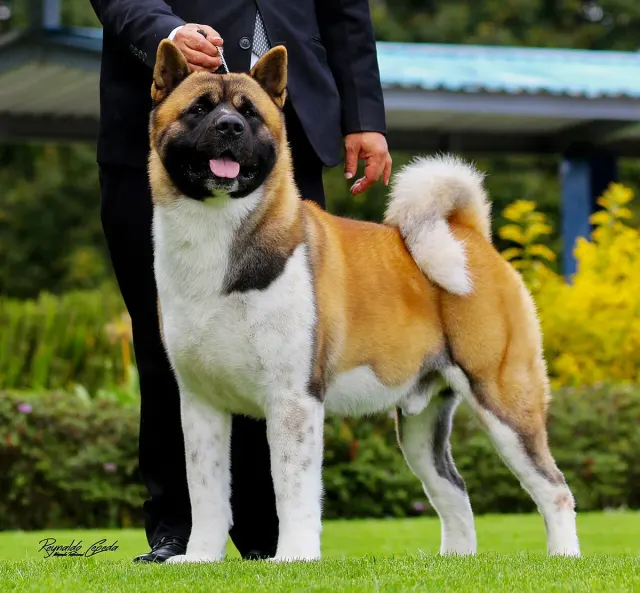
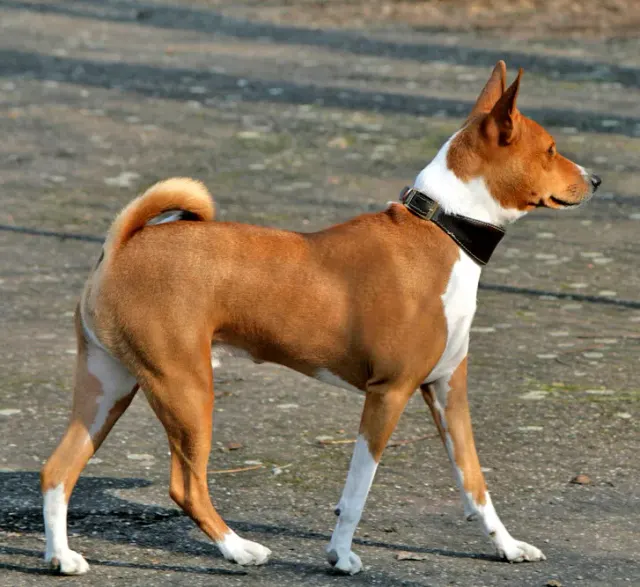
A small fox-like Japanese dog, the Shiba is clean, independent and proud, with a rather cat-like character.
History and origins
The Shiba is the smallest of the Japanese spitz breeds. It was used in Japan's mountains to hunt small game and birds.
Nearly lost after the Second World War, it was rebuilt from a few regional bloodlines.
Appearance and colours
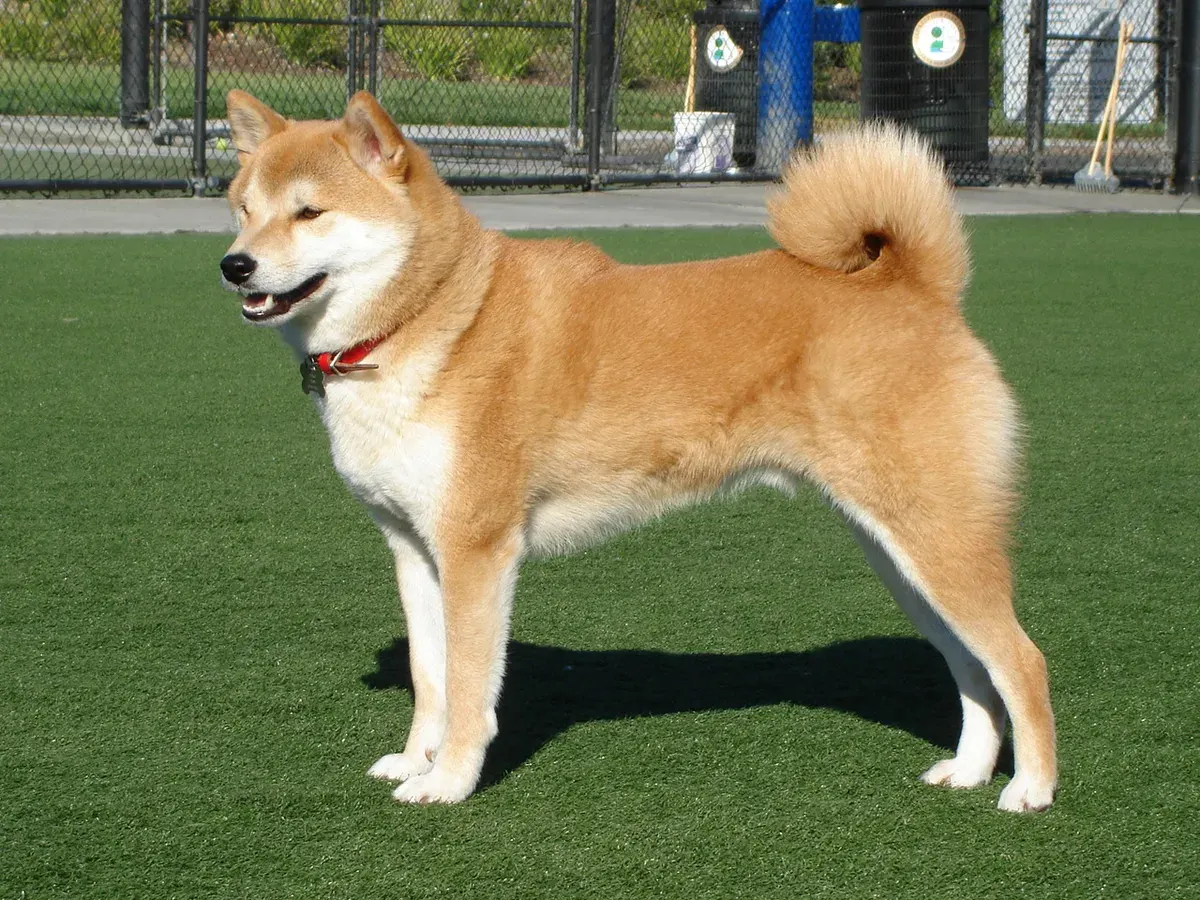
The FCI breed standard describes a small, well-balanced, well-boned and well-muscled dog with a strong constitution and quick, free movement. The outer coat is harsh and straight over a soft, dense undercoat.
Colours are red, black and tan, sesame, black sesame and red sesame, all with "urajiro", a whitish coat on the sides of the muzzle, cheeks, throat, chest, belly and underside of the tail.
- Height at the withers: 39.5 cm for males, 36.5 cm for females (± 1.5 cm).
Temperament
Independent, alert and very clean, the Shiba is affectionate in its own way without being clingy. It can be reserved with strangers and intolerant of other dogs.
Its recall is often unreliable, so patient, positive training started early is essential.
With children and other pets
The standard describes a faithful temperament with keen senses and high alertness. It rates 3 out of 5 with children and 2 out of 5 with other dogs in our ratings.
- It is independent and alert: early socialisation helps.
- It sheds a great deal (5 out of 5 in our ratings).
Training tips
According to the standard, the Shiba has been a native Japanese breed since ancient times; its name means "small dog", and it hunted small animals and birds in the mountains facing the Sea of Japan. Crossbreeding with imported English gundogs made pure Shibas scarce by the 1920s, the standard was unified in 1934, and in 1937 the breed was designated a "natural monument". It rates 2 out of 5 for trainability in our ratings.
- Use patient, consistent, reward-based training.
- Teach a reliable recall early: it is an independent hunter.
Health
This is a fairly robust breed. Skin allergies, kneecap luxation, glaucoma and some rare inherited neurological diseases should be monitored.
Regular veterinary follow-up is recommended.
Common health issues in detail
A 2026 Japanese study of 109 Shiba Inu found that a variant near the SIX6 gene, a major glaucoma gene in humans, was more common in dogs with glaucoma and raised the odds of the disease about 3.6 times.
The Royal Kennel Club recommends as a minimum for breeding dogs eye testing including gonioscopy, and as best practice hip scoring and DNA tests for GM1 and GM2 gangliosidosis, two storage diseases, added to its best-practice guidelines from December 2025.
This is general information. For any question about your dog's health, consult a veterinarian.
Feeding
Good-quality small-breed food in measured portions suits it.
Avoid excess weight.
Exercise
It needs about an hour of daily activity, always on a lead or in a very securely fenced area.
It loves to explore and sniff.
It lives well in an apartment if walked enough; expect a lot of hair during moults.
Grooming
Its double coat needs weekly brushing, but it sheds enormously during its two annual moults.
It grooms itself like a cat and has little odour.
Choosing a puppy
Choose a breeder who eye-tests the parents, including gonioscopy, scores hips and does the gangliosidosis DNA tests.
- Ask for the parents' eye, hip and DNA results.
- Ask whether relatives have had glaucoma.
- Meet the mother: she should be confident and calm.
Our guide on how to recognise a responsible breeder explains what to ask.
Similar breeds
The Akita is a larger Japanese spitz. The Korean Jindo, Japanese Spitz and Finnish Spitz are other spitz breeds.