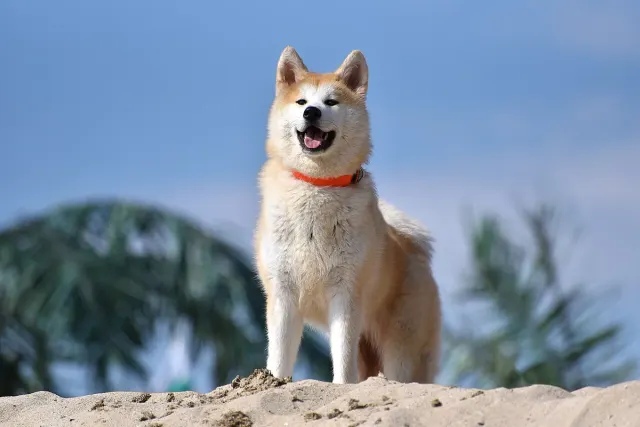
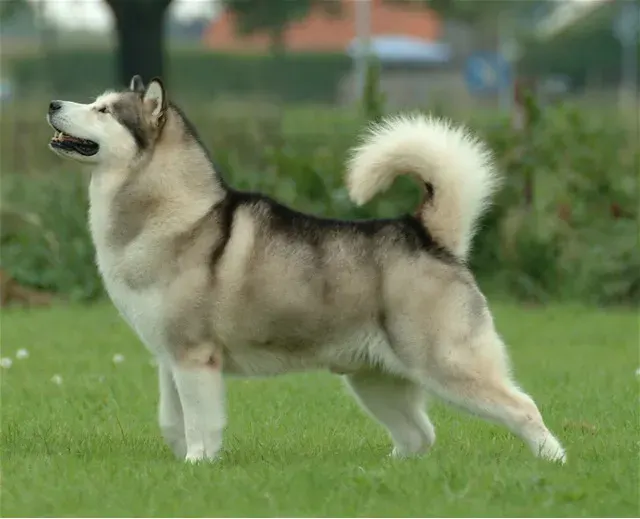
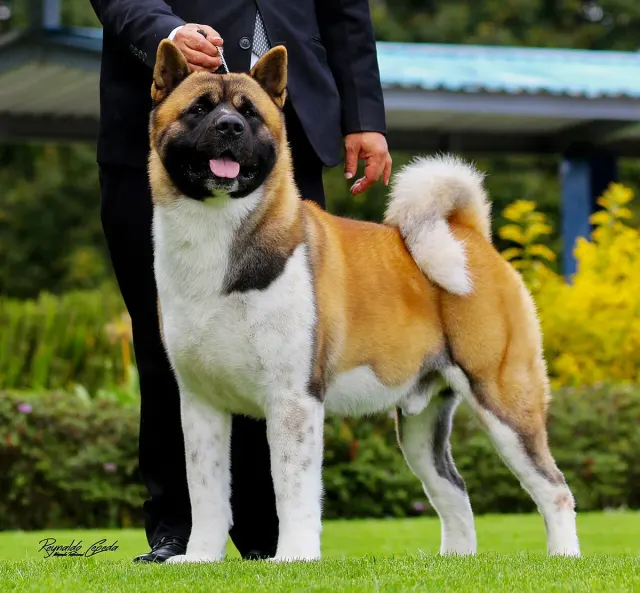
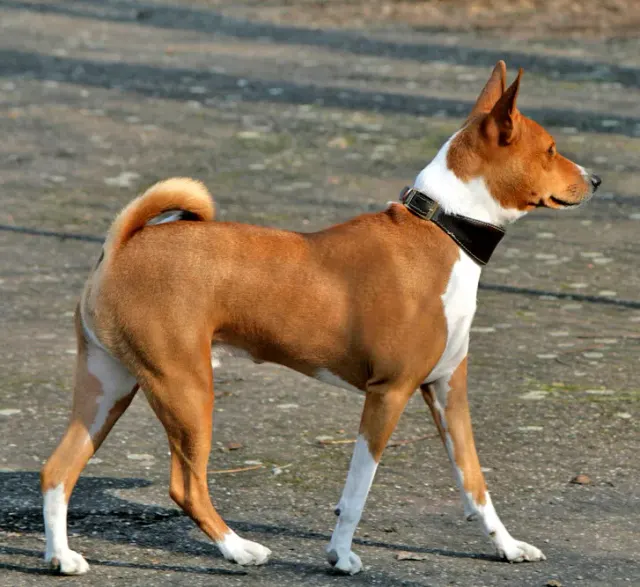
South Korea's national dog, the Jindo is a loyal, clean and independent spitz that often bonds deeply with one person.
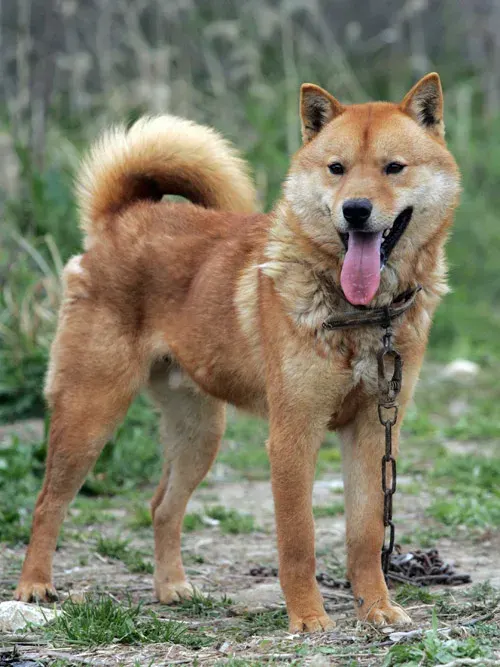
History and origins
The Korean Jindo comes from Jindo Island in south-western Korea, where it hunted in small groups and guarded homes. It is protected as a national treasure in South Korea.
It is recognised by the Fédération Cynologique Internationale.
Appearance and colours
The FCI breed standard describes a well-proportioned, medium-sized spitz-type dog used for hunting and guarding, with erect ears and a rolled or sickle-shaped tail. It has a double coat: a soft, dense, light undercoat and a stiff outer coat that stands slightly off the body.
Colours are red fawn, white, black, black and tan, wolf grey and brindle.
- Height at the withers: 50–55 cm for males, 45–50 cm for females.
- Weight: 18–23 kg for males, 15–19 kg for females.
Temperament
Very loyal, reserved and independent, the Jindo often bonds deeply with one person. It is wary of strangers and may be intolerant of other dogs.
Intelligent but stubborn, it needs patient training and early socialisation. It is known for its escape skills.
With children and other pets
The standard describes a dog with a very strong hunting instinct, bold, brave, alert and careful, and above all extremely faithful to its master; it is generally not fond of other animals, especially males. It rates 3 out of 5 with children and 2 out of 5 with other dogs in our ratings.
- It is very loyal to its family.
- Be careful with other dogs and small animals.
Training tips
According to the standard, the Jindo has existed for thousands of years on Jindo Island, at the south-western tip of the Korean peninsula, where it was preserved by the island's isolation. The Royal Kennel Club calls it the national breed of Korea. The standard calls it a one-man dog that accepts a new owner but never forgets its first. It rates 3 out of 5 for trainability in our ratings.
- Use patient, consistent, reward-based training.
- Teach a reliable recall early: its hunting instinct is strong.
Health
This is a robust breed. Hypothyroidism and some skin allergies should be monitored.
Regular veterinary follow-up is recommended.
This is general information. For any question about your dog's health, consult a veterinarian.
Feeding
Good-quality food matched to its activity suits it. Some individuals are fussy eaters.
Avoid sudden changes.
Exercise
It needs an hour or more of daily activity: long walks, running and scent games.
High fencing is essential: it jumps and digs.
It needs a house with a well-fenced garden and an available owner.
Grooming
Its double coat needs weekly brushing, far more during moults.
It is very clean and has little odour.
Choosing a puppy
The FCI standard says only healthy dogs with typical breed conformation should be used for breeding.
- Ask what health checks the parents have had.
- Meet the mother: she should be confident and calm.
Our guide on how to recognise a responsible breeder explains what to ask.
Similar breeds
The Akita and Shiba Inu are other Asian spitz breeds. The Finnish Spitz and Norwegian Elkhound are other hunting spitz.