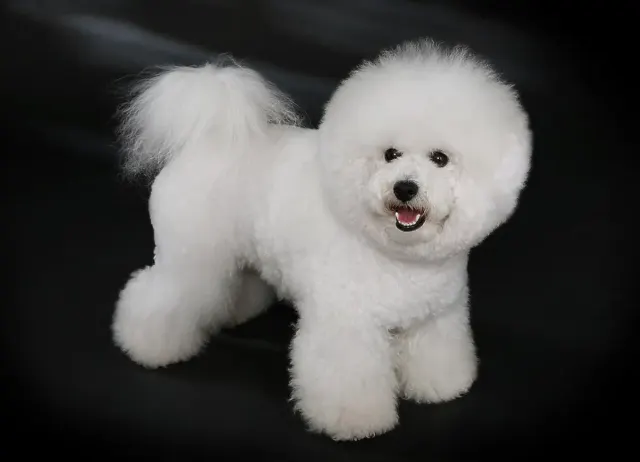
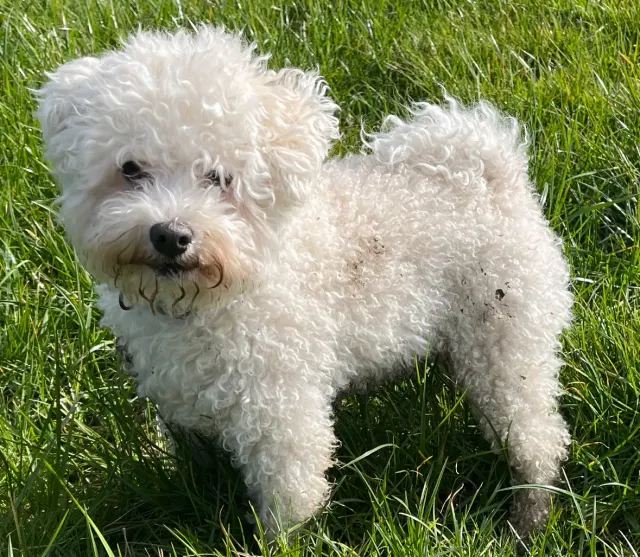
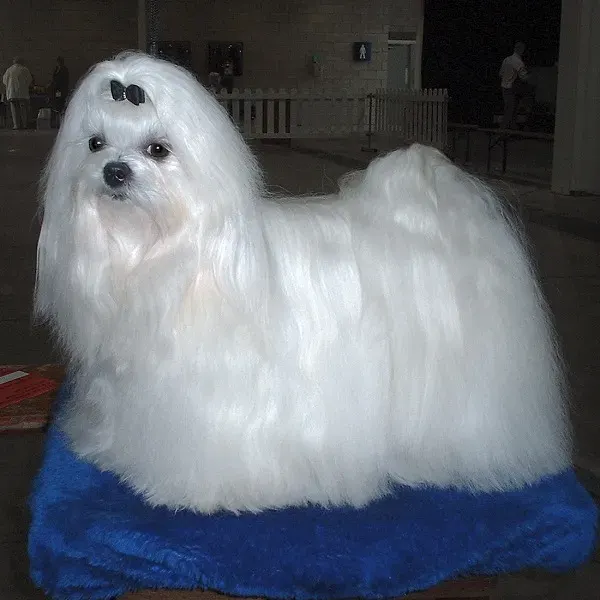
A small dog with a long, silky white coat, the Maltese is gentle, playful and devoted to its owners. It sheds very little.
History and origins
The Maltese is one of Europe's oldest companion breeds. Small white dogs of this type were described in antiquity around the Mediterranean and are traditionally linked with the island of Malta.
Italy is now the breed's reference country with the Fédération Cynologique Internationale.
Appearance and colours
The FCI breed standard describes a small dog with a longish body, covered with a very long white coat, very elegant, with a proud, distinguished head carriage. The coat is dense, shiny and silky, very long and perfectly straight, falling like a cape to the ground, with no undercoat.
The Royal Kennel Club lists the colours white, white with black points and white with lemon markings.
- Height at the withers: 21–25 cm for males, 20–23 cm for females.
- Weight: 3–4 kg.
Temperament
Affectionate, lively and playful, the Maltese loves being at the centre of family life. It is usually sociable with other dogs and can be reserved with strangers.
It copes poorly with long periods alone. With young children, play should be supervised because it is small and fragile.
With children and other pets
The standard describes a lively, affectionate, very calm and very intelligent dog. It rates 3 out of 5 with children and 4 out of 5 with other dogs in our ratings.
- It is tiny: teach children to handle it gently.
- Its long coat needs daily care (5 out of 5 for grooming needs in our ratings).
Training tips
According to the standard, the name does not mean that the breed comes from Malta: it comes from a Semitic word meaning refuge or harbour, found in several Mediterranean place names. Its ancestors lived in the ports of the central Mediterranean, hunting mice and rats in warehouses and ships' holds, and little dogs of this kind were already listed in Aristotle's time. It rates 3 out of 5 for trainability in our ratings.
- Use short, gentle, reward-based sessions.
- Start grooming routines early.
Health
The main things to watch are the teeth (tartar), kneecaps, eyes (tear staining) and, in puppies, low blood sugar. Some lines have liver problems.
Regular veterinary check-ups and careful dental care help it live a long life.
Common health issues in detail
The Royal Kennel Club recommends eye testing as best practice for breeding dogs.
We found no large population study of health in the Maltese.
This is general information. For any question about your dog's health, consult a veterinarian.
Feeding
It needs small portions of food for very small dogs. Treats and table scraps quickly lead to weight gain and digestive upsets.
Puppies should have several small meals a day.
Exercise
Daily walks and play at home are enough. It also enjoys short training sessions.
A harness is better than a collar.
In summer a short clip keeps it comfortable; walk it in the cool hours and avoid scorching ground. Its white coat picks up city dust easily, so plan for regular grooming.
Grooming
Its long, fine coat barely sheds but tangles easily: brush daily if kept long, or choose a regular short clip at the groomer. Clean around the eyes every day.
Tooth brushing is essential.
Choosing a puppy
Choose a breeder who eye-tests the parents.
- Ask for the parents' eye results.
- Meet the mother: she should be lively and affectionate.
Our guide on how to recognise a responsible breeder explains what to ask.
Similar breeds
The Bichon Frise, Bolognese, Havanese and Coton de Tulear are other small white or Bichon-type companions.