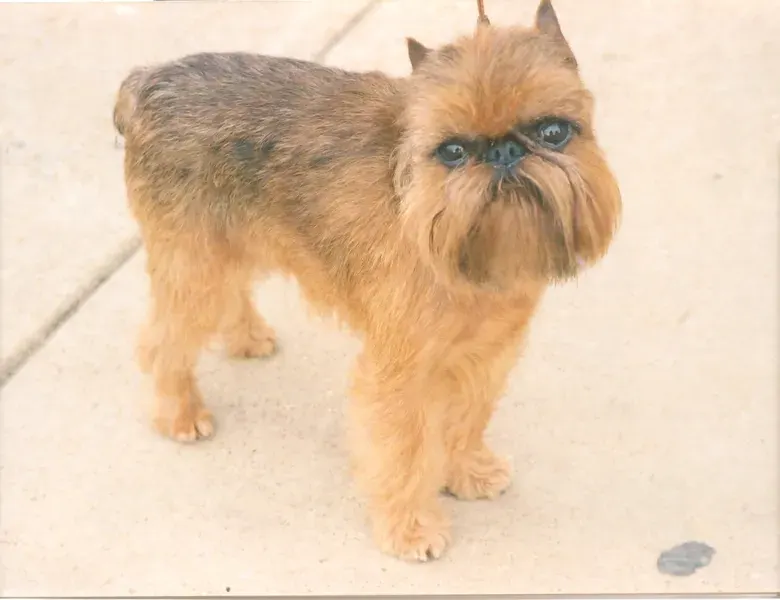
A small Belgian dog with a wiry red coat and an almost human expression, the Brussels Griffon is lively, curious and devoted to its owner.
History and origins
The Brussels Griffon descends from small ratting dogs that guarded stables and cabs in 19th-century Brussels. Crosses with companion breeds gave it its short, expressive face.
Queen Marie Henriette of Belgium helped make it popular.
Appearance and colours
The FCI breed standard describes a small companion dog, intelligent, well balanced, alert, proud and robust, practically square, attracting attention by its almost human expression; the head is quite large for the body and is the breed's most striking feature. The FCI recognises three related breeds: the Griffon Bruxellois and Griffon Belge, both rough-coated, and the short-coated Petit Brabançon.
In the Griffons, the coat is naturally harsh, slightly wavy and trimmed, with an undercoat. The Griffon Bruxellois is red or reddish, while the Griffon Belge is black or black and tan. The Royal Kennel Club, which groups them under one name, lists red, black and black and tan, in rough and smooth coats.
- Weight: 3.5–6 kg.
Temperament
Lively, curious and self-assured, the Brussels Griffon bonds strongly with one person. It is sensitive and dislikes being jostled, so care is needed with young children.
Gentle, consistent training suits it.
With children and other pets
The standard describes a well-balanced little dog, alert, proud, very attached to its owner and very watchful, neither timid nor aggressive. The Royal Kennel Club calls it a smart little dog from Belgium with a terrier-like personality. It rates 2 out of 5 with children in our ratings.
- It is small: it suits calm homes with older, gentle children.
- It is watchful and may bark at visitors.
Training tips
According to the standard, the three breeds descend from a small rough-coated dog, the "Smousje", long found around Brussels, where these dogs guarded carriages and kept stables free of rodents; in the 19th century, Ruby King Charles Spaniel and Pug blood was added, and the first Griffons Bruxellois were registered in 1883. It rates 3 out of 5 for trainability in our ratings.
- Use short, positive, reward-based sessions.
- Avoid exertion in warm weather: it rates 1 out of 5 for heat tolerance.
Health
Its short muzzle exposes it to breathing difficulties and heat intolerance. Syringomyelia, kneecap luxation and eye problems should also be monitored.
Regular veterinary follow-up is recommended.
This is general information. For any question about your dog's health, consult a veterinarian.
Feeding
Small-breed food in measured portions suits it.
Avoid excess weight.
Exercise
Daily walks and indoor games are enough.
No exertion at all in hot weather.
It is perfectly suited to apartments.
Grooming
Its wiry coat needs weekly brushing and hand-stripping a few times a year. Clean its beard and around its eyes.
It sheds little.
Choosing a puppy
The FCI standard disqualifies aggressive or overly shy dogs. Choose a breeder who selects for easy breathing and moderate features, and raises puppies in the home.
- Meet the parents: they should breathe quietly at rest and after play.
- Ask about any health problems in the parents and relatives.
Our guide on how to recognise a responsible breeder explains what to ask.
Similar breeds
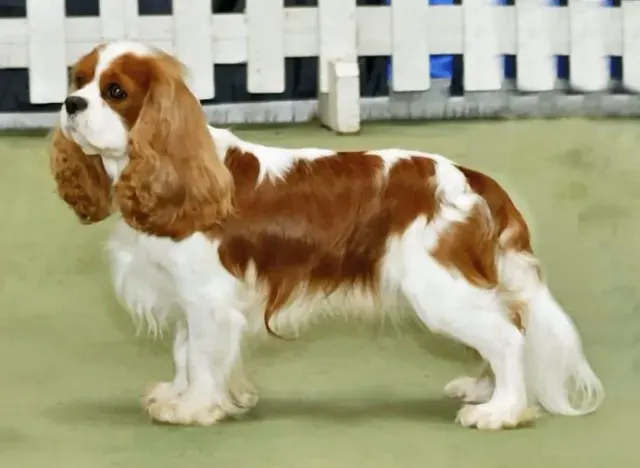
The Affenpinscher is a related rough-coated toy breed. The Pug and Cavalier King Charles Spaniel are flat-faced companions linked to its history. The Miniature Schnauzer is another small bearded dog.