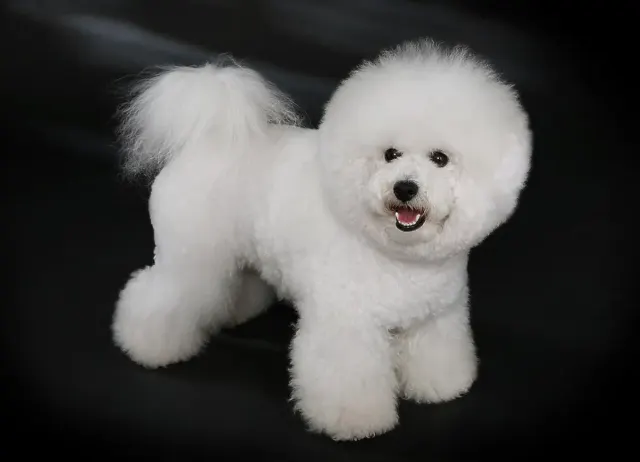
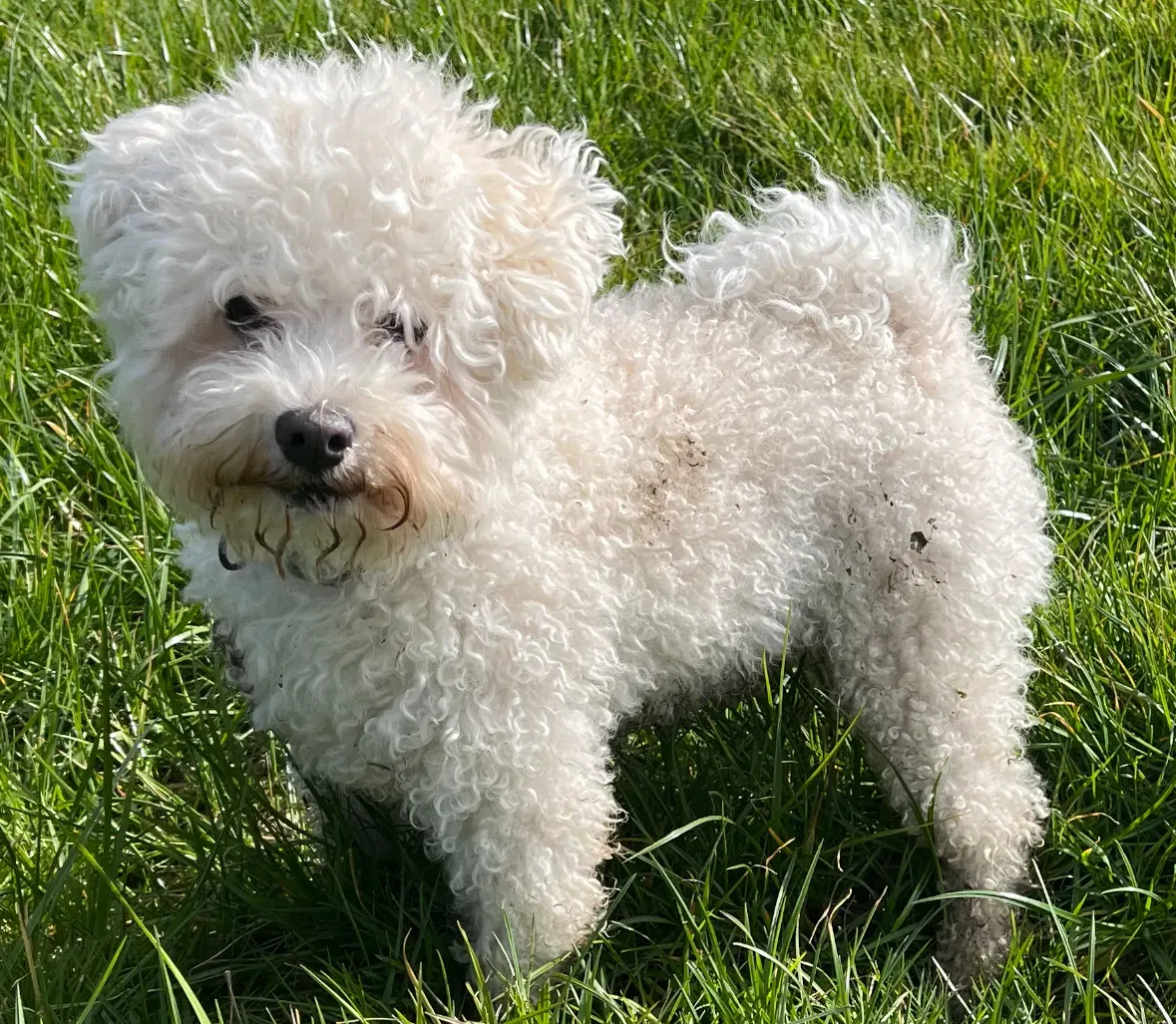
A small, all-white Italian bichon with a fluffy coat, the Bolognese is calm, affectionate and devoted to its owners.
History and origins
The Bolognese is an old Italian breed associated with the city of Bologna. It was given as a gift between noble families during the Renaissance.
It belongs to the bichon family, like the Maltese and the Bichon Frise.
Appearance and colours
The FCI breed standard describes a small, stocky, compact dog covered with a long, fluffy, pure white coat, square in build. The Royal Kennel Club speaks of great beauty and character, with a coat of white flocks.
The hair is long all over the body, shorter on the muzzle, and forms long flocks of the same texture everywhere; it stands off the body rather than lying flat, and never forms fringes. The colour is pure white; very slight shades of ivory are allowed.
- Height at the withers: 27–30 cm for males, 25–28 cm for females.
- Weight: 2.5–4 kg.
Temperament
Calm, gentle and very affectionate, the Bolognese is more laid-back than other bichons. It bonds with one or two people and can be reserved with strangers.
It copes poorly with being alone and responds well to gentle training.
With children and other pets
The standard describes a very serene dog, generally not very active, calm and very faithful to its owner and household. It rates 4 out of 5 with children and 4 out of 5 with other dogs in our ratings.
- It is tiny: teach children to handle it gently.
- It is a companion dog that likes to stay close to its people.
Training tips
According to the standard, the Bolognese shares its origins with the Maltese: their distant ancestors are the little dogs that Aristotle called "canes melitenses". Already known in Roman times, it was a prized gift among the powerful, and Cosimo de' Medici took eight of them to Brussels as gifts for Belgian nobles. It rates 3 out of 5 for trainability in our ratings.
- Use gentle, short, reward-based sessions.
- Daily walks and play are enough for its moderate needs.
Health
This is a fairly robust breed. Kneecap luxation, dental problems and some eye conditions should be monitored.
Regular veterinary follow-up is recommended.
Common health issues in detail
The Royal Kennel Club recommends eye testing as best practice for breeding dogs.
We found no large population study of health in the Bolognese.
This is general information. For any question about your dog's health, consult a veterinarian.
Feeding
Food for very small dogs, in small portions, suits it.
Limit treats.
Exercise
Calm daily walks and indoor play are enough.
It adapts very well to a quiet pace of life.
It is perfectly suited to apartments and suits calm people, including older owners.
Grooming
Its fluffy coat hardly sheds but mats: brush several times a week.
Clean around the eyes and brush its teeth.
Choosing a puppy
Choose a breeder who eye-tests the parents and raises the puppies in the home.
- Ask for the parents' eye certificates.
- Meet the mother: she should be calm and friendly.
- Ask how the coat is maintained.
Our guide on how to recognise a responsible breeder explains what to ask.
Similar breeds
The Maltese shares the same ancient ancestors, according to the FCI standard. The Bichon Frisé, Havanese and Coton de Tuléar are other small white or Bichon-type companion dogs.