Skip to content
Caninpedia

Nederlandse Kooikerhondje

A small red-and-white Dutch spaniel with black-tipped ears, the Kooikerhondje is lively, sensitive and very attached to its family.
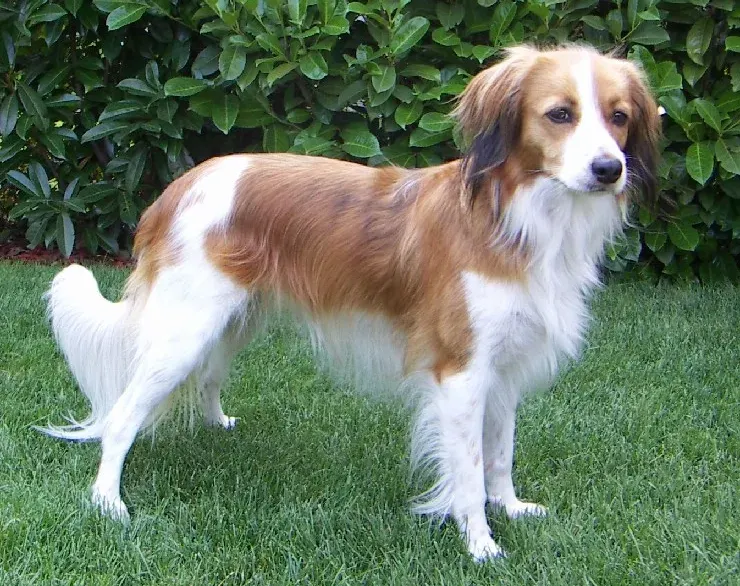
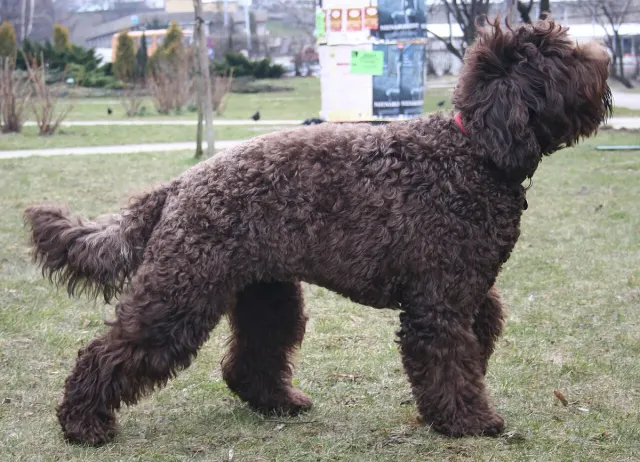
Photo of the Nederlandse Kooikerhondje dog breed
Photo: Unknown author — CC BY 2.5 (source)

History and origins

The Kooikerhondje was used in the Netherlands at 'kooi' duck decoys: by waving its plumed tail, it lured ducks into canals where they were caught.

Nearly lost during the Second World War, it was saved by a Dutch baroness.

Appearance and colours

The FCI breed standard describes a harmoniously built, orange-red parti-coloured small sporting dog of almost square proportions, moving with its head held high and its well-feathered tail waving level with or above the back; the ears carry long black hair tips, the so-called earrings. The coat is of medium length, slightly wavy or straight, with a well-developed undercoat.

The colour is distinct orange-red patches on pure white, the orange-red predominating.

  • Ideal height at the withers: 40 cm for males, 38 cm for females (2 cm over or 3 cm under permitted).

Temperament

Lively, cheerful and very attached to its family, the Kooiker is often reserved with strangers. Sensitive, it dislikes rough handling, so care is needed with young children.

It learns quickly with gentle, positive training.

With children and other pets

The standard describes a lively, agile, self-confident and good-natured dog, alert but not noisy; faithful, easy-going and friendly. It rates 3 out of 5 with children and 3 out of 5 with other dogs in our ratings.

  • It is a friendly, active companion.
  • It needs daily exercise and activity.

Training tips

According to the standard, the breed was recreated from 1942 by Baroness van Hardenbroek van Ammerstol from a bitch called Tommy found on a farm in Friesland; it was officially recognised in 1971. In the duck decoy, it lures ducks with its waving tail without hunting them. The Royal Kennel Club calls it the duck decoy dog of the Netherlands. It rates 4 out of 5 for trainability in our ratings.

  • It learns well with reward-based training.
  • Scent games and retrieving suit it.

Health

An inherited neurological disease, von Willebrand disease, kneecap luxation and some eye diseases should be monitored. Tests are available.

Choose a breeder who tests their breeding dogs.

Common health issues in detail

A Dutch study of 97 Kooikerhondjes with hereditary polymyositis, an inflammation of the muscles, notes that the disease is linked to a DNA deletion with low penetrance, so not every dog carrying it becomes ill; dogs with two copies tended to fall ill younger, and most owners reported improvement with treatment.

The Royal Kennel Club recommends as best practice for breeding dogs DNA tests for hereditary necrotising myelopathy (ENM) and von Willebrand disease type 3 (vWD3).

This is general information. For any question about your dog's health, consult a veterinarian.

Feeding

Food matched to its size and activity suits it.

Avoid excess weight.

Exercise

It needs about an hour of daily activity, with training games and agility.

It enjoys water.

Being small, it can live in an apartment if it gets enough exercise every day.

Grooming

Its medium-length coat needs weekly brushing, more during the moult.

Clean its ears regularly.

Choosing a puppy

Choose a breeder who does the ENM and vWD3 DNA tests and can tell you about polymyositis in the puppy's family.

  • Ask for the parents' ENM and vWD3 results.
  • Ask whether any relatives have had polymyositis.
  • Meet the mother: she should be friendly and confident.

Our guide on how to recognise a responsible breeder explains what to ask.

Similar breeds

The Nova Scotia Duck Tolling Retriever also lures ducks. The Small Münsterländer, Brittany and English Cocker Spaniel are other small, feathered gundogs.
Frequently asked questions

What colours does the Nederlandse Kooikerhondje come in?

The FCI breed standard describes a harmoniously built, orange-red parti-coloured small sporting dog of almost square proportions, moving with its head held high and its well-feathered tail waving level with or above the back; the ears carry long black hair tips, the so-called earrings. The colour is distinct orange-red patches on pure white, the orange-red predominating. Read more in “Appearance and colours”.

What health problems are common in the Nederlandse Kooikerhondje?

A Dutch study of 97 Kooikerhondjes with hereditary polymyositis, an inflammation of the muscles, notes that the disease is linked to a DNA deletion with low penetrance, so not every dog carrying it becomes ill; dogs with two copies tended to fall ill younger, and most owners reported improvement with treatment. Read more in “Common health issues in detail”.

How do I choose a Nederlandse Kooikerhondje puppy?

Choose a breeder who does the ENM and vWD3 DNA tests and can tell you about polymyositis in the puppy's family. Read more in “Choosing a puppy”.

Is the Nederlandse Kooikerhondje good with children?

The Nederlandse Kooikerhondje usually gets along with children, especially older ones who know how to behave around dogs. We rate it 3/5 for living with children; whatever the breed, always supervise children and dogs together. Looking for a family dog? See The 10 best dog breeds for families with children.

Is the Nederlandse Kooikerhondje good with other dogs?

The Nederlandse Kooikerhondje usually tolerates other dogs, especially when it has been well socialised. It is rated 3/5 with other dogs; early socialisation makes a big difference.

Can a Nederlandse Kooikerhondje live in an apartment?

The Nederlandse Kooikerhondje can live in an apartment, but its high energy calls for long daily outings. Its energy level is rated 4/5. See also: The 10 best dog breeds for apartment living.

How big does a Nederlandse Kooikerhondje get?

The Nederlandse Kooikerhondje is a small breed: adults usually weigh 9–11 kg and measure 35–42 cm at the withers. It belongs to the “Retrievers, flushing dogs and water dogs” group.

How long does a Nederlandse Kooikerhondje live?

The Nederlandse Kooikerhondje typically lives 12 to 14 years. That is about average for dogs. Looking for a longer-lived breed? See The 10 longest-living dog breeds.

Does the Nederlandse Kooikerhondje shed a lot?

The Nederlandse Kooikerhondje sheds a moderate amount. An occasional brushing keeps its coat in good condition. Looking for a lighter shedder? See The 10 dog breeds that shed the least.

Is the Nederlandse Kooikerhondje easy to train and good for first-time owners?

The Nederlandse Kooikerhondje learns readily and is generally easy to train. Its high energy (rated 4/5) needs plenty of daily activity. According to the standard, the breed was recreated from 1942 by Baroness van Hardenbroek van Ammerstol from a bitch called Tommy found on a farm in Friesland; it was officially recognised in 1971. Overall, it is possible for a first-time owner who is ready to learn. See also: The 10 easiest dog breeds to train.

Can a Nederlandse Kooikerhondje handle hot weather?

The Nederlandse Kooikerhondje tolerates moderate heat. On hot days, walk it early or late and provide shade and fresh water. Need a dog for a hot climate? See The 10 dog breeds best suited to hot climates.

Nederlandse Kooikerhondje appears in these lists

Sources

Breed standards, kennel club pages and health references used for this profile.

Back to all breeds