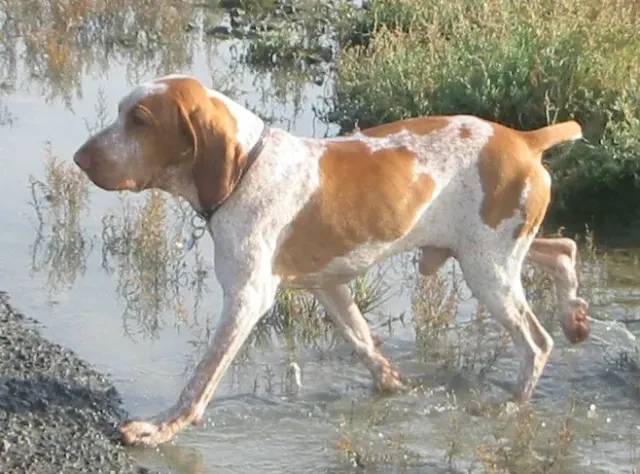
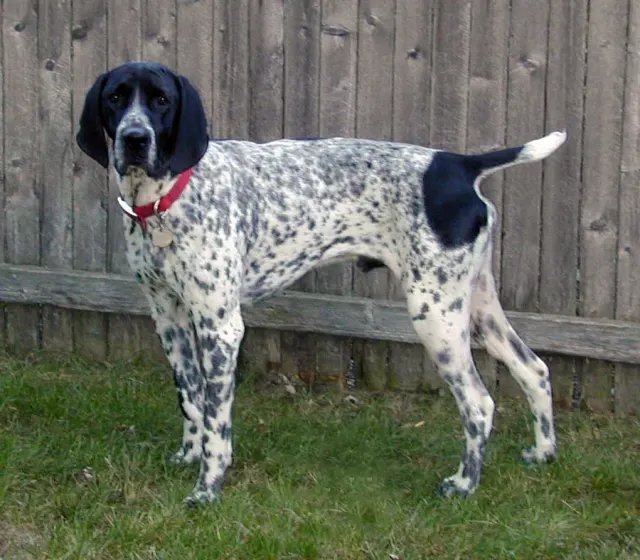
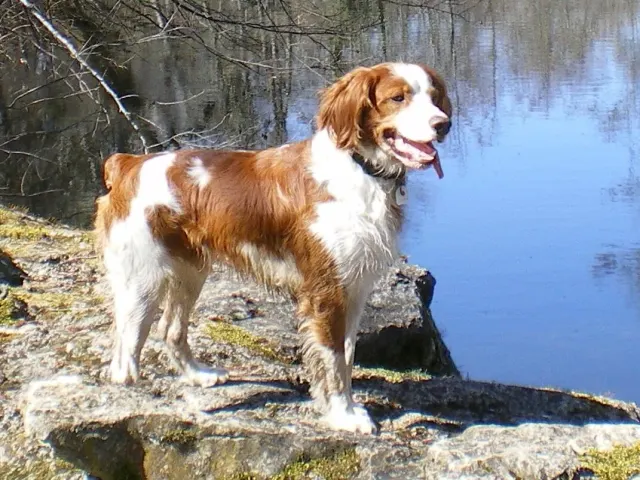
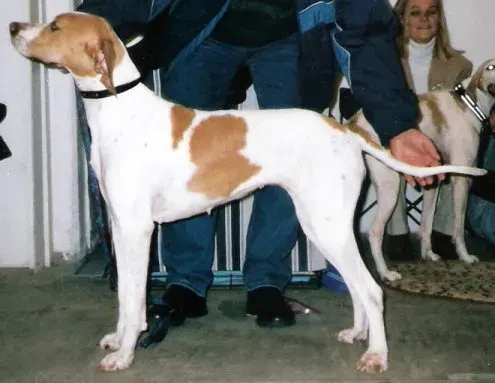
A versatile, affectionate German pointing dog, the Small Münsterländer is lively, intelligent and easy to live with in a family.
History and origins
The Small Münsterländer comes from the Münster region of north-west Germany. It was established in the early 20th century from local bird dogs for all-round hunting.
It points, retrieves and happily works in water.
Appearance and colours
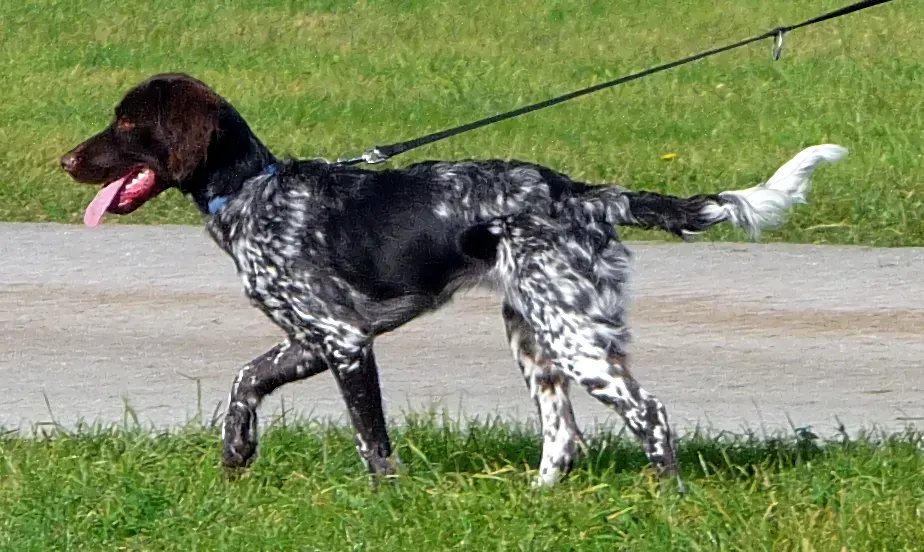
The FCI breed standard describes a strong, harmonious, medium-sized dog of balanced proportions, quality and elegance, with a distinguished head, well-feathered front legs, breeches and a tail with a distinct flag. The coat is dense, of medium length, straight or slightly wavy, close-lying and water-repellent.
Colours are brown and white or brown roan, with brown patches, a brown mantle or brown ticking; a blaze and tan markings on the muzzle are permitted.
- Height at the withers: 54 cm for males, 52 cm for females (± 2 cm).
Temperament
Cheerful, affectionate and cooperative, it is very good with children and other dogs. It learns quickly and enjoys working with its owner.
It copes poorly with inactivity and loneliness.
With children and other pets
The standard describes an intelligent dog, able to learn, full of temperament but even and steady in character, alert and friendly with people and suitable for family life, with good social behaviour and close contact with its owner. It rates 5 out of 5 with children and 4 out of 5 with other dogs in our ratings.
- It is a friendly family dog that needs plenty of activity.
- Its hunting instinct is strong.
Training tips
According to the standard, the breed has been documented in the German Münsterland since about 1870, from centuries-old flushing and pointing dogs; a breed club was founded in 1912 to preserve it as a versatile hunting dog for field, forest and water. The Royal Kennel Club calls it a smaller versatile gundog with a brown and white coat. It rates 4 out of 5 for trainability in our ratings.
- Retrieving, tracking and scent work suit it.
- Use calm, reward-based training.
Health
This is a fairly healthy breed. Hip dysplasia and some eye conditions should be monitored.
Regular veterinary follow-up is recommended.
This is general information. For any question about your dog's health, consult a veterinarian.
Feeding
Food matched to its activity suits it.
Avoid excess weight.
Exercise
It needs one and a half to two hours of daily activity: hunting, retrieving games, swimming and tracking.
It loves water.
It needs a house with a garden and an active family.
Grooming
Its medium-length coat needs brushing once or twice a week. Care for the feathering on the ears and legs.
Check for grass seeds after outings.
Choosing a puppy
The FCI standard says only healthy dogs with typical breed conformation should be used for breeding.
- Ask what health checks the parents have had.
- Meet the mother: she should be friendly and steady.
Our guide on how to recognise a responsible breeder explains what to ask.
Similar breeds
The Large Münsterländer is its larger relative. The Brittany, French Spaniel and Nederlandse Kooikerhondje are other spaniel-type gundogs.