A small, short-nosed companion spaniel with a soft expression, the King Charles is calm, affectionate and perfect for a quiet life.
History and origins
The King Charles Spaniel is an old English companion dog, a court favourite since the 16th century. In the 19th century it was bred towards a rounder head and a very short muzzle.
This sets it apart from the Cavalier King Charles, recreated later with a longer muzzle.
Appearance and colours
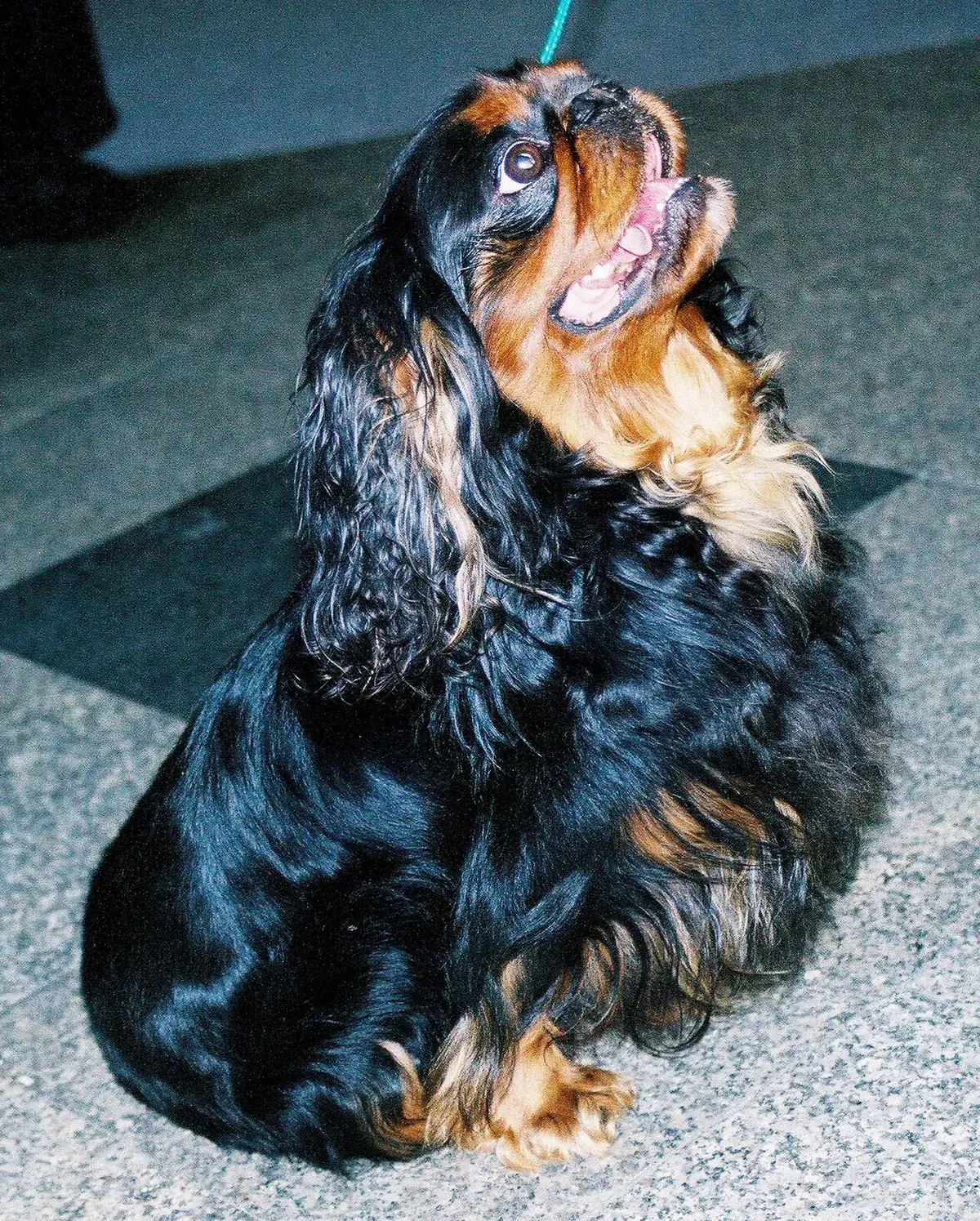
The FCI breed standard describes a refined, compact and cobby toy spaniel with a distinctive domed head and a short, turned-up nose. The coat is long, silky and straight (a slight wave is allowed), with profuse feathering on the legs, ears and tail.
There are four colours: black and tan, tricolour (pearly white with black patches and tan markings), Blenheim (pearly white with chestnut-red patches) and ruby (whole rich chestnut red).
- Weight: 3.6–6.3 kg.
Temperament
Calm, gentle and very affectionate, the King Charles loves company and comfort. It is often a little reserved with strangers.
It learns with gentle, patient training.
With children and other pets
The standard describes a happy, intelligent toy spaniel, reserved, gentle and affectionate. It rates 4 out of 5 with children and 4 out of 5 with other dogs in our ratings.
- It is a gentle companion.
- Avoid exertion in the heat: it rates 1 out of 5 for heat tolerance.
Training tips
According to the standard, this relative of the Cavalier King Charles Spaniel, called the English Toy Spaniel in some countries, takes its name from a dog that was a great favourite of King Charles II; toy spaniels were bred smaller and smaller from sporting spaniels and crossed with toy dogs from the East, which gave their facial appearance. The Royal Kennel Club calls it a historic royal spaniel. It rates 3 out of 5 for trainability in our ratings.
- Short, gentle, reward-based sessions suit it.
- Brush the feathering regularly.
Health
Its short muzzle exposes it to breathing difficulties and heat intolerance. Heart disease (mitral valve), eye problems and syringomyelia are also reported.
Regular veterinary follow-up, especially cardiac, is recommended.
Common health issues in detail
The Royal Kennel Club recommends eye testing as best practice for breeding dogs and notes that the breed can be affected by conformation-related problems. In August 2026 it also recognised breathing testing for brachycephalic obstructive airway syndrome (BOAS) under its Respiratory Function Grading scheme, which it will add to its health standard from January 2027.
We found no large population study of health in the King Charles Spaniel.
This is general information. For any question about your dog's health, consult a veterinarian.
Feeding
Small-breed food in measured portions suits it.
Avoid excess weight, which worsens breathing difficulties.
Exercise
Short daily walks and calm play are enough.
Avoid any exertion in hot weather.
Never leave it in a car. It is perfectly suited to apartment life.
Grooming
Its silky coat needs brushing two to three times a week. Clean its eyes, facial folds and ears.
It is an indoor dog.
Choosing a puppy
Choose a breeder who eye-tests the parents and has their breathing graded.
- Ask for the parents' eye results and BOAS breathing grades.
- Watch the parents breathe at rest and after a short walk: noisy breathing is a warning sign.
- Meet the mother: she should be gentle and affectionate.
Our guide on how to recognise a responsible breeder explains what to ask.
Similar breeds
The Cavalier King Charles Spaniel is its close relative with a longer muzzle. The Japanese Chin, Pekingese and Pug are other short-faced companions.