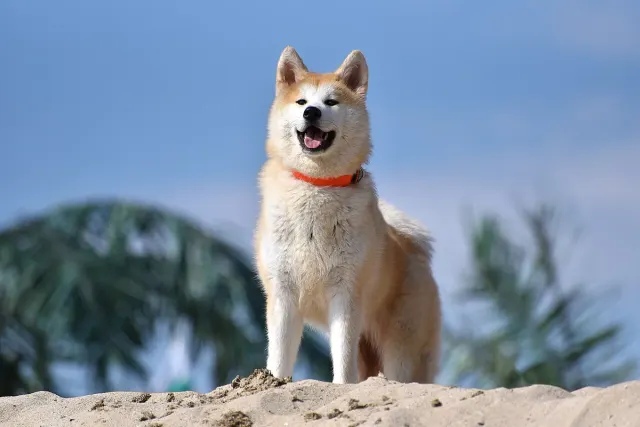
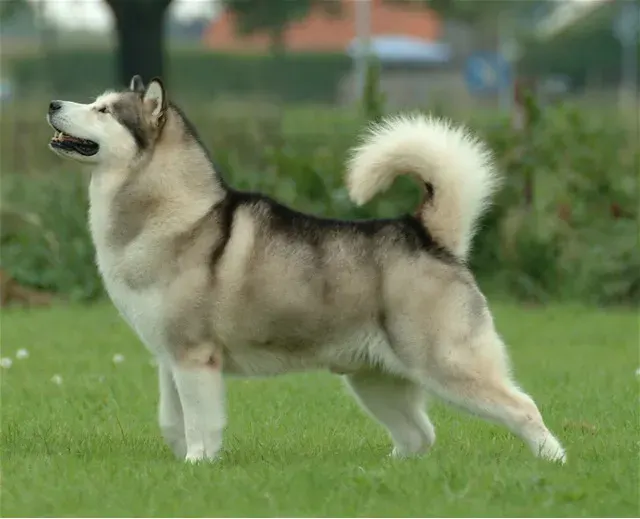
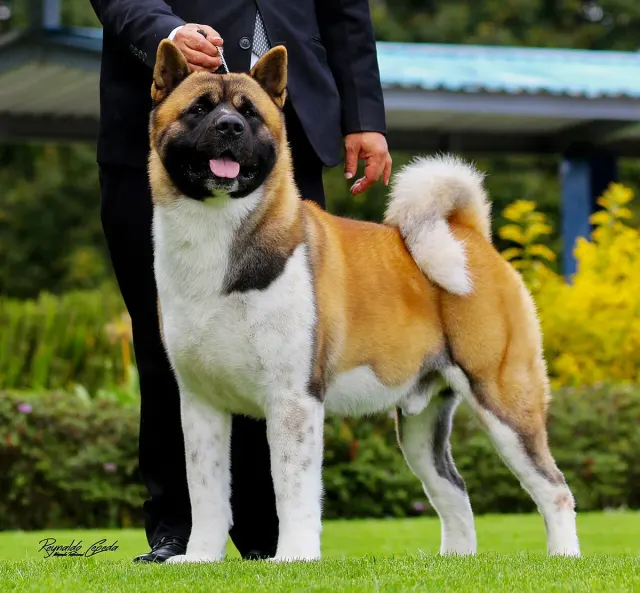
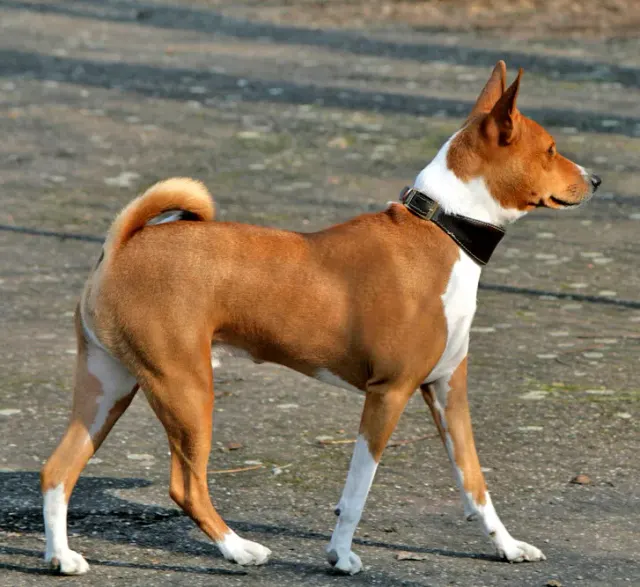
A modern German spitz, the Eurasier is calm, balanced and devoted to its family, a quiet and easy-going companion.
History and origins
The Eurasier was created in Germany in the 1960s by Julius Wipfel, crossing the Wolfspitz, the Chow Chow and later the Samoyed, with the aim of a well-balanced family dog.
It is recognised by the Fédération Cynologique Internationale.
Appearance and colours
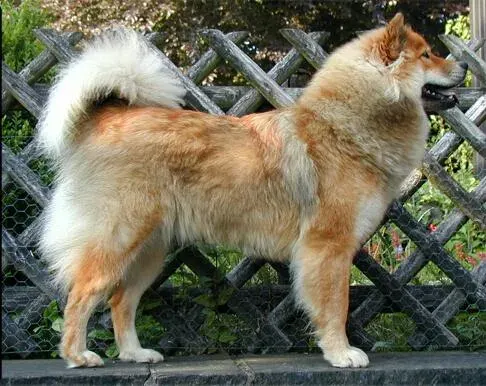
The FCI breed standard describes a balanced, well-built, medium-sized spitz-type dog with prick ears and medium bone; the coat should still let the body's proportions be seen. It has a thick undercoat and medium-long, straight, loosely lying guard hair, shorter on the face and the front of the legs.
All colours and colour combinations are permitted except pure white and white patches (piebald).
- Height at the withers: 52–60 cm for males, 48–56 cm for females.
- Weight: 22–30 kg for males, 18–26 kg for females.
Temperament
Calm, gentle and very attached to its family, the Eurasier is reserved with strangers without being aggressive. It dislikes being separated from its people.
Sensitive, it learns well with gentle, consistent training.
With children and other pets
The standard describes a self-assured, calm, even-tempered dog, watchful and alert without being noisy, very strongly attached to its family and relaxed, though not intrusive, with strangers. It rates 4 out of 5 with children and 4 out of 5 with other dogs in our ratings.
- It needs close daily contact with its family to thrive, says the standard.
- It sheds a lot (4 out of 5 in our ratings).
Training tips
According to the standard, the breed was created in Germany in 1960 by crossing a Chow Chow with a Wolfspitz; first called the "Wolf-Chow", it was renamed Eurasier after a later cross with the Samoyed. The standard says it needs understanding yet consistent training. It rates 3 out of 5 for trainability in our ratings.
- Use calm, consistent, reward-based training.
- Avoid exercise in the heat: it rates 2 out of 5 for heat tolerance.
Health
This is a fairly healthy breed. Hip dysplasia, hypothyroidism, entropion and kneecap luxation should be monitored.
Regular veterinary follow-up is recommended.
Common health issues in detail
The Royal Kennel Club recommends as best practice for breeding dogs hip and elbow scoring and eye testing, and notes that the breed has a breed club health scheme.
We found no large population study of health in the Eurasier.
This is general information. For any question about your dog's health, consult a veterinarian.
Feeding
Good-quality food matched to its moderate activity suits it.
Avoid excess weight.
Exercise
Daily walks of about an hour and some play are enough.
It is calm indoors.
Calm and family-oriented, it can live in an apartment if the home stays cool and it is walked daily.
Grooming
Its double coat needs weekly brushing, daily during moults.
It has little odour.
Choosing a puppy
Choose a breeder who scores hips and elbows, eye-tests the parents and takes part in the breed club health scheme.
- Ask for the parents' hip, elbow and eye results.
- Meet the mother: she should be calm and self-assured.
- Check that the puppy is raised in the house with the family.
Our guide on how to recognise a responsible breeder explains what to ask.
Similar breeds
The Chow Chow, Keeshond and Samoyed are the spitz breeds behind the Eurasier. The German Spitz is another family spitz.