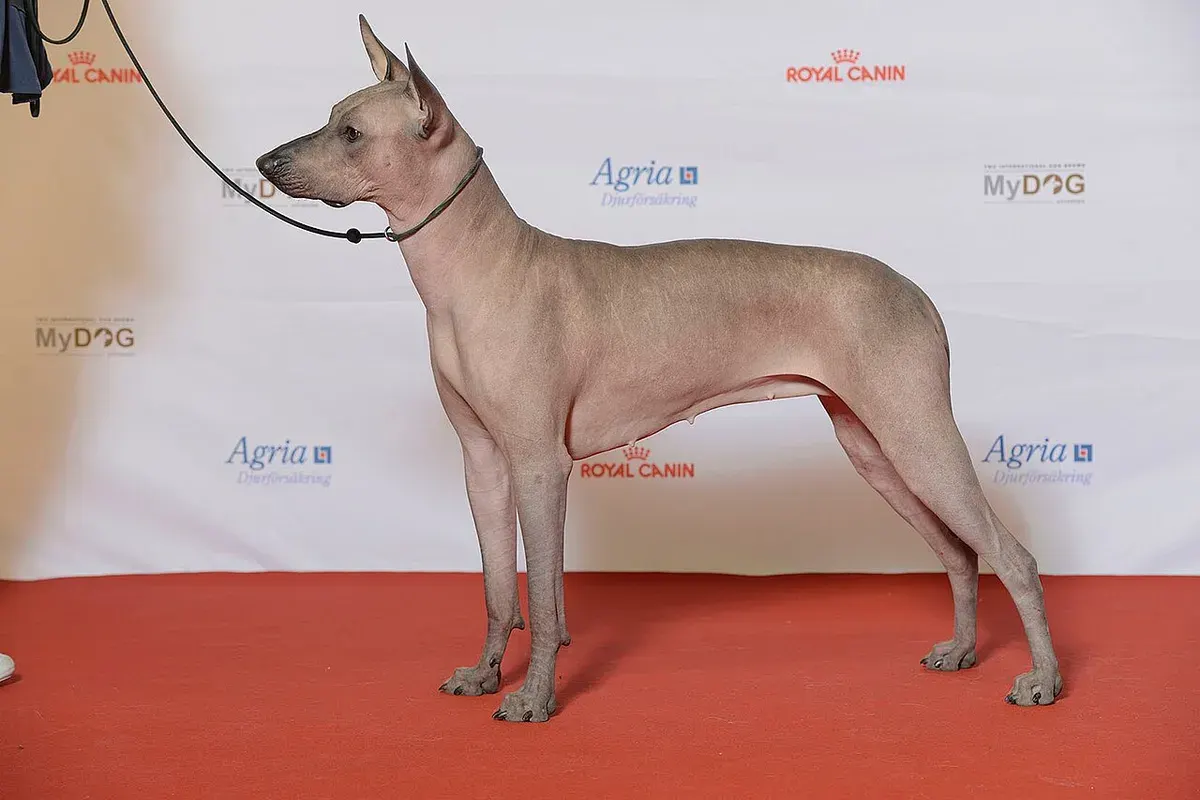
The ancient dog of the Aztecs, the Xolo is usually hairless. Calm, loyal and attentive, it comes in three sizes.
History and origins
The Xoloitzcuintle, or 'Xolo', is a very old breed from Mexico linked to pre-Columbian civilisations. It was regarded as a guide for souls and a treasured companion.
It comes in three sizes (standard, intermediate and miniature) and two varieties: hairless and coated.
Appearance and colours
The FCI breed standard describes an ancient, natural, primitive dog, slim and elegant, moderate in all respects, expressing speed, harmony and strength. There are two varieties: hairless, with only a few short, coarse hairs on the forehead, neck, feet and tail tip, and coated, with short, flat hair all over. There are three sizes.
In the hairless variety, solid, dark skin colours are preferred: black, blackish grey, slate, dark grey, reddish, liver, bronze or blond, with or without spots.
- Height at the withers: standard 46–60 cm, intermediate 36–45 cm, miniature 25–35 cm.
Temperament
Calm, attentive and very attached to its family, the Xolo is a good watchdog, reserved with strangers.
Intelligent, it learns well with gentle training and early socialisation.
With children and other pets
The standard describes a silent, calm, cheerful, alert and intelligent dog, possibly suspicious of strangers, a good watchdog and an excellent companion, never aggressive. It rates 4 out of 5 with children and 3 out of 5 with other dogs in our ratings.
- It is a calm, loyal companion and watchdog.
Training tips
According to the standard, the breed's origin is very ancient: in pre-Hispanic Mexico it was regarded as a representative of the god Xolotl, from which its name comes, and was believed to guide the souls of the dead; it nearly disappeared before the Mexican Kennel Club rescued it, using it on its logo since 1940. It rates 3 out of 5 for trainability in our ratings.
- Use calm, reward-based training.
- Socialise it early with visitors.
Health
This is a fairly robust breed. Hairless dogs often have incomplete teeth and sensitive skin (acne, sunburn, scrapes).
Regular veterinary follow-up, especially for the skin, is recommended.
Common health issues in detail
The Royal Kennel Club recommends as best practice for breeding dogs hip and elbow scoring and eye testing.
We found no large population study of health in the Xoloitzcuintle.
This is general information. For any question about your dog's health, consult a veterinarian.
Feeding
Choose food suited to its size; dogs with missing teeth may need smaller or softened kibble.
Avoid excess weight.
Exercise
It needs daily walks and play suited to its size.
It enjoys a warm, sunny spot, in moderation.
In winter it needs a coat. It lives very well in an apartment and suits people looking for a dog that does not shed.
Grooming
The hairless variety does not shed, but its skin needs care: gentle cleansing, moisturiser and sun protection.
The coated variety needs weekly brushing.
Choosing a puppy
Choose a breeder who scores hips and elbows and eye-tests the parents.
- Ask for the parents' hip, elbow and eye results.
- Ask which size and variety the puppy is.
- Meet the mother: she should be calm and friendly.
Our guide on how to recognise a responsible breeder explains what to ask.
Similar breeds
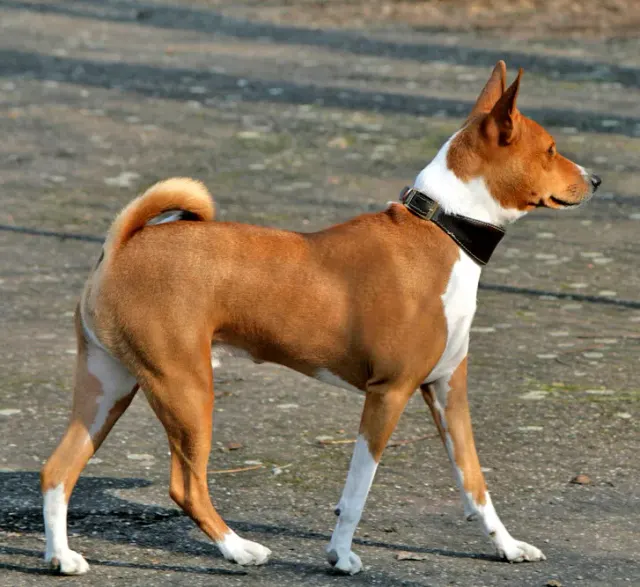
The Chinese Crested Dog is another hairless breed. The Basenji, Pharaoh Hound and Italian Greyhound are other slim, primitive-type or short-coated dogs.