Skip to content
Caninpedia

Italian Greyhound

The smallest of the sighthounds, the Italian Greyhound is graceful, gentle and very cuddly, with the outline of a miniature Greyhound.
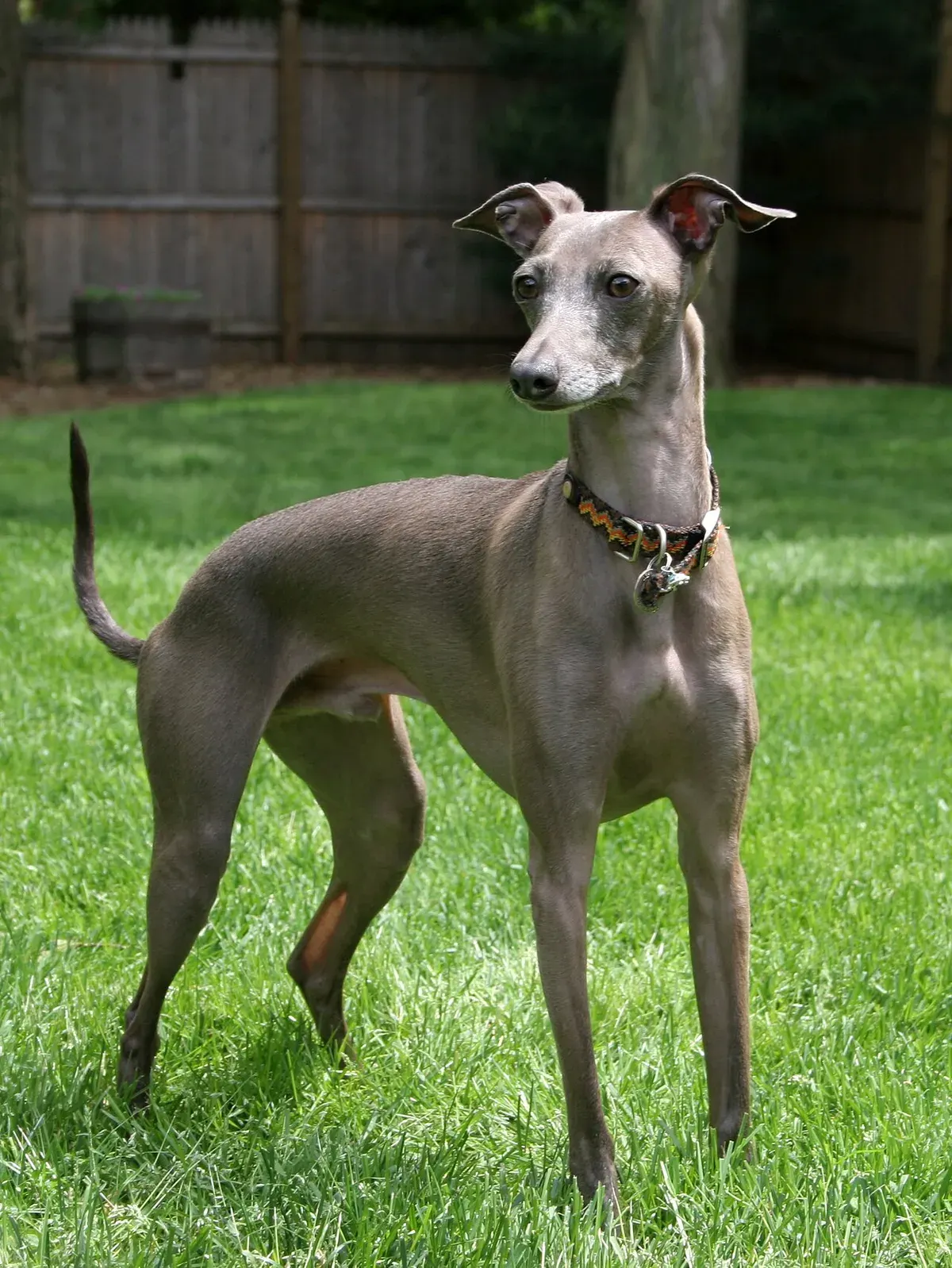
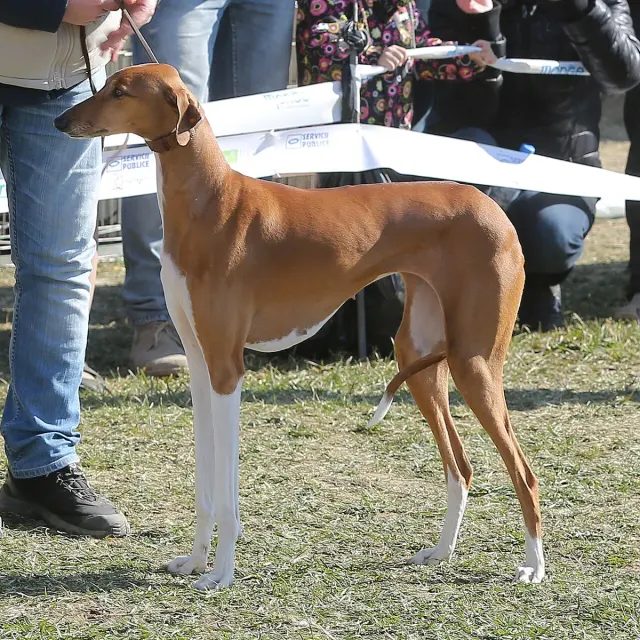
Photo of the Italian Greyhound dog breed
Photo: christina — CC BY 2.0 (source)

History and origins

Small sighthounds of this type appear in Mediterranean art from antiquity. The breed was especially prized at Italian Renaissance courts, hence its name.

It is above all a companion dog.

Appearance and colours

The FCI breed standard describes a slender dog whose body fits into a square: a true miniature sighthound, the model of refinement, grace and distinction. The coat is short, silky and fine all over, with no fringes.

The colour is solid black, grey or isabella (pale yellowish-beige) in all shades; white is tolerated only on the chest and feet.

  • Height at the withers: 32–38 cm.
  • Weight: up to 5 kg.

Temperament

Gentle, sensitive and very affectionate, the Italian Greyhound loves contact and comfort. It can be shy with strangers.

House-training can take a while; it needs patient, kind training.

With children and other pets

The standard describes a lively, affectionate and docile dog. It rates 3 out of 5 with children and 4 out of 5 with other dogs in our ratings.

  • It is fine-boned: teach children to handle it gently.

Training tips

According to the standard, the Italian Greyhound descends from small sighthounds of ancient Egypt, passed through Greece and reached Italy by the 5th century BC; it flourished at Renaissance courts and appears in many paintings. The Royal Kennel Club calls it a miniature sighthound dating back to the Roman Empire. It rates 2 out of 5 for trainability in our ratings.

  • Use gentle, patient, reward-based training.
  • Let it run only in safe, fenced areas: it chases by sight.

Health

Its slender legs are fragile and fractures are not rare in young dogs. Dental problems, kneecap luxation and some eye diseases should also be monitored.

Regular veterinary follow-up is recommended.

Common health issues in detail

The Royal Kennel Club recommends eye testing as best practice for breeding dogs.

We found no large population study of health in the Italian Greyhound.

This is general information. For any question about your dog's health, consult a veterinarian.

Feeding

Small-breed food suits it; it should stay slim.

Hard chews help dental hygiene, in moderation.

Exercise

Daily walks and a few runs in an enclosed area are enough. It is quick and agile.

Avoid jumps from heights.

It is perfectly suited to apartments; watch out for balconies and falls.

Grooming

Its very short, fine coat needs only a rub with a grooming mitt. It has very little odour.

Tooth brushing is essential.

Choosing a puppy

Choose a breeder who eye-tests the parents.

  • Ask for the parents' eye test results.
  • Meet the mother: she should be lively and affectionate.

Our guide on how to recognise a responsible breeder explains what to ask.

Similar breeds

The Whippet and Greyhound are its larger relatives. The Chinese Crested Dog and Miniature Pinscher are other small, fine-boned dogs.
Frequently asked questions

What colours does the Italian Greyhound come in?

The colour is solid black, grey or isabella (pale yellowish-beige) in all shades; white is tolerated only on the chest and feet. Read more in “Appearance and colours”.

What health problems are common in the Italian Greyhound?

The Royal Kennel Club recommends eye testing as best practice for breeding dogs. Read more in “Common health issues in detail”.

How do I choose an Italian Greyhound puppy?

Choose a breeder who eye-tests the parents. Read more in “Choosing a puppy”.

Is the Italian Greyhound good with children?

The Italian Greyhound usually gets along with children, especially older ones who know how to behave around dogs. We rate it 3/5 for living with children; whatever the breed, always supervise children and dogs together. It is fine-boned: teach children to handle it gently. Looking for a family dog? See The 10 best dog breeds for families with children.

Is the Italian Greyhound good with other dogs?

The Italian Greyhound generally gets along well with other dogs. It is rated 4/5 with other dogs; early socialisation makes a big difference.

Can an Italian Greyhound live in an apartment?

Yes, the Italian Greyhound can live in an apartment if it gets regular daily exercise. Its energy level is rated 3/5. See also: The 10 best dog breeds for apartment living.

How big does an Italian Greyhound get?

The Italian Greyhound is a toy breed: adults usually weigh 3.5–5 kg and measure 32–38 cm at the withers. It belongs to the “Sighthounds” group.

How long does an Italian Greyhound live?

The Italian Greyhound typically lives 13 to 15 years. That is about average for dogs. Looking for a longer-lived breed? See The 10 longest-living dog breeds.

Does the Italian Greyhound shed a lot?

No, the Italian Greyhound sheds very little. Its coat needs very little grooming. It ranks No. 3 in The 10 dog breeds that shed the least.

Is the Italian Greyhound easy to train and good for first-time owners?

The Italian Greyhound can be stubborn or independent, so training takes patience. Its moderate energy (rated 3/5) calls for daily walks and play. The Royal Kennel Club calls it a miniature sighthound dating back to the Roman Empire. Overall, it is better suited to experienced owners. Looking for an easier breed to train? See The 10 easiest dog breeds to train.

Can an Italian Greyhound handle hot weather?

The Italian Greyhound tolerates moderate heat. On hot days, walk it early or late and provide shade and fresh water. Need a dog for a hot climate? See The 10 dog breeds best suited to hot climates.

Compare Italian Greyhound with other breeds

Italian Greyhound appears in these lists

Sources

Breed standards, kennel club pages and health references used for this profile.

Back to all breeds