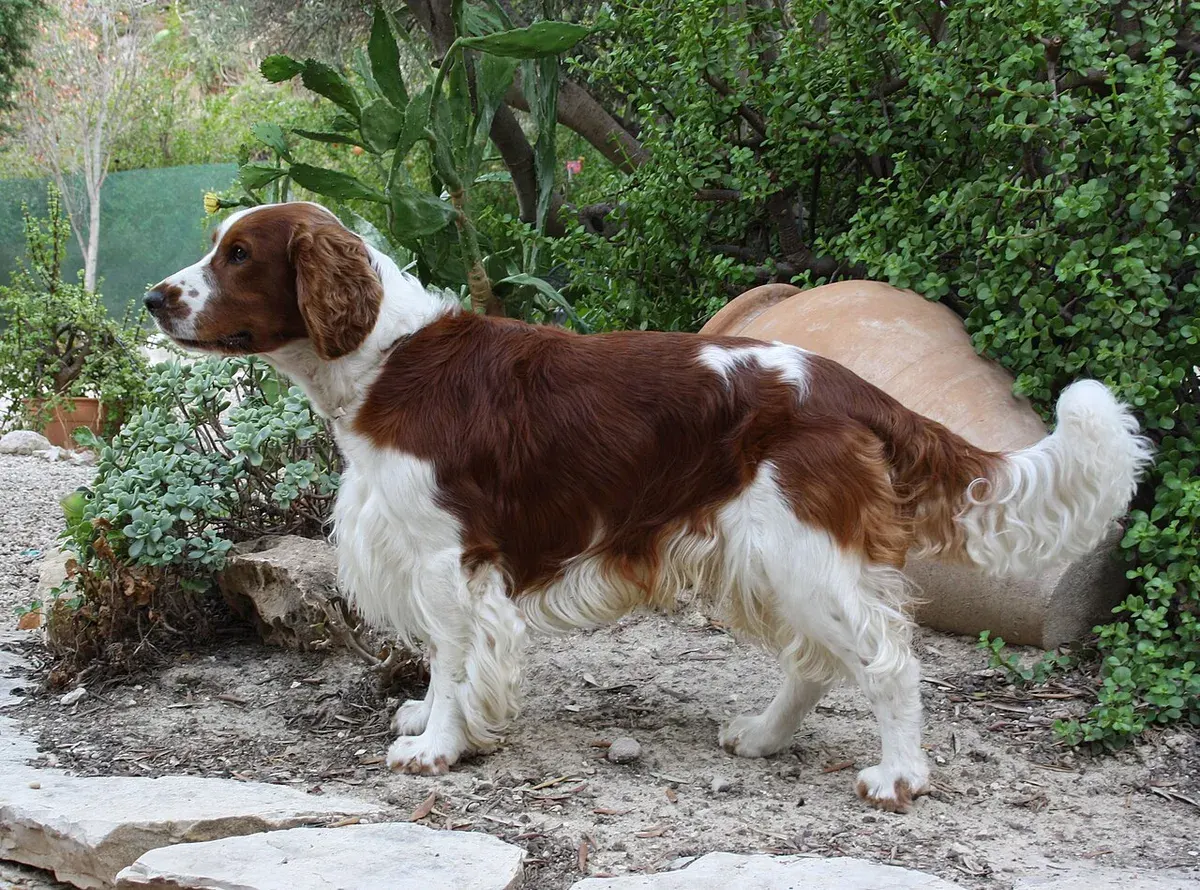
A red-and-white spaniel from Wales, the Welsh Springer is affectionate, loyal and hardy, a little more reserved than its English cousin.
History and origins
The Welsh Springer Spaniel is an old flushing dog from Wales, used to flush and retrieve small game. Its coat is always red and white.
It was recognised as a breed separate from the English Springer in the early 20th century.
Appearance and colours
The FCI breed standard describes a symmetrical, compact dog, not leggy, built for endurance and hard work, a quick, active mover. The coat is straight or flat, silky and dense, never wiry or wavy, with moderate feathering on the legs and light feathering on the ears and tail.
The colour is rich red and white only.
- Height at the withers: about 48 cm for males, 46 cm for females.
Temperament
Affectionate, loyal and very attached to its family, it can be reserved with strangers. It is cheerful and has great stamina.
It learns well with gentle, patient training but can be independent.
With children and other pets
The standard describes a very ancient and distinct breed, strong, merry and very active, with a kindly disposition, never nervous; aggression is unacceptable. It rates 4 out of 5 with children and 4 out of 5 with other dogs in our ratings.
- It is a cheerful, kind family dog.
- It needs plenty of exercise.
Training tips
The Royal Kennel Club notes that red and white hunting dogs are mentioned in Welsh literature of the Middle Ages and are thought to be the ancestors of the Welsh Springer Spaniel, once simply called the Welsh Spaniel. The FCI classifies it as a flushing dog. It rates 3 out of 5 for trainability in our ratings.
- Retrieving and scent games suit it.
- Use patient, reward-based training.
Health
Hip dysplasia, some eye diseases, epilepsy and ear infections should be monitored.
Regular veterinary follow-up is recommended.
Common health issues in detail
Pectinate ligament dysplasia, an abnormality of the eye's drainage angle that is linked to glaucoma risk, is common in the breed. In a UK study, 61.2% of 227 Welsh Springers examined by gonioscopy were affected and 36.2% moderately or severely; it became more common with age and progressed in more than half of the dogs re-examined, so dogs found clear young may be affected later.
The Royal Kennel Club recommends as a minimum for breeding dogs eye testing including gonioscopy, and hip scoring as best practice.
This is general information. For any question about your dog's health, consult a veterinarian.
Feeding
Food matched to its activity suits it.
Avoid excess weight.
Exercise
It needs one and a half to two hours of daily activity: walks, retrieving and swimming.
It gets bored if left alone.
It needs a house with a garden and an active family.
Grooming
Its silky coat needs brushing once or twice a week. Care for the feathering and clean the ears.
Check for grass seeds after outings.
Choosing a puppy
Choose a breeder who eye-tests the parents, including recent gonioscopy, and hip-scores them.
- Ask for the parents' latest gonioscopy and eye results, and their hip scores.
- Meet the mother: she should be merry and kind.
Our guide on how to recognise a responsible breeder explains what to ask.
Similar breeds
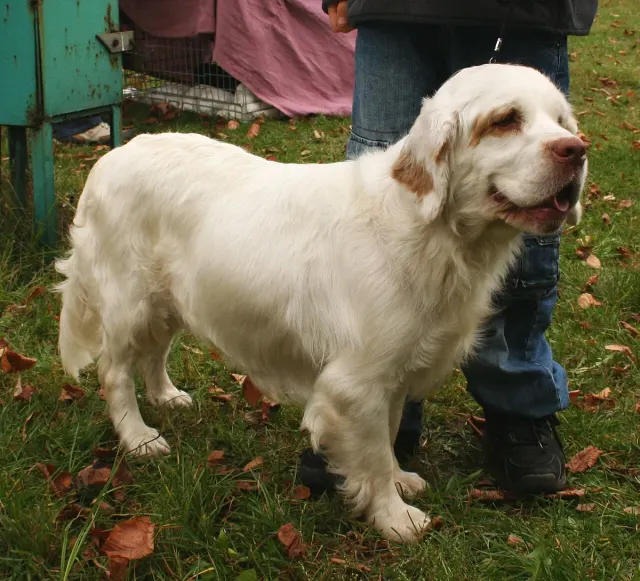
The English Springer Spaniel, English Cocker Spaniel and Clumber Spaniel are other British spaniels. The Brittany is another red and white gundog.