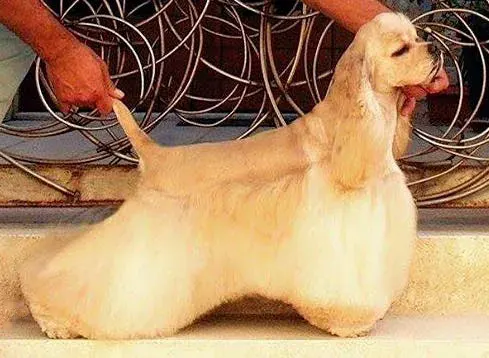
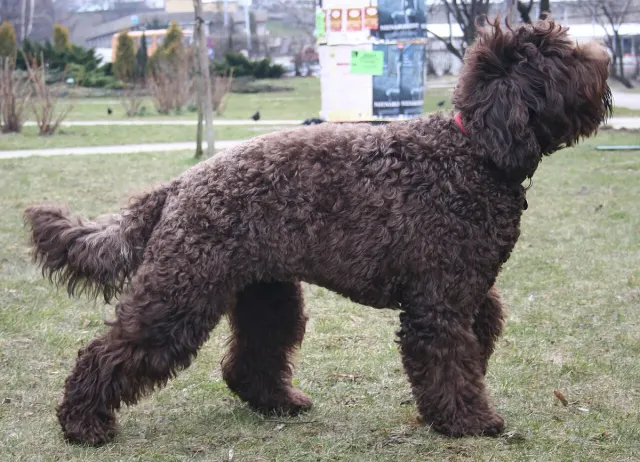
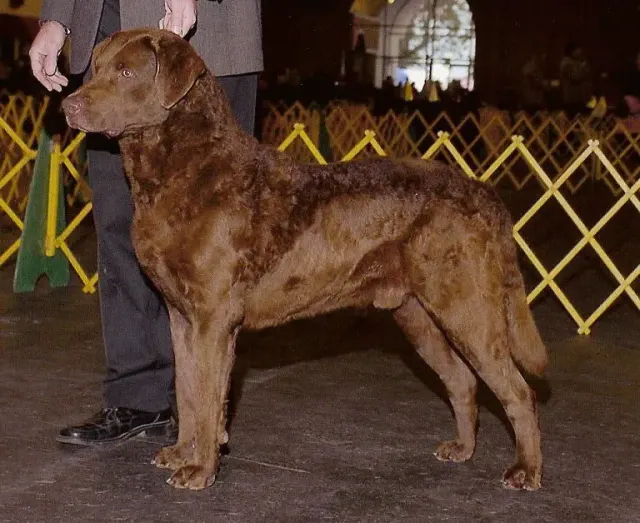
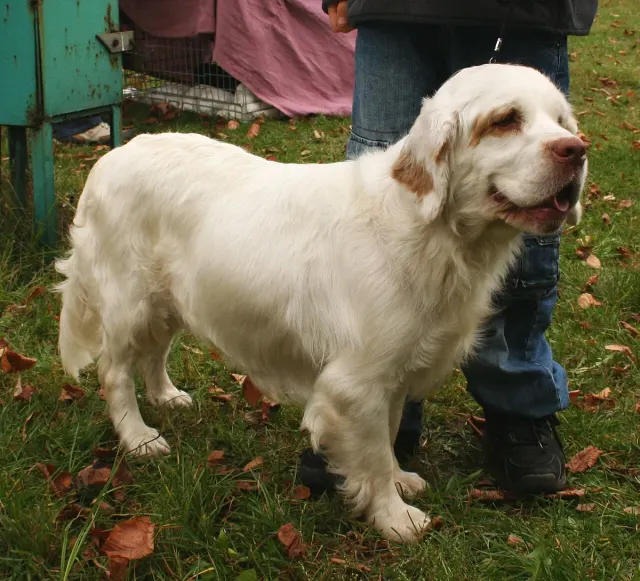
Tireless, cheerful and very affectionate, the English Springer is an enthusiastic flushing dog and an excellent dog for active families.
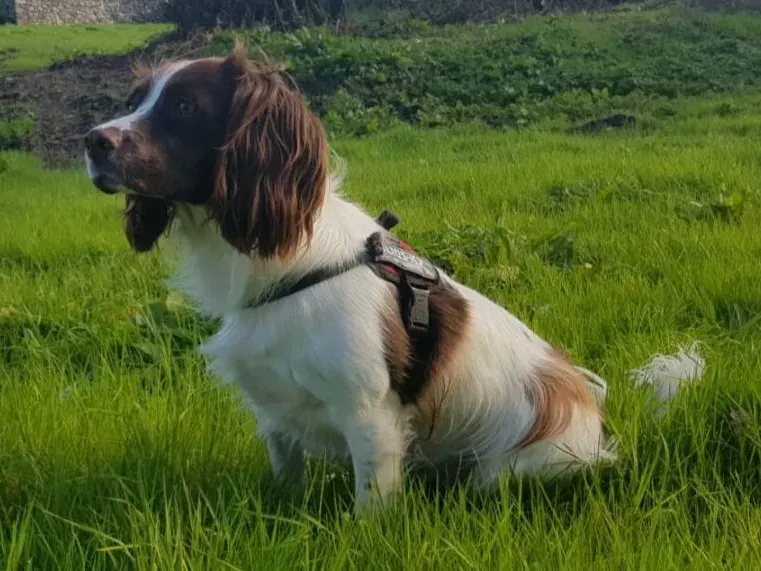
History and origins
The English Springer Spaniel was developed in England to 'spring' game in front of hunters and then retrieve it. It works equally well on land and in water.
Its nose also makes it a widely used detection dog.
Appearance and colours
The FCI breed standard describes a symmetrical, compact, strong, merry and active dog, the highest on the leg and raciest in build of the British land spaniels. The coat is close, straight and weather-resistant, with moderate feathering on the ears, legs and body.
Colours are liver and white or black and white, either with or without tan markings.
- Height at the withers: about 51 cm.
Temperament
Cheerful, affectionate and eager to please, the Springer adores children and family life. It overflows with energy and enthusiasm.
Intelligent, it learns quickly with positive training but gets bored without enough activity.
With children and other pets
The standard describes a friendly, happy, biddable dog; timidity or aggression is unacceptable. It rates 5 out of 5 with children and 4 out of 5 with other dogs in our ratings.
- It is a cheerful, affectionate family dog.
- It needs plenty of activity to stay calm at home.
Training tips
According to the standard, the breed is of ancient origin and the oldest of the sporting gundogs; it was first used to find and spring game for the net, falcon or greyhound, and now finds, flushes and retrieves game for the gun. The Royal Kennel Club calls it the most popular spaniel for working in the field. It rates 4 out of 5 for trainability in our ratings.
- Retrieving and scent games suit it well.
- It rates 5 out of 5 for energy: plan long daily exercise.
Health
Hip dysplasia, some inherited eye diseases, ear infections and an inherited enzyme disorder (tests exist) should be monitored.
Regular veterinary follow-up is recommended.
Common health issues in detail
The Royal Kennel Club recommends as a minimum for breeding dogs hip and elbow scoring and eye testing including gonioscopy, and as best practice DNA tests for acral mutilation syndrome (AMS), dyserythropoietic anaemia and myopathy syndrome (DAMS), fucosidosis, phosphofructokinase deficiency (PFK) and progressive retinal atrophy (cord1 PRA).
We found no large population study of health in the English Springer Spaniel that we could use here.
This is general information. For any question about your dog's health, consult a veterinarian.
Feeding
Food suited to its high activity level works well.
Avoid excess weight in less active dogs.
Exercise
It needs at least two hours of daily activity: retrieving, swimming, search games and hunting.
It loves water.
Morning beach swims are ideal. It needs a house with a garden and a sporty family.
Grooming
Its medium-length coat needs brushing twice a week and tidy-up trims. Clean and dry its ears often.
Check for grass seeds after outings.
Choosing a puppy
Choose a breeder who scores hips and elbows, eye-tests the parents and does the recommended DNA tests.
- Ask for the parents' hip, elbow, eye and DNA results.
- Meet the mother: she should be friendly and confident.
- Ask whether the parents are from working or show lines.
Our guide on how to recognise a responsible breeder explains what to ask.
Similar breeds
The Welsh Springer Spaniel and English Cocker Spaniel are other British spaniels. The Labrador Retriever and Small Münsterländer are other energetic gundogs.