A powerful, quiet Japanese mastiff, the Tosa is calm but formidable and suited only to very experienced owners.
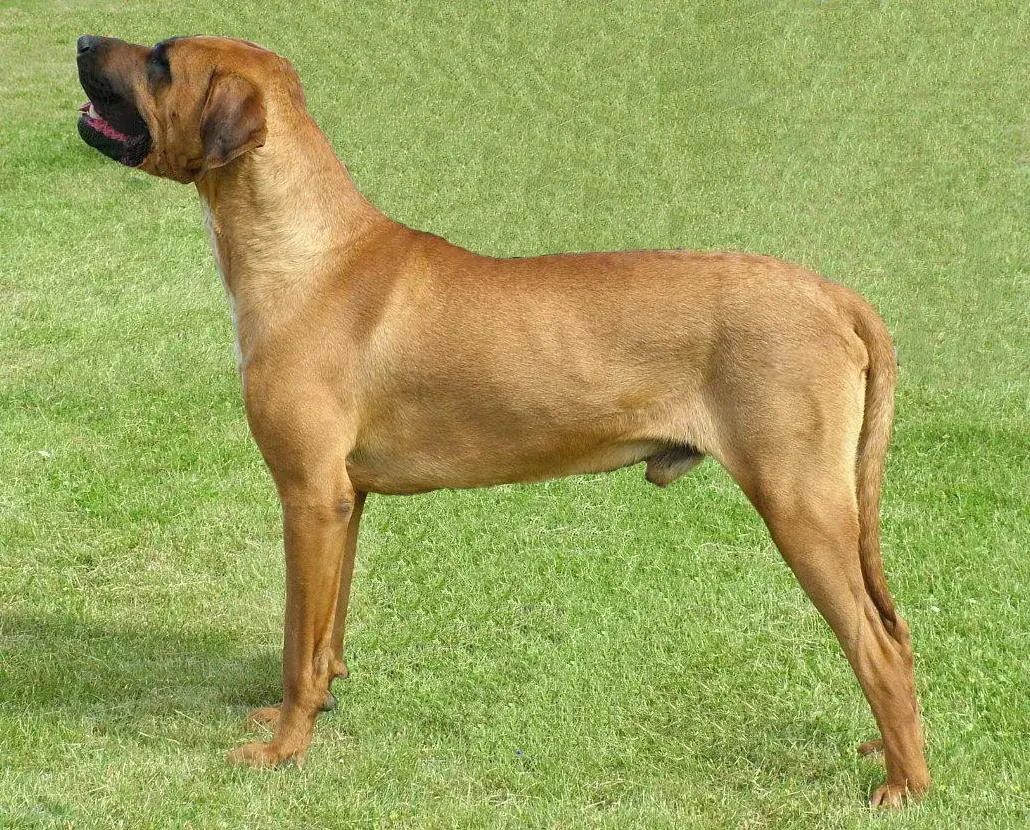
History and origins
The Tosa was developed in Japan's Tosa province (on the island of Shikoku) from Japanese dogs crossed with European breeds such as the Mastiff and Bulldog. It was intended for traditional dog fights.
Because of its origins, keeping one is banned or regulated in several countries.
Appearance and colours
The FCI breed standard describes a large dog of stately manner and robust build, with hanging ears, short hair, a square muzzle and a hanging tail thick at the root. The coat is short, hard and dense.
Colours are red, fawn, apricot, black and brindle; slight white markings on the chest and feet are permitted.
- Height at the withers: at least 60 cm for males, at least 55 cm for females.
Temperament
Calm, patient and loyal to its family, the Tosa can be very reserved with strangers and intolerant of other dogs.
It requires very early socialisation, expert training and constant supervision.
Some regions restrict ownership of this breed; check your local regulations.
With children and other pets
The standard describes a temperament marked by patience, composure, boldness and courage. It rates 2 out of 5 with children and 1 out of 5 with other dogs in our ratings.
- It suits only very experienced owners and is usually best as the only dog.
- Early, careful socialisation is essential.
Training tips
According to the standard, Japan has a long history of dog fighting going back to the 14th century, and the Tosa was produced by crossing the Shikoku with Western breeds, including the Bulldog, Mastiff, German Pointer and Great Dane; it is sometimes called the "Japanese Mastiff". The FCI describes it as a former fighting dog that is now a watchdog. It rates 2 out of 5 for trainability in our ratings.
- Use calm, consistent, reward-based training from an early age.
- Check whether local rules apply to this breed where you live.
Health
Hip dysplasia, bloat and some heart and skin problems should be monitored.
Regular veterinary follow-up is essential.
This is general information. For any question about your dog's health, consult a veterinarian.
Feeding
Large-breed food in two meals and slow growth are recommended.
Avoid excess weight.
Exercise
It needs daily on-lead walks in calm settings.
Avoid dog parks and potential conflict situations.
Its bulk makes it heat-sensitive: shade, water and walks in the cool hours in summer. It is unsuited to apartment life.
Grooming
Its short coat needs weekly brushing. Clean the facial folds and manage the drool.
An occasional bath is enough.
Choosing a puppy
The FCI standard says only healthy dogs with typical breed conformation should be used for breeding.
- Ask what health checks the parents have had.
- Meet the mother: she should be calm and composed, not aggressive.
Our guide on how to recognise a responsible breeder explains what to ask.
Similar breeds
The Mastiff, Neapolitan Mastiff, Dogue de Bordeaux and Bullmastiff are other large mastiff-type breeds.