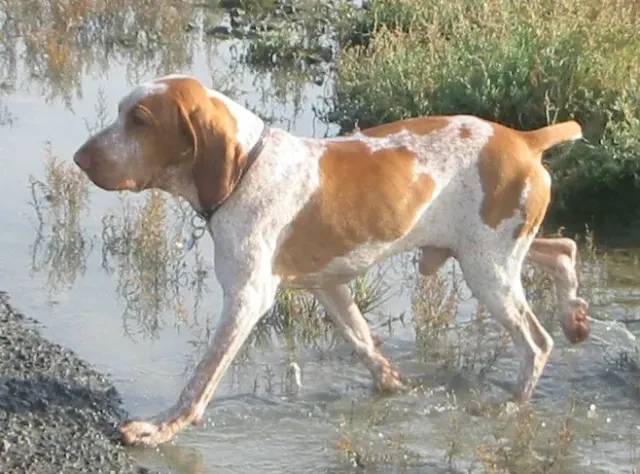
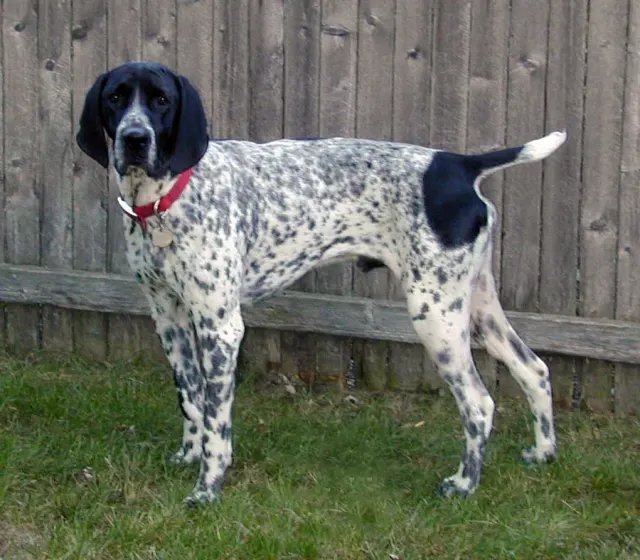
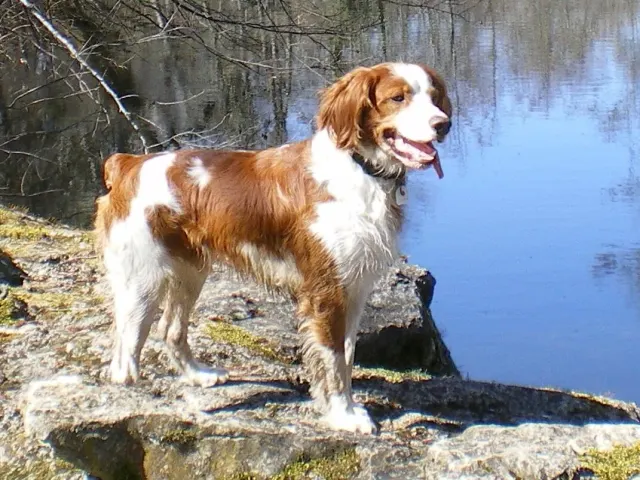
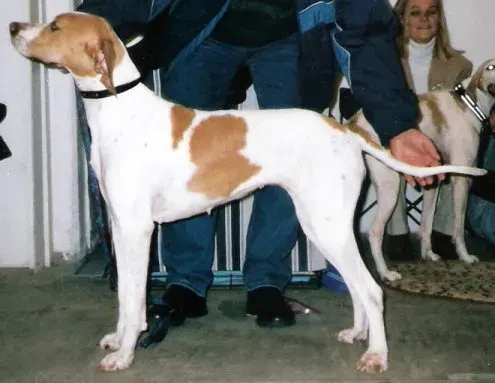
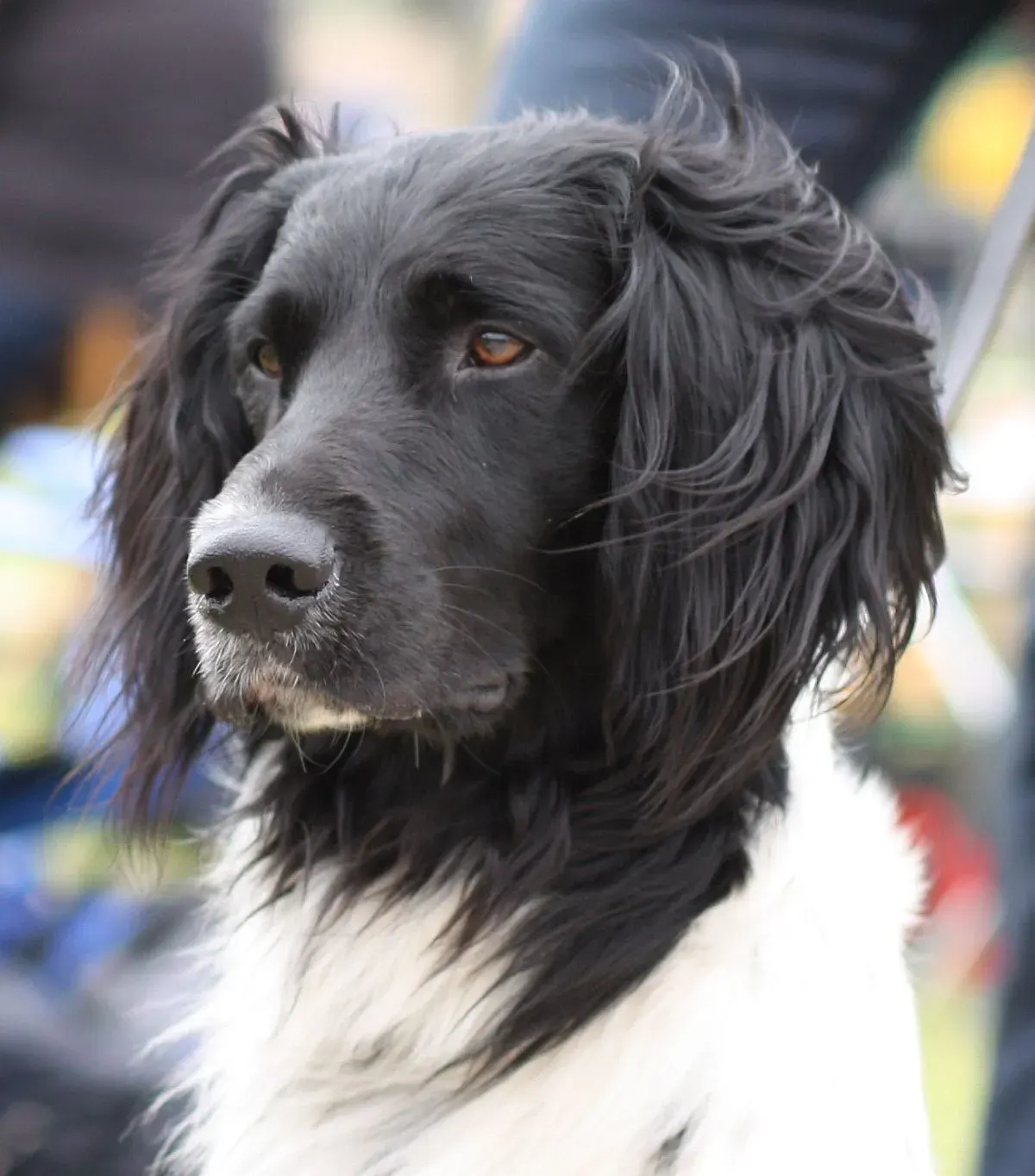
A large long-haired black-and-white pointing dog, the Large Münsterländer is gentle, reliable and very attached to its family.
History and origins
The Large Münsterländer comes from north-west Germany. It descends from German long-haired pointers; black-and-white dogs excluded from another breed were bred separately from the early 20th century.
It is a versatile hunting dog.
Appearance and colours
The FCI breed standard describes a strong, muscular dog with a racy overall impression and an expression of intelligence and nobility, about as long as tall. The coat is long and dense but sleek, not curly or stand-off, well feathered on the legs and tail, with short, smooth hair on the head.
There are three colour varieties: white with black patches and spots, blue roan, or pure black; the head is always black, sometimes with a white snip or blaze.
- Height at the withers: 60–65 cm for males, 58–63 cm for females (2 cm over tolerated).
- Weight: about 30 kg.
Temperament
Gentle, balanced and affectionate, it is excellent in a family and with children. It is watchful without aggression.
Intelligent, it learns well with positive training.
With children and other pets
The standard describes a tractable, easily taught dog with a lively temperament without nervousness. It rates 5 out of 5 with children and 4 out of 5 with other dogs in our ratings.
- It is a friendly family dog that needs plenty of activity.
- Brush the feathering regularly.
Training tips
According to the standard, the Large Münsterländer belongs to the family of long-haired German pointing dogs; after the German Longhair club excluded the black colour in 1909, a club founded in 1919 took over breeding of the black and white dogs. The Royal Kennel Club calls it a versatile gundog with a distinctive black and white coat. It rates 4 out of 5 for trainability in our ratings.
- Retrieving, tracking and scent work suit it.
- Avoid exercise in the heat: it rates 2 out of 5 for heat tolerance.
Health
Hip dysplasia and some eye and skin conditions should be monitored.
Regular veterinary follow-up is recommended.
In summer: walks during the cool hours and leishmaniasis prevention.
Common health issues in detail
The Royal Kennel Club recommends as a minimum for breeding dogs hip and elbow scoring, and as best practice eye testing and a DNA test for hyperuricosuria (HUU), which imported dogs must have.
We found no large population study of health in the Large Münsterländer.
This is general information. For any question about your dog's health, consult a veterinarian.
Feeding
Food matched to its activity, in two meals, suits it.
Avoid excess weight.
Exercise
It needs one and a half to two hours of daily activity: hunting, retrieving and swimming.
It loves water.
It needs a house with a garden.
Grooming
Its long coat needs brushing twice a week. Care for the feathering.
Check for grass seeds after outings.
Choosing a puppy
Choose a breeder who scores hips and elbows, eye-tests the parents and does the HUU DNA test.
- Ask for the parents' hip, elbow, eye and HUU results.
- Meet the mother: she should be friendly and steady.
Our guide on how to recognise a responsible breeder explains what to ask.
Similar breeds
The Small Münsterländer is a smaller German long-haired pointing dog. The English Setter, German Wirehaired Pointer and Flat-coated Retriever are other gundogs.