An elegant little herding dog with an abundant coat, the Shetland Sheepdog is intelligent, sensitive and devoted to its family.
History and origins
The Shetland Sheepdog, or 'Sheltie', comes from the Shetland Islands north of Scotland, where small dogs guarded sheep and ponies that were also small. Crosses with Collies later shaped its appearance.
It looks like a miniature Collie but is a breed in its own right.
Appearance and colours
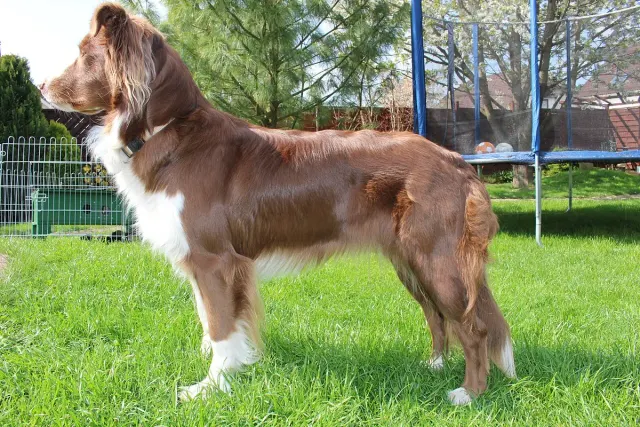
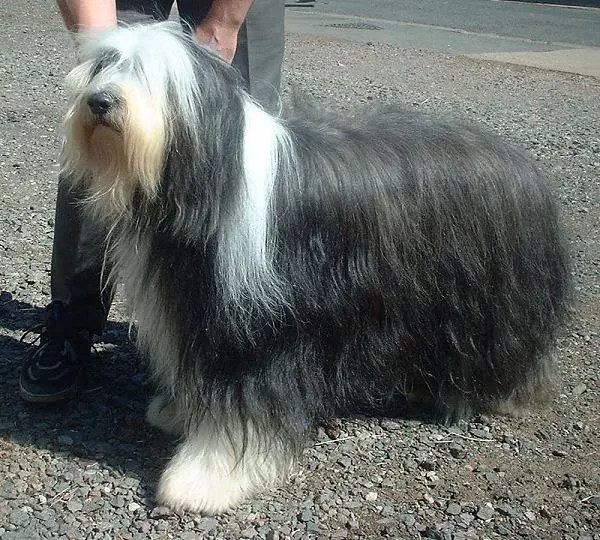
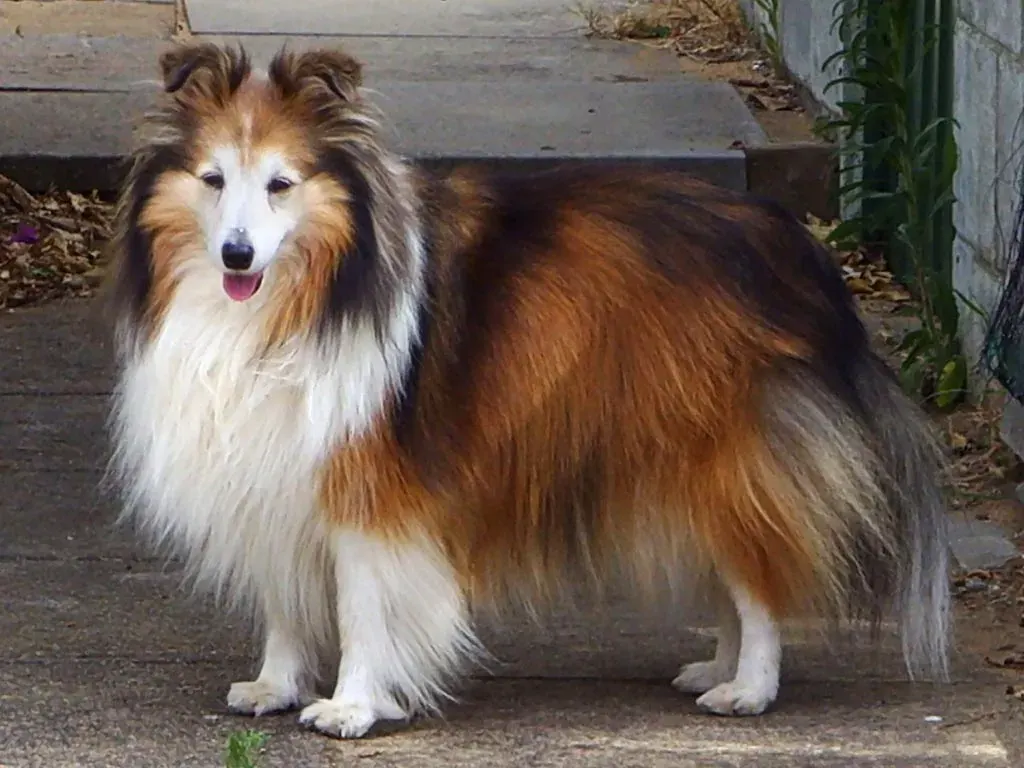
The FCI breed standard describes a small, long-haired working dog of great beauty, free from coarseness, with lithe, graceful action, an abundant coat, mane and frill and a sweet expression. It has a double coat: a long, harsh, straight outer coat and a soft, short, close undercoat.
Colours are sable (pale gold to deep mahogany), tricolour, blue merle, black and white, and black and tan.
- Ideal height at the withers: 37 cm for males, 35.5 cm for females.
Temperament
Gentle, quick and very attentive, the Sheltie is affectionate with its family and often reserved with strangers. It readily barks to alert.
It learns very fast and excels at obedience and agility. Being sensitive, it needs gentle training.
With children and other pets
The standard describes an alert, gentle, intelligent, strong and active dog, affectionate and responsive to its owner, reserved with strangers but never nervous. It rates 4 out of 5 with children and 4 out of 5 with other dogs in our ratings.
- It is an affectionate family dog that may be shy with strangers.
- Its coat needs regular grooming (4 out of 5 in our ratings).
Training tips
The FCI classifies the Shetland Sheepdog as a companion and sheepdog. The Royal Kennel Club notes that the Shetland Isles produced small animals suited to small farms, such as the Sheltie and the Shetland pony, and that the Scottish sheepdogs behind the Collies probably contributed to the breed. It rates 5 out of 5 for trainability in our ratings.
- It learns very quickly with reward-based training.
- Herding games and dog sports suit it.
Health
Like Collies, it can be affected by Collie eye anomaly and drug sensitivity (the MDR1 mutation). Hypothyroidism and some skin diseases have also been reported.
Genetic tests exist, so ask the breeder for them.
Common health issues in detail
The Royal Kennel Club recommends as a minimum for breeding dogs eye testing, and as best practice DNA tests for collie eye anomaly (CEA/CH), multi-drug resistance (MDR1, a sensitivity to certain medicines), two forms of progressive retinal atrophy (BBS2-PRA and CNGA1-PRA) and von Willebrand disease (vWD3-2), plus hip and elbow scoring.
We found no large population study of health in the Shetland Sheepdog.
This is general information. For any question about your dog's health, consult a veterinarian.
Feeding
Food for small active dogs in measured portions suits it. It gains weight easily if given too many treats.
Check its body shape under the thick coat.
Exercise
It needs about an hour of daily activity, with walks and training games. It loves dog sports.
Mental work is as important as physical exercise.
In summer, walk it very early and in the evening, keep it cool and always offer water. Thanks to its size, it can live in an apartment if it is well stimulated every day. Its alert barking may bother neighbours, though, so early training helps.
Grooming
Its dense double coat needs brushing two to three times a week, daily during the moult. Take special care behind the ears.
Do not shave it.
Choosing a puppy
Choose a breeder who does the eye tests, DNA tests and hip and elbow scoring recommended by the Royal Kennel Club.
- Ask for the parents' eye, DNA, hip and elbow results, including MDR1.
- Meet the mother: she should be gentle and confident, not fearful.
Our guide on how to recognise a responsible breeder explains what to ask.
Similar breeds
The Rough Collie and Smooth Collie are its larger relatives. The Border Collie and Icelandic Sheepdog are other herding dogs.