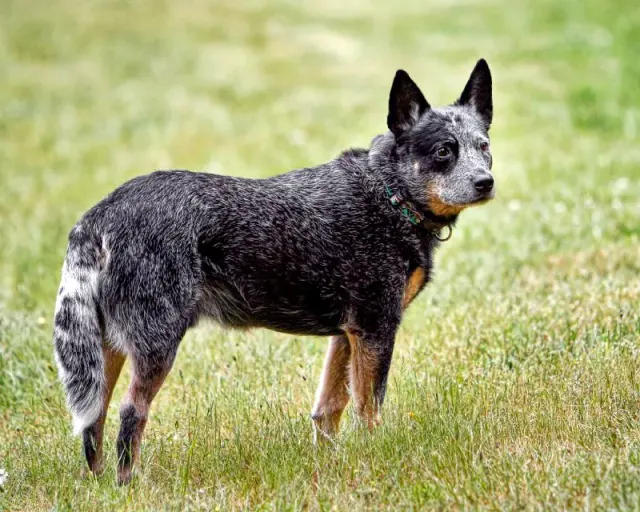
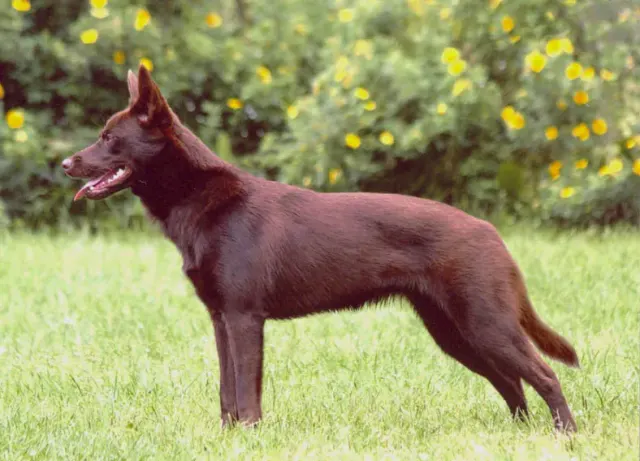
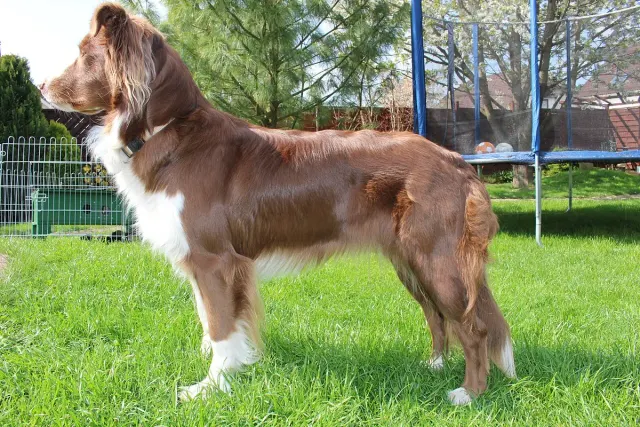
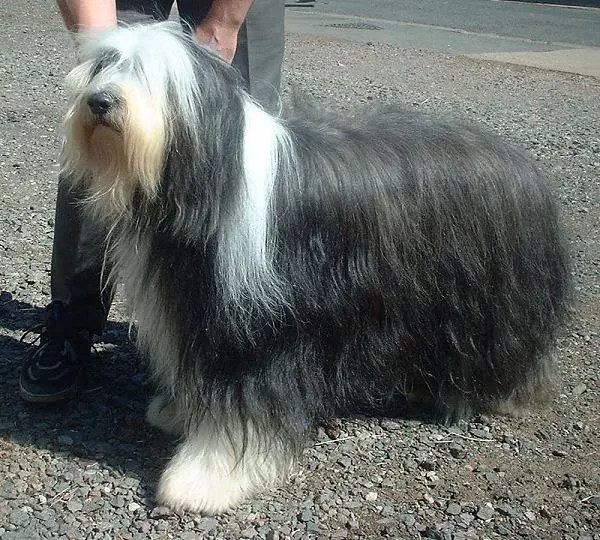
The same gentle temperament as its long-haired cousin with far easier grooming: the Smooth Collie is a loyal, sensitive family dog.
History and origins
The Smooth Collie shares its origins with the Rough Collie: both descend from Scottish herding dogs. The smooth type was mainly used to drive livestock to market.
Rarer than its cousin, it is recognised as a separate breed by the Fédération Cynologique Internationale.
Appearance and colours
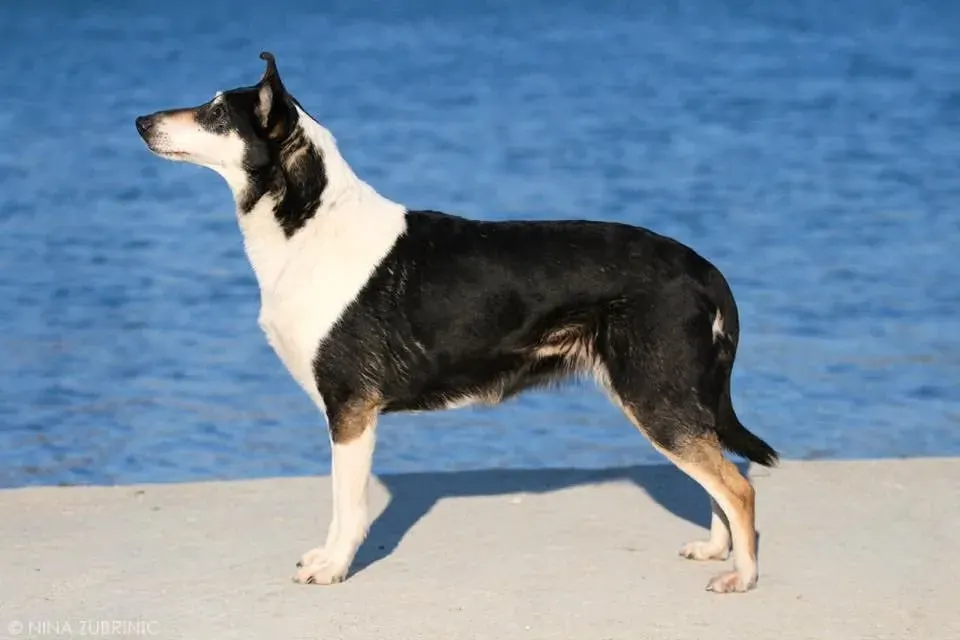
The FCI breed standard describes a dog of intelligence, alertness and activity, standing with dignity, built for strength and activity with no coarseness, giving the appearance of working ability. The coat is short and flat, with a harsh top coat and a very dense undercoat, and is not trimmed.
The three recognised colours are sable and white, tricolour and blue merle.
- Height at the withers: 56–61 cm for males, 51–56 cm for females.
- Weight: 20.5–29.5 kg for males, 18–25 kg for females.
Temperament
Gentle, affectionate and attentive, the Smooth Collie is very close to its family and usually excellent with children. It is watchful and can be slightly reserved with strangers.
Sensitive, it responds very well to positive training and dislikes harshness.
With children and other pets
The standard describes a friendly dog with no trace of nervousness or aggressiveness. It rates 5 out of 5 with children and 4 out of 5 with other dogs in our ratings.
- It is a gentle, friendly family dog.
- Its short coat is easier to care for than the Rough Collie's.
Training tips
The FCI classifies the Smooth Collie as a sheepdog. The Royal Kennel Club notes that it has always lived in the shadow of the Rough Collie, and that the two could be interbred until 1994, so both coats could appear in the same litter. It rates 4 out of 5 for trainability in our ratings.
- It learns well with gentle, reward-based training.
- Herding games and long walks suit it.
Health
Like the Rough Collie, it can be affected by Collie eye anomaly and by drug sensitivity linked to the MDR1 mutation.
Ask for the parents' genetic tests and tell your veterinarian its breed.
Common health issues in detail
The Royal Kennel Club recommends as best practice for breeding dogs DNA tests for collie eye anomaly (CEA/CH), degenerative myelopathy (DM), multi-drug resistance (MDR1, a sensitivity to certain medicines) and progressive retinal atrophy (rcd2), plus eye testing and hip scoring.
We found no large population study of health in the Smooth Collie.
This is general information. For any question about your dog's health, consult a veterinarian.
Feeding
Good-quality food matched to its activity suits it. Watch its weight and limit treats.
Two meals a day are recommended.
Exercise
It needs an hour or more of daily activity. It enjoys obedience, agility and games with its family.
It likes having a task to do.
Walk it early in the morning and in the evening, with water and shade. A house with a garden suits it better than an apartment, but it can adapt to city life with regular outings and an involved family.
Grooming
Its short, dense coat with undercoat needs brushing once a week, more often during the moult.
That is a big advantage over the Rough Collie.
Choosing a puppy
Choose a breeder who does the DNA tests, eye testing and hip scoring recommended by the Royal Kennel Club.
- Ask for the parents' DNA, eye and hip results, including MDR1.
- Meet the mother: she should be friendly and relaxed.
Our guide on how to recognise a responsible breeder explains what to ask.
Similar breeds
The Rough Collie is the same breed with a long coat. The Shetland Sheepdog, Border Collie and Australian Shepherd are other herding dogs.