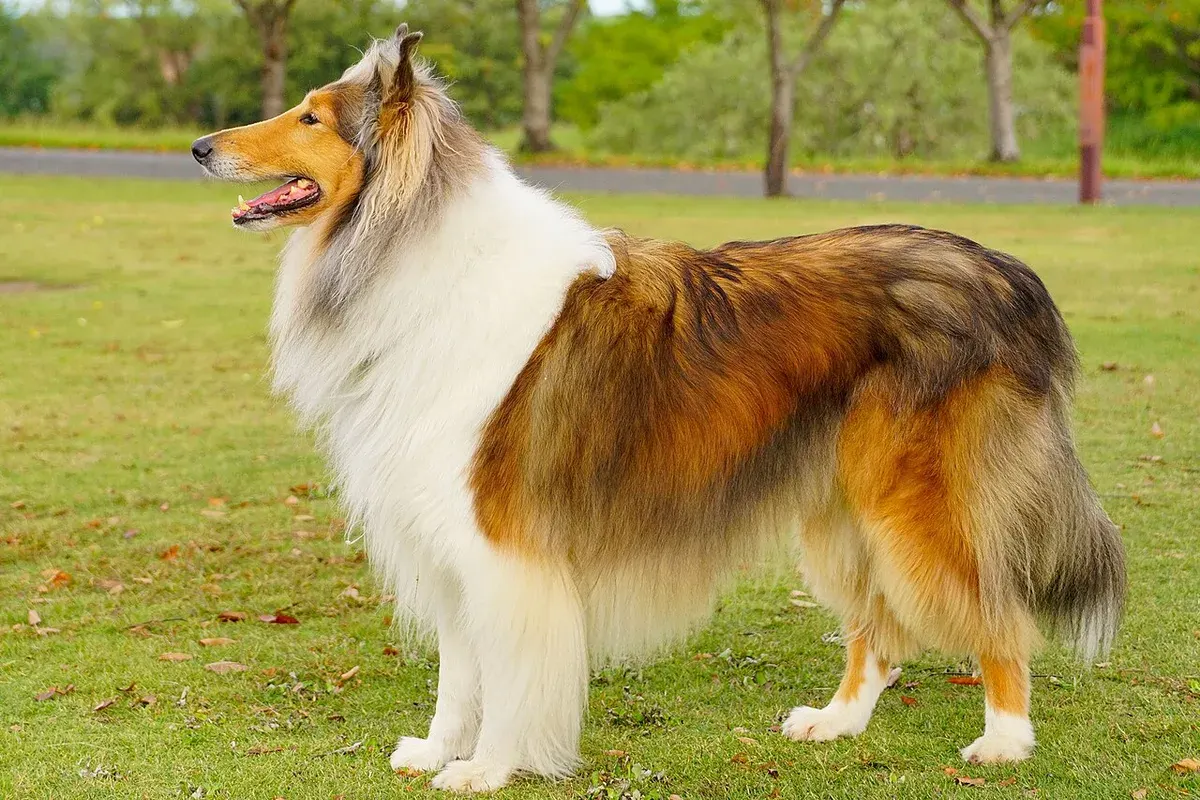
Made famous by Lassie, the Rough Collie is a gentle, loyal and very family-minded dog with a magnificent mane.
History and origins
The Rough Collie descends from Scottish herding dogs. In the 19th century Queen Victoria helped make it popular, and breeding for shows refined its outline and coat.
The 'Lassie' films and series made it one of the most famous dogs in the world.
Appearance and colours
The FCI breed standard describes a dog of great beauty, standing with impassive dignity, built for strength and activity, with no coarseness; expression is most important. The coat is very dense, with a straight, harsh outer coat, a soft, furry undercoat, and a very abundant mane and frill.
Colours are sable (light gold to rich mahogany), tricolour (mainly black with rich tan markings) and blue merle.
- Height at the withers: 56–61 cm for males, 51–56 cm for females.
Temperament
Gentle, sensitive and very attached to its family, the Collie is patient with children and rarely aggressive. It can be a little reserved with strangers and readily barks to alert.
It learns easily with gentle training; harshness makes it shut down.
With children and other pets
The standard describes a friendly dog with no trace of nervousness or aggressiveness: a great companion, friendly, happy and active, good with children and other dogs. It rates 5 out of 5 with children and 4 out of 5 with other dogs in our ratings.
- It is a gentle, friendly family dog.
- Its coat needs a lot of care (4 out of 5 for grooming needs in our ratings).
Training tips
According to the standard, the Rough and Smooth Collies differ only in coat length; the breed is thought to have developed from dogs brought to Scotland by the Romans, and the Rough Collie is a refined version of the Scottish shepherd's working collie. The Royal Kennel Club notes that the first sable, Old Cockie, born in 1868, caused a sensation. It rates 4 out of 5 for trainability in our ratings.
- It learns well with gentle, reward-based training.
- Avoid exercise in the heat: it rates 2 out of 5 for heat tolerance.
Health
The breed is affected by an inherited eye condition (Collie eye anomaly) and a genetic sensitivity to certain drugs (the MDR1 mutation). Genetic tests can detect both.
Always tell your veterinarian its breed before any treatment.
Common health issues in detail
A Swedish study notes that fear-related problems are common in Rough Collies in Sweden; using temperament-test results from 2,953 dogs, it found the personality traits measured to be moderately heritable and concluded that the test could help breeders select against everyday fearfulness.
The Royal Kennel Club recommends as a minimum for breeding dogs eye testing and hip scoring, and as best practice DNA tests for collie eye anomaly (CEA/CH), degenerative myelopathy (DM), multi-drug resistance (MDR1, a sensitivity to certain medicines) and progressive retinal atrophy (rcd2); it notes that the breed can be affected by conformation-related problems.
This is general information. For any question about your dog's health, consult a veterinarian.
Feeding
Good-quality food matched to its usually moderate activity suits it. Its thick coat can hide weight gain, so feel its ribs regularly.
Two meals a day are recommended.
Exercise
It needs about an hour of daily activity: walks, games, obedience or gentle agility.
Above all, it likes to take part in family activities.
Walk it during the cool hours, keep it shaded and somewhere ventilated, and offer water at all times. In an apartment, expect a lot of hair and pay close attention to heat.
Grooming
Its long, dense coat needs thorough brushing at least twice a week, daily during the moult. Focus behind the ears, under the armpits and on the 'trousers'.
Do not clip it: the undercoat protects it from both heat and cold.
Choosing a puppy
Choose a breeder who does the eye, hip and DNA tests recommended by the Royal Kennel Club and selects for a steady, confident temperament.
- Ask for the parents' eye, hip and DNA results, including MDR1.
- Meet the mother: she should be friendly and relaxed, not fearful.
- Ask how the puppies are socialised with everyday noises and visitors.
Our guide on how to recognise a responsible breeder explains what to ask.
Similar breeds
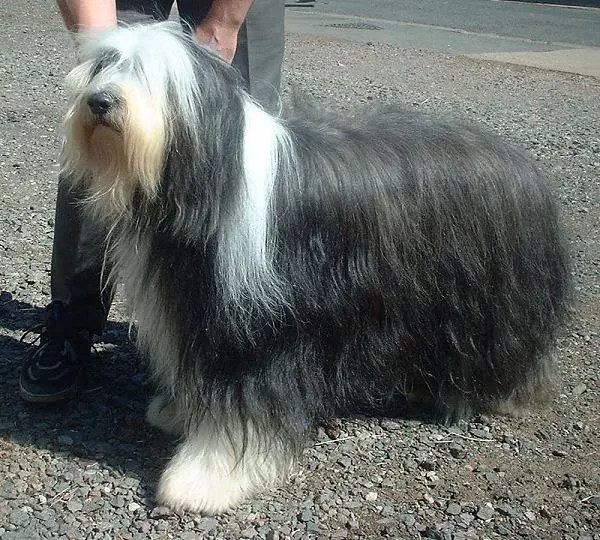
The Smooth Collie is the same breed with a short coat. The Shetland Sheepdog, Border Collie and Bearded Collie are other British herding dogs.