Cheerful, bouncy and covered in a long coat, the Bearded Collie is a fun-loving Scottish herding dog, ideal for active families.
History and origins
The Bearded Collie is an old Scottish herding dog used to gather and drive sheep in the hills. It is named for the 'beard' formed by the hair on its muzzle.
Nearly lost after the Second World War, it was revived by British breeders.
Appearance and colours
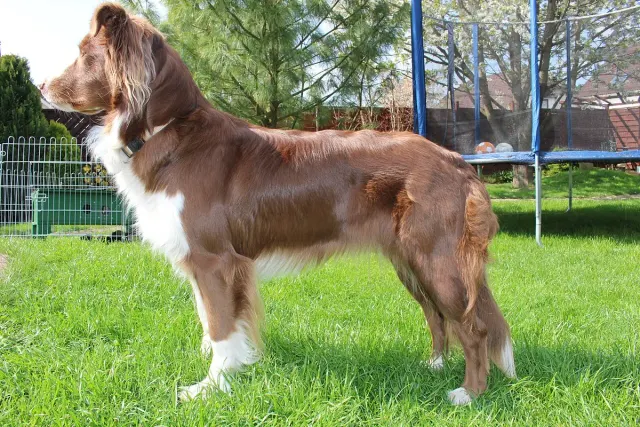
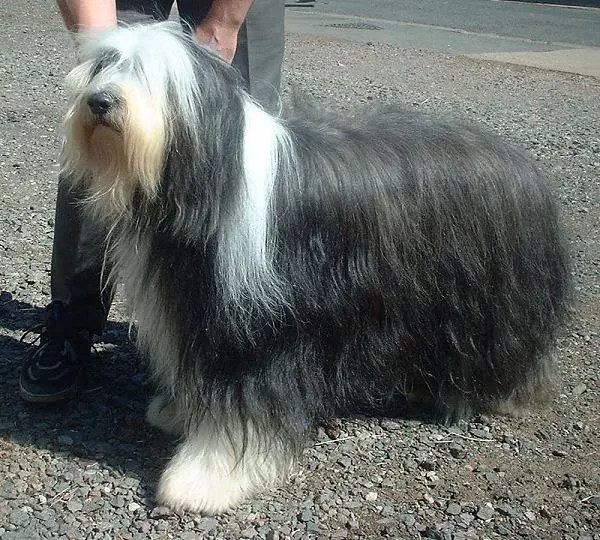
The FCI breed standard describes a lean, active dog, strongly made but showing plenty of daylight under the body, longer than tall (about 5:4), with a bright, enquiring expression. The coat on the cheeks, lower lips and chin lengthens towards the chest to form the typical beard.
The double coat has a soft, furry, close undercoat and a flat, harsh, strong and shaggy outer coat, without woolliness or curl, long enough to protect the dog but not to hide its shape; it must not be trimmed. Colours include slate grey, reddish fawn, black, blue, all shades of grey, brown and sandy, with or without white markings; merle is never allowed.
- Ideal height at the withers: 53–56 cm for males, 51–53 cm for females.
Temperament
Enthusiastic, sociable and playful, the 'Beardie' is affectionate with everyone, children included. It is no guard dog.
Intelligent but independent, it can be stubborn, so patient, varied and playful training is needed.
With children and other pets
The standard describes an alert, lively, self-confident and active dog, a steady, intelligent worker with no sign of nervousness or aggression. It rates 5 out of 5 with children and 4 out of 5 with other dogs in our ratings.
- It is a cheerful, sociable family dog that enjoys company.
- Its coat brings mud and debris into the house: plan for it.
Training tips
The standard notes that a dog resembling the Bearded Collie appears in Scottish records around the 16th century and was long bred for herding in Scotland and northern England; today's breed owes most to G. Olive Willison, whose Bothkennar kennel, founded with a puppy called Jeannie in the 1940s, "set the mould". It rates 3 out of 5 for trainability in our ratings.
- Combine daily exercise with training, herding games or agility.
- Use positive, varied sessions to keep its attention.
Health
This is a fairly robust breed. Hip dysplasia, hypothyroidism and some autoimmune diseases should be monitored.
Regular veterinary follow-up is recommended.
Common health issues in detail
Addison's disease. The Bearded Collie is one of the breeds at increased risk of Addison's disease (primary hypoadrenocorticism), an autoimmune disease in which the adrenal glands stop producing vital hormones. A genetic study found a strongly associated region on chromosome 18 and several smaller ones, confirming that the disease has a complex, multi-gene basis; no single DNA test can yet predict it. Signs such as weakness, vomiting, weight loss or collapse should be checked by a vet.
Health tests. The Royal Kennel Club recommends as best practice for breeding dogs a DNA test for collie eye anomaly/choroidal hypoplasia (CEA/CH), hip scoring and elbow grading.
This is general information. For any question about your dog's health, consult a veterinarian.
Feeding
Good-quality food matched to its activity suits it. Its long coat easily hides weight gain.
Fresh water should always be available.
Exercise
Very energetic, it needs at least an hour and a half of daily activity: runs, games, agility and hiking.
It quickly gets bored if left alone.
In summer, limit activity to the cool hours, keep it in the shade and consider a maintenance trim (without shaving to the skin). It is better suited to a house with a garden in a temperate area than to an apartment in a hot city.
Grooming
Its long double coat needs thorough brushing several times a week to prevent mats. Many owners choose a shorter trim.
Clean its beard regularly after meals.
Choosing a puppy
Choose a breeder who DNA-tests for CEA and scores hips and elbows, and who is open about Addison's disease in their lines.
- Ask about Addison's disease in the parents and relatives.
- Ask to see the coat of the parents and how long grooming takes each week.
- Meet the mother: she should be lively, confident and friendly.
Our guide on how to recognise a responsible breeder explains what to ask.
Similar breeds
The Polish Lowland Sheepdog is thought to share ancestors with the Bearded Collie, according to the FCI standard. The Old English Sheepdog and Briard are other shaggy-coated herding dogs. The Border Collie is another British sheepdog.