Shar Pei
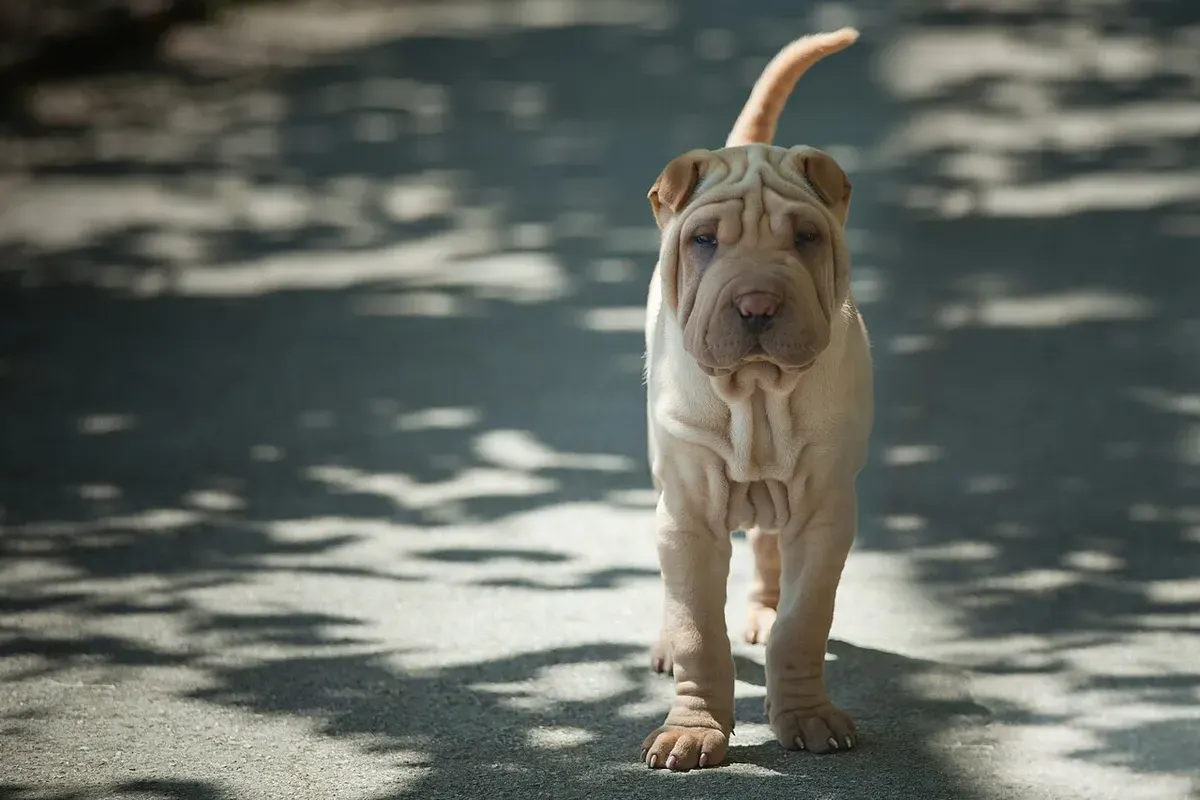
Recognisable by its wrinkles and blue-black tongue, the Shar Pei is a calm, independent dog deeply attached to its family.
History and origins
The Shar Pei comes from southern China, where it served as a farm, guard and hunting dog. Its name means 'sand skin', a reference to its short, harsh coat.
After becoming very rare in the 20th century, it was saved by breeders in Hong Kong and the United States.
Temperament
Calm, dignified and independent, the Shar Pei is devoted to its family and wary of strangers. It is clean and fairly quiet.
It needs early socialisation and firm, respectful training; it can be intolerant of other dogs.
Health
The breed is prone to entropion (eyelids rolling inwards), skin-fold problems, ear infections and an inherited inflammatory disease called 'Shar Pei fever', which can affect the kidneys.
Regular veterinary follow-up is essential; see a vet if it has a fever or swollen hocks.
This is general information. For any question about your dog's health, consult a veterinarian.
Feeding
Good-quality food, sometimes hypoallergenic for dogs with sensitive skin, suits it.
Avoid excess weight.
Exercise
Moderate daily walks are enough. It is not very sporty.
Avoid exertion in hot weather.
Calm indoors, it can live in an apartment if well socialised and walked daily.
Grooming
Its short coat needs weekly brushing. Skin folds must be kept clean and dry, and its small ears should be monitored.
Use gentle products suited to its sensitive skin.